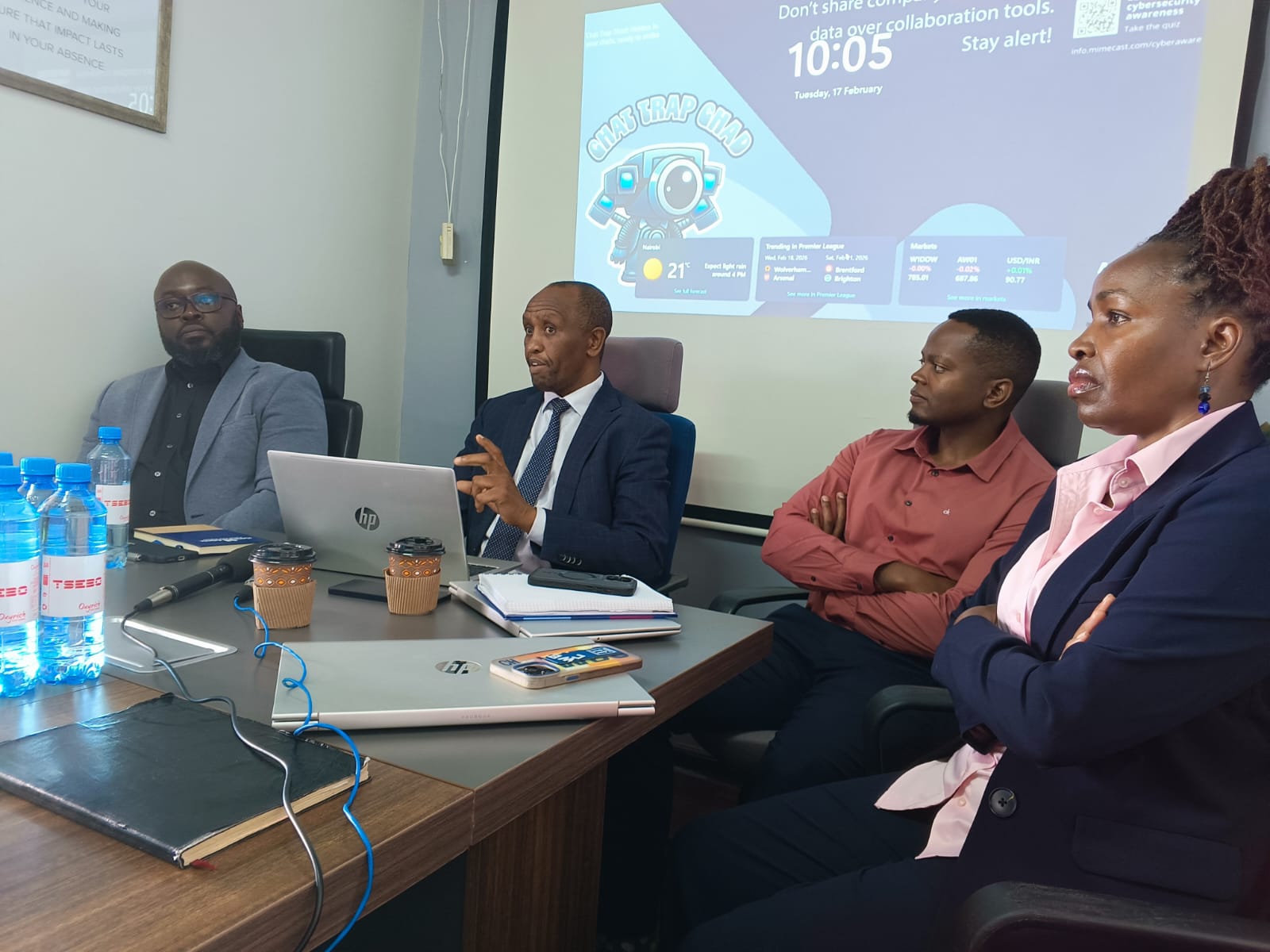
 A media roundtable on education reforms and the evolving state of learning in Kenya at Makini School, Ngong Road, February 17, 2026. /EMMANUEL WANJALA
Artificial intelligence is quietly reshaping classroom experiences, shifting learning from a one-size-fits-all model to a system that adapts in real time to each learner’s pace and comprehension.
As schools grapple with widening achievement gaps and overstretched teachers, the question is no longer whether AI belongs in education, but whether institutions can afford to ignore its potential.
At Makini School, that transition is already underway.
The institution has integrated an AI-powered learning tool that utilises algorithms to track a learner’s progress, adjust questions based on responses, and require mastery of a concept before allowing progression.
The system also flags learners who need additional support, enabling timely teacher intervention.
“If a child does not understand, they will keep getting the same set of questions until they can demonstrate comprehension of a concept,” Horace Mpanza, regional managing director at Makini Schools, said.
He spoke during a media roundtable on education reforms and the evolving state of learning in Kenya.
The discussion comes as the country enters the final phase of transitioning to the Competency-Based Education (CBE) system, which is now at the Senior School level in Grade 10.
The framework shifts focus from exam-oriented memorisation to learner-centred pedagogy and core competencies such as critical thinking, communication, collaboration and digital literacy.
Mpanza said the move from the 8-4-4 system to CBE is bearing fruit, but argued that AI tools further enhance the learner experience by enabling real-time assessment and data-driven intervention.
He said stakeholders must show preparedness and willingness to unlearn long-held teaching practices characterised by rote learning.
“Education shouldn't be about regurgitation and memomry test, that's not future-proof learning. What's happening now under CBE curriculum, learners are taught skills that will never go out of fashion, that's true quality education,” he said.
“The value that AI brings in for us, what we found is that it enables teaching to continue even when the teacher is not there.”
Beyond personalised instruction, he said AI reduces teachers’ workload by automating marking and generating performance analytics that guide reteaching.
“The teacher then gets data which says this is how the pupils have performed on what happened yesterday when they did the work themselves. As a teacher, I would then analyse and realise most of my learners did not understand this, so I need to reteach,” he said.
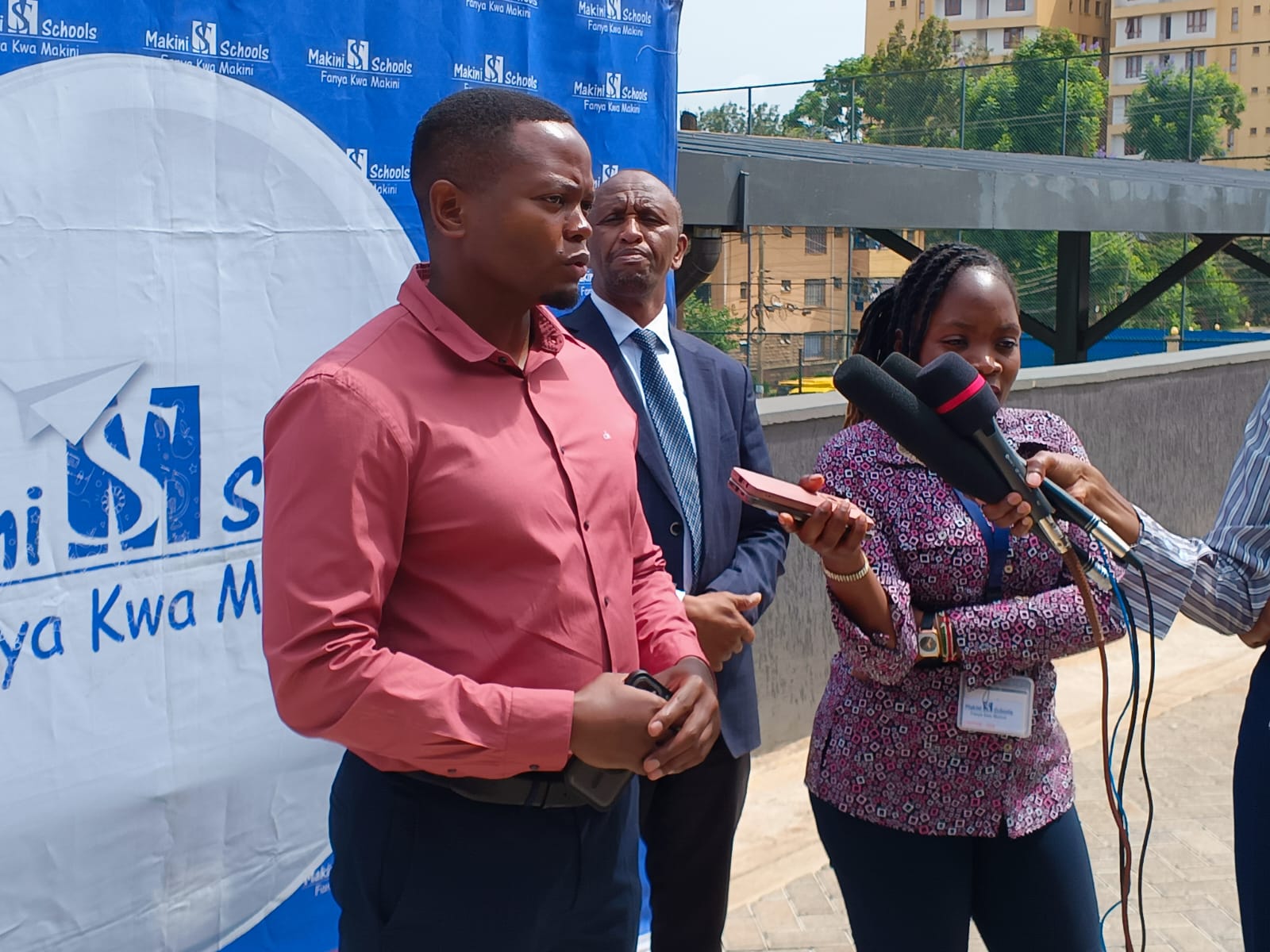 Horace Mpanza, flanked by Wilson Mwangi, addresses the media at Makini School after the media roundtable on state of education in Kenya.
Wilson Mwangi, executive head in charge of CBE at Makini School, Ngong Road, said one of the most significant benefits of AI-driven teaching lies in the data it produces.
Insights from such systems, he argued, can expose systemic gaps and inform teacher retooling to keep pace with digital transformation.
While acknowledging government efforts to support CBE implementation, Mwangi said infrastructure disparities remain a challenge, particularly in access to digital tools.
“There are a lot of things that some schools out there do not have at the moment. The government is working on that, but that the moment, how many schools do not have access to even a computer and how many teachers can leverage digital tools?”
Mpanza challenged the private sector to play a more active role in equipping Africa’s growing young population with digital skills, arguing that AI literacy must be embedded in education systems.
“It goes without saying that you will have to leverage it for various reasons, and I do think there will come a time when it will probably be everybody. It will probably be the same case as cell phone where everybody will leverage these tools to maximise efficiency to save time and resources.”
He dismissed fears that AI threatens job security, drawing parallels with industrial mechanisation, particularly in the mining industry.
“Those are jobs that people should not have been doing; people now operate machines, so I see the same sort of trend that life's going to get easier and people are going to get into work that requires high-order thinking,” Mpanza said.
“Essentially, learners are not any different because they have to be prepared for jobs that do not exist, as a lot of jobs we have right now are probably not going to exist because of AI.”
As Kenya deepens its CBE transition, the integration of artificial intelligence may increasingly shift from optional innovation to structural necessity — particularly for schools seeking measurable gains in learner outcomes and instructional efficiency.