AT dawn in Mtito Andei, Fredrick Mutua unlocks his roadside restaurant as he has done for 12 years.
By 6am, he expects the first wave of truck drivers hauling containers from Mombasa to Nairobi and beyond—drivers who know his place for strong tea, quick meals and safe parking.
Mtito Andei is a major stop-over when travelling between Mombasa and Nairobi, one of the few small towns that enjoy a 24-hour economy in the country.
“We heavily depend on the traffic along the highway. Some days, you can count the trucks on one hand but if all cargo goes to rail, this business will not survive a year,” he says.
At Emali, a fast-growing and crucial transit town along the Nairobi-Mombasa highway, approximately 120 km from Nairobi, Mama Mwikali, a groceries dealer also depends on the traffic along the highway.
Spanning the border of Makueni and Kajiado counties, it serves as a major hub for trade, agriculture (onions, tomatoes, watermelons), and livestock. It is known for its lively nightlife and as a gateway to Amboseli National Park.
“We depend on the highway, without this, I don’t know even if my children will be in scholl as we speak,” she says.
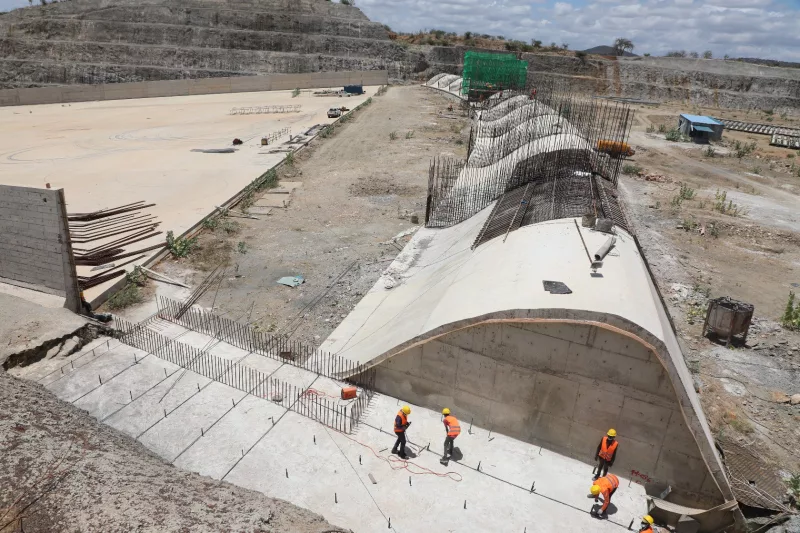
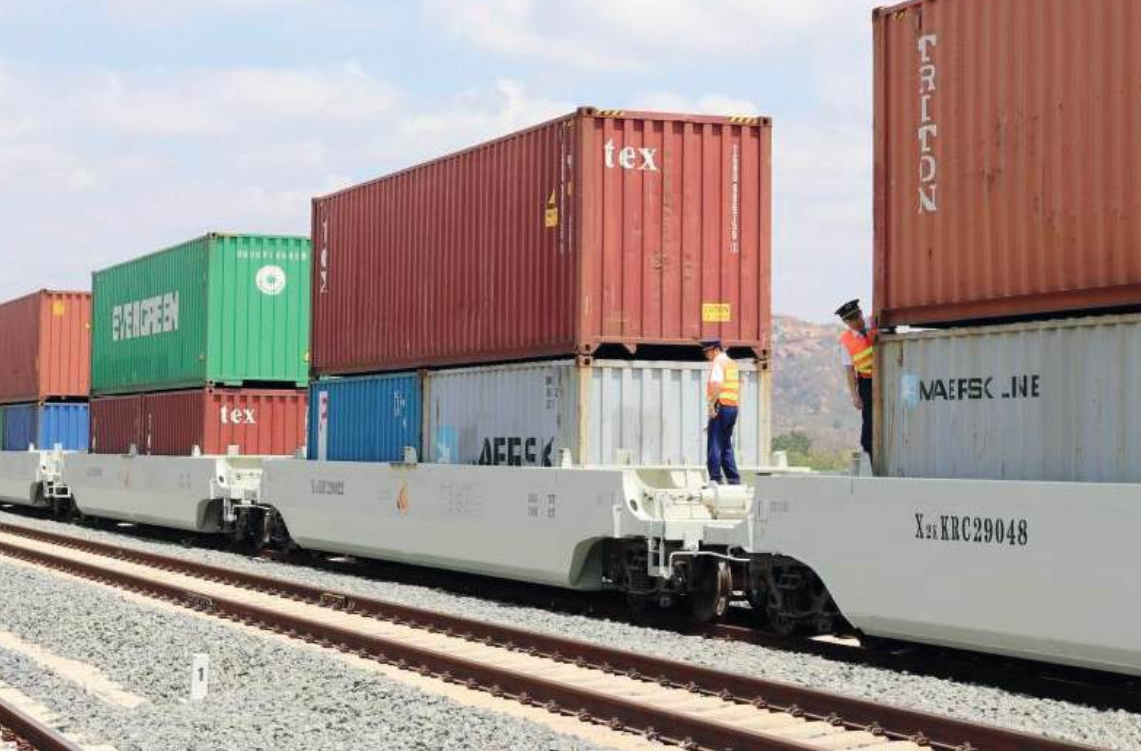
The two capture a growing anxiety along the Mombasa–Nairobi highway as Kenya Revenue Authority and Kenya Ports Authority push for cargo destined for the hinterland to move by the Standard Gauge Railway (SGR) to the Naivasha Inland Container Depot.
While the main intention is to help decongest the Port of Mombasa, moving transit cargo via SGR to Naivasha means a reduction on the number of trucks along the highway, which will hit many businesses.
Businesses along the Mombasa-Nairobi Highway (A109) and the Nairobi Expressway corridor have for years thrived on logisticcs, hospitality and retail, serving the heavy traffic.
For decades, the highway linking the Port of Mombasa to Nairobi and the hinterland has been more than a transport route. It has been an economic lifeline for towns such as Mariakani, Voi, Mtito Andei, Sultan Hamud, Emali and Athi River, among others.
Truck traffic created a highway economy—fuel stations doubling as shopping hubs, lodges offering night stops, garages specialising in heavy commercial vehicles, and informal traders selling everything from food to phone chargers.
Each truck stop injects thousands of shillings into local economies, sustaining jobs far from Nairobi’s formal sector.
However, a recent push by KRA and KPA to have transit cargo picked from Naivasha has sent chills down the spine of many businesses.
Road transporters have cautioned against attempts to reintroduce forced rail haulage of transit cargo to the Naivasha Inland Container Depot (ICD).
Such a move, they say, would undermine free-market principles, violate court rulings and reverse key economic gains recorded along the Northern Corridor since 2022.
Kenya Revenue Authority Commissioner General Humphrey Wattanga said the Naivasha ICD would be prioritised for long-haul cargo bound for Uganda, Rwanda, the Democratic Republic of Congo and South Sudan, allowing Mombasa Port to focus on domestic and short-haul traffic.
President William Ruto formally ended mandatory rail haulage during his inauguration, a move that was widely welcomed by transporters, traders and coastal businesses that had suffered under the previous administration’s policy of compelling cargo owners to use the SGR to the Naivasha ICD, which was equally challenged in court.
Kenya Tranpsorters Association (KTA) has however rejected the fresh approach, arguing that congestion at the Port of Mombasa is operational rather than modal, and cannot be resolved through what it terms “administrative coercion”.
“Mombasa–Malaba route cuts across ten counties and sustains extensive logistics, trade, industrial and service ecosystems. Any policy that forces cargo away from this system damages livelihoods far beyond the port.”KTA chairman Newton Wang’oo said.
According to KTA, forced rail haulage under the previous administration had far-reaching economic consequences.
Entire towns along the corridor—particularly Mombasa—experienced sharp declines in business activity, job losses and closures of transport-dependent enterprises.
Road-based supply chains collapsed as cargo volumes were diverted to a single inland facility, shifting costs to importers while hollowing out county economies.
The association also argues that the Naivasha ICD lacks a defensible commercial or logistical rationale grounded in independent feasibility studies.
Even if the SGR were extended to the border, KTA contends, no rational importer serving Uganda, Rwanda, South Sudan or eastern Democratic Republic of Congo would voluntarily choose Naivasha as a clearance point over Mombasa.
“The current low utilisation of the Naivasha ICD is not a problem to be corrected through coercion; it is evidence of a structurally flawed project,” Wang’oo said a a statement, “Market rejection is not a justification for regulatory force.”
KTA insists it is not opposed to rail transport or the SGR, but to what it calls price-fixing and state-mandated allocation of cargo in a liberal economy.
It maintains that the choice of clearance point and mode of transport must rest solely with the cargo owner, based on cost, time and risk considerations.
Importers, the lobby says, are commercially sophisticated and will naturally gravitate towards the most efficient option if it offers genuine savings.
“If rail transport to Naivasha were truly cheaper and more efficient, the ICD would already be operating at or near full capacity especially given the current congestion at the Port of Mombasa,” he noted.
KTA said it supports efforts by KRA, KPA and other agencies to decongest Mombasa and welcomed several interventions already undertaken.
However, it warned that any attempt to reintroduce forced rail haulage, whether through regulatory circulars, selective enforcement or administrative pressure, would violate Articles 40, 46 and 47 of the Constitution, which protect property rights, consumer choice and fair administrative action.
Such a move, the association said, would also contradict existing court precedent and the President’s explicit policy position, and could trigger renewed legal action and disruptive protests across the ten corridor counties.
“Forced railage without the cargo owner’s consent would likely invite judicial intervention and unnecessary disruptions, as witnessed in the past,” Wang’oo said.
As debate over the future of the Naivasha ICD and port congestion intensifies, the transporters’ lobby is urging the government to prioritise operational reforms, market-driven solutions and respect for the rule of law.
It has warned that return to coercive policies could undermine confidence in Kenya’s logistics sector and its role as a regional trade gateway.