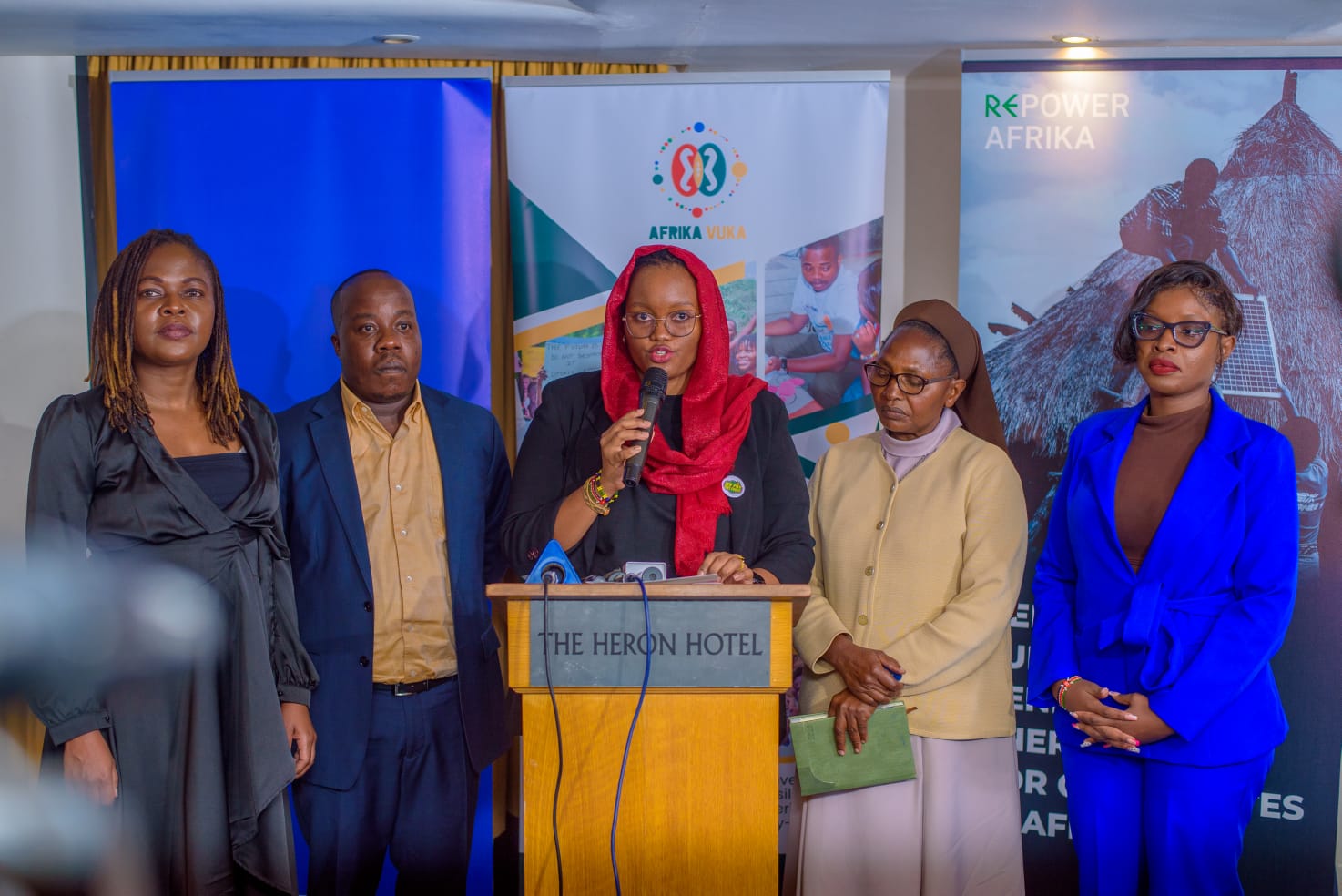
DeCOALinize campaign coordinator Doreen Onyango, Power Shift Africa senior advisor renewable energy & just transition Amos Wamenya, 350 Africa programme manager Rukiya Khamis, Founder JPIC Sister Mary Frances and 350 Africa regional organiser Ruth Agala /HANDOUT
The spike in oil prices has cost ordinary people and businesses in Kenya an additional $143 million (Sh18.5 billion) to $150 million (Sg19.4 billion) in the first two months of the Iran war, new findings show.
The analysis by 350.org, an international environmental organisation addressing the climate crisis, shows that the spike in crude prices translated into higher fuel costs for households and businesses, compounding existing economic pressures.
The estimates cover only direct oil price increases and exclude knock-on effects such as rising food prices, transport costs and broader inflation, suggesting the overall economic impact could be significantly higher. The real economic damage is hence likely significantly more substantial.
Kenya, a net importer of petroleum products, is particularly exposed to external price volatility.
According to the analysis, the extra spending on oil over the 60 days could have financed solar power systems for about 150,000 households, underlining the opportunity cost of fossil fuel dependence.
In addition to the horrific loss of human life, campaigners say that the war has facilitated an “obscene transfer” of wealth from struggling households to fossil fuel giants already reaping massive windfall profits.
These estimates were released at a 350.org East Africa meeting in Nairobi, to delve into the need for governments in Kenya and East Africa as a whole, to prioritise ring -fencing public funds for the expansion of decentralised renewable energy for communities hit hardest by the impacts of climate change.
The action is part of ‘We Pay,They Profit’, a flagship campaign to end dependence on fossil fuels and ensure affordable energy for all, launched by 350.org groups and partners from Asia, Latin America, Africa, Europe, and North America.
350.org East Africa Programme Manager, Rukiya Khamis said the additional oil costs come at a time when the country is already grappling with a widening trade deficit driven by heavy imports of fuel, machinery and industrial inputs.
“It is a staggering injustice that, as we move through the first quarter of 2026, fossil fuel corporations are once again posting record-breaking profits while families struggle to keep the lights on. Right now, power is concentrated in the hands of those who thrive on crisis and scarcity," Khamis said.
This affordability campaign, she noted, is about tipping the scales and putting power back where it belongs.
"With the people. It’s time to end our forced dependence on fossil fuels, tax the profiteers who are benefiting from our hardship,and redirect that wealth into building a fair, clean, renewable energy system. We are not just asking for a lower bill; we are demanding a system that values human dignity over corporate greed," she said.
The group argues that shifting to locally generated clean energy would shield consumers from global price swings while lowering long-term energy costs.
Globally, 350.org estimates that sustained high oil and gas prices could cost the world economy between $600 billion and $1 trillion (Sh129 trillion) by the end of 2026.
“The fossil fuel era is not just ecologically unsustainable, it is economically indefensible. Those who profited from pollution must pay their fair share, because a transition to decentralised renewables is not a burden. It is the surest investment of our generation, delivering cheaper energy, millions of jobs, and real resilience.” said Amos Wemanya, Power Shift Africa, Senior Climate Advisor.
350.org head of campaigns and networks Savio Carvalho said: “We pay, they profit, until we break free from fossil fuels. The lesson is clear: the less reliant we are on fossil fuels, the more protected ordinary people are from price shocks. Renewables have surged ahead as the cheapest option available, while fossil fuels have become a shock-prone liability. It is time to make big oil pay and shift power back to the people.”
In addition, households are estimated to bear trillions of dollars annually in indirect fossil fuel-related costs, including subsidies, health impacts and climate damage.
The 350.org analysis calculates losses from price spikes using weighted oil price averages since the start of the Iran war, combined with national consumption levels and adjustments for uncertainty, such as reduced demand and rationing in response to rising prices.
It does not yet include wider knock-on effects, such as rising fertiliser and food costs, declines in economic output and employment, or broader inflation driven by fossil fuel price volatility. As a result, the true economic damage is likely significantly higher than the losses from oil and gas prices alone.