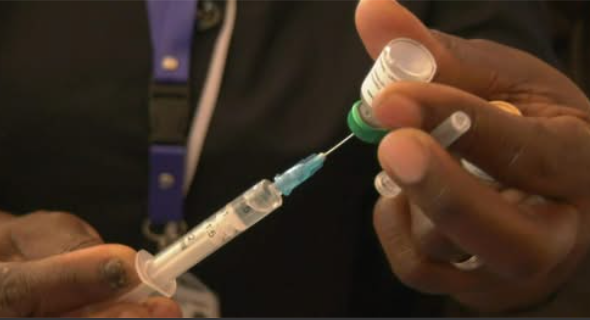
 Injectable vaccine // file
A new report by the Centre for Epidemiological Modelling and Analysis (CEMA) at the University of Nairobi reveals that as Kenya climbed the economic ladder, it simultaneously lost access to the life-saving grants that once anchored its healthcare system.
In their place, the country has been forced to rely on concessional loans. This debt that is now suffocating the very sector it was meant to save.
The logic of international development dictates that as a country’s income grows, it must transition from donor dependency.
However, for Kenya, this transition is happening faster than domestic tax revenues can keep up, titled Immediate Impact of External Funding Withdrawal On Kenya’s Health Sector.
It provides a stark look at how the composition of health funding has shifted from gifts to debt:
"The on-budget support is provided in the form of grants or concessional loans and is recorded in the national budget as either Appropriations-in-Aid or as direct revenue to finance government expenditure. For the period 2019/20-2025/26, the country cumulatively received more loans than grants in external funding for health through on-budget support."
In the 2021/22 financial year, a staggering 83.2 per cent of on-budget external health support came in the form of loans. Because healthcare does not generate immediate cash to pay back these creditors, this borrowing directly increases Kenya’s public debt and damages its international creditworthiness.
The report identifies that the LMIC status is a direct barrier to receiving the type of funding Kenya actually needs to sustain its health gains:
"Access to grants is however hampered by the categorization of the country into a lower middle-income country (LMIC) which implies that the country is expected to finance its healthcare through more loans than grants. ... Furthermore, loans borrowed to invest in healthcare do not have a direct and immediate return on borrowed money invested."
Kenya, for instance, is gradually transitioning out of Gavi support to buy vaccines, and recently negotiated with donors to buy it family planning products for three more years.
Dr. David Khaoya, the report’s lead author, says the crisis should force hard conversations.
“External funding has long played a significant role in Kenya’s health sector, but it is unpredictable and unsustainable,” he said.
“This funding shock is a wake-up call. While the challenges are significant, Kenya and other African countries now have an opportunity to rethink how health systems are financed and build long-term resilience.”
Kenya’s financial strain is exacerbated by the withdrawal of major donors. Total external funding for health is estimated to plummet to Sh54 billion in FY 2025/26, down from Sh126 billion just a year prior. As the US government and other partners exit, they leave behind a massive vacancy that the Kenyan government is currently struggling to fill with its own budget.
In December 2025, Kenya and the United States signed a landmark five-year, $2.5 billion (Sh 325 billion) Health Cooperation Framework in Washington DC. This deal was designed as a "phased transition" to help Kenya move toward self-reliance. Under the agreement, the US pledged up to $1.6 billion in support, provided Kenya increases its own domestic spending by $850 million over the next five years.
However, the implementation of this deal is currently suspended. Last month, the High Court froze the framework following a petition by Senator Okiya Omtatah.
The petitioners raised concerns over clauses that would allow the US access to Kenyan genomic data and biological specimens, arguing the deal was signed without the public participation required for such a significant national commitment.
The CEMA report warns that if Kenya continues to rely on loans to cover basic health needs like HIV treatment and vaccines, the Debt Trap will only tighten. The researchers argue that the country must find a new way forward:
"The report also brings out the need to explore innovative financing mechanisms such as sin taxes, hypothecated levies, impact bonds, and debt swaps, and to negotiate for more grant financing and better alignment of external support with unfunded national priorities,” the authors said.
The others are ,Ombajo Loice, Mutono Nyamai, Nyaikamba Purity, Oumaima Laraj, Njuguna Brian, Musasia Ryan, Omondi Austine, Thumbi Mwangi.
“Overall, the analysis highlights that Kenya’s health sector is highly exposed to external funding shocks," they said.
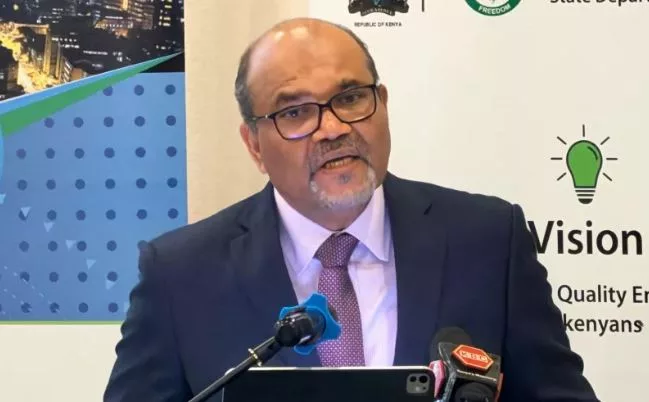

![Africa CDC Director General Dr Jean Kaseya at a past event. [Photo: Arthur Mbuguah, WHM]](https://cdn.radioafrica.digital/image/2026/10/8ced213c-affb-4dff-97ca-1b6bac1f958e.webp)