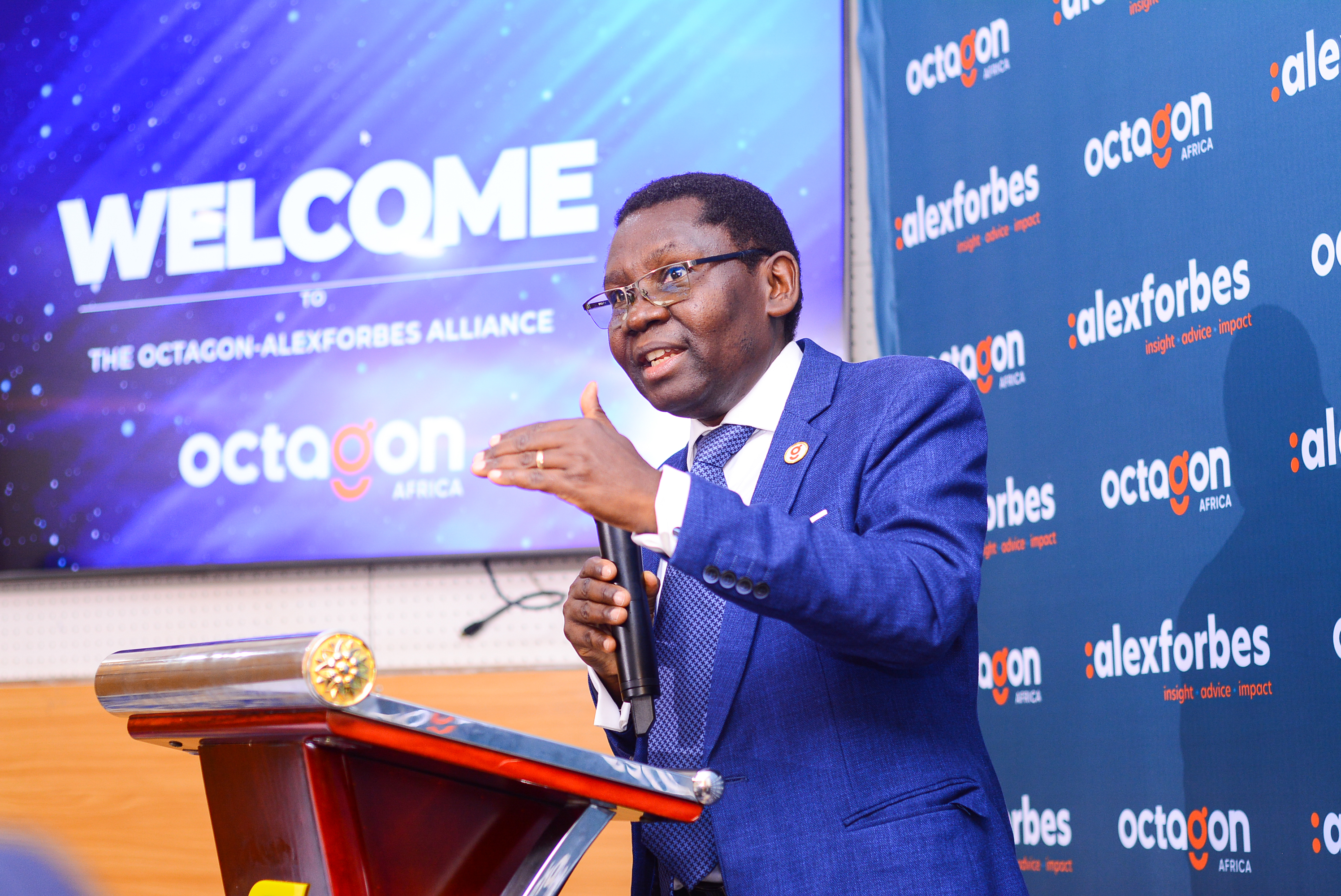
KENYA’S pension industry has grown from a modest Sh150 billion before the turn of the millennium to more than Sh2.6 trillion today, making it one of the most mature retirement markets in Africa. Few individuals have had a front-row seat to that transformation—or helped shape it—like Fred Waswa, the Founder and Group Chief Executive Officer of Octagon Africa Financial Services Ltd.
A seasoned pension expert with over three decades of experience, Waswa played a pivotal role in the formulation of Kenya’s Retirement Benefits Authority regulations between 1999 and 2001, working closely with employers and retirement schemes to lay the foundation for today’s structured pension system.The Star spoke to him on the evolution of Kenya’s retirement sector, the trust that underpins its growth and the urgent reforms needed to expand coverage especially among informal workers, while unlocking pension capital for national development.
Excerpts:
How would you describe the current state of Kenya’s pension sector?
Kenya’s pension sector is one of the most mature and well-established in Africa. In fact, we rank among the top three retirement benefits markets on the continent, alongside South Africa and Nigeria.
The sector has grown tremendously over the last 25 years. Before the year 2000, pension assets stood at about Sh150 billion. Today, pension assets in Kenya are in excess of Sh2.6 trillion. That growth did not happen by accident, it came largely from strong regulation, better governance and increased confidence among employers and workers.
What role has regulation played in shaping this growth?
Regulation has been the single most important driver of growth. Before 1997, there was no proper regulatory framework. The Retirement Benefits Act and the regulations that followed, implemented around 1999 and 2000, completely transformed the industry. They introduced segregation of roles, meaning pension administration, fund management and custody must be done by separate entities with no shared ownership.That structure protects members’ money. It is the reason pension schemes are among the safest places to invest long-term savings in Kenya.
How does Octagon fit into this ecosystem?
Octagon is a pensions-focused financial services firm. We provide pension administration services to corporates, SMEs and individuals.For SMEs, we run an umbrella fund, which allows small businesses to pool together instead of bearing the heavy cost of compliance individually.
For individuals, we offer personal pension plans and income drawdown solutions for retirees who want a stable monthly income for life. Beyond pensions, we also operate an insurance brokerage and a strong training arm focused on trustees, members and financial literacy.
You have placed strong emphasis on financial literacy. Why is this so important?
Financial literacy is foundational. Across Kenya, Uganda, and Zambia where we operate, we have found that many people simply do not know how to manage money. Money is not land or livestock. It is a completely different asset class.
If you don’t understand how to manage it, you consume today and suffer tomorrow. That is why we decided to start with children. Culture is built early. When children understand saving, investing and planning from a young age, they grow into adults who make better financial decisions. That, in the long run, strengthens the entire pension system.
How large is Octagon’s pension footprint today?
Across Kenya, Uganda, and Zambia, we manage over Sh110 billion in pension assets, serving close to 300,000 members. These include corporate schemes, SME members, and individual pension contributors.
Despite the growth in assets, pension coverage in Kenya remains low. Why?
The main issue is that pensions are not compulsory for employers beyond statutory schemes. Many employers still do not run private pension plans for their staff. For a long time, even the statutory scheme—the National Social Security Fund—was weakly enforced. Contributions were low, sometimes as little as Sh400 a month. That kind of contribution cannot support retirement dignity.
The restructuring of NSSF into Tier I and Tier II, with contributions linked to salaries, is a game-changer. Enforcement has also improved dramatically. Inspectors now actively ensure compliance even in small businesses. This will significantly improve both coverage and benefit adequacy.
You have been vocal about private equity and infrastructure investment. What is the challenge?
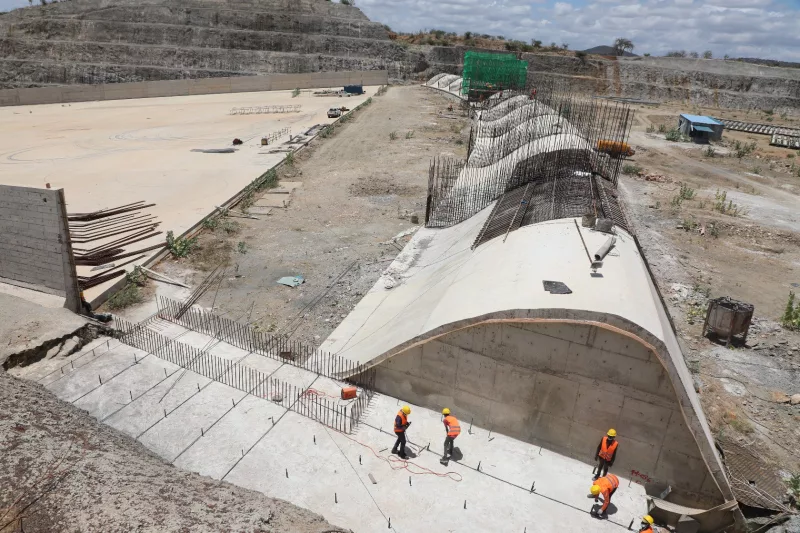
The biggest frustration is this, Kenya has Sh2.6 trillion in pension assets, yet we borrow hundreds of billions to build roads. That tells you there is a disconnect. Private equity and infrastructure are the asset classes that actually grow economies. Yet less than one per cent of pension assets are invested in private equity.
The problem is not lack of money, it is lack of legal and regulatory structure. Trustees are custodians of people’s retirement savings. Without clear protections, governance rules and project structures, they will always choose the safest route: government bonds.
What needs to change to unlock pension money for development?
First, private equity fund managers should be regulated as a distinct asset-management class, with clear rules and accountability. Second, there must be a proper legal framework for pension-fund-backed infrastructure projects, including special purpose vehicles where pension schemes have governance control, transparency and predictable returns.
Countries like South Africa and Singapore built much of their infrastructure using pension money. In Singapore, pension funds own hospitals, buildings and infrastructure that generate income for decades. That is exactly what pension funds are designed to do, invest for the long term.
What role is Octagon playing beyond advocacy?
We invest heavily in training trustees on alternative investments, private equity and long-term decision-making. Trustees must understand these assets before they can confidently approve them.We also welcome recent reforms extending trustee terms from three to five years. Longer terms encourage long-term thinking which is essential for investments that may take seven or more years to mature.
Beyond governance reforms, what else are you doing to support better decision-making?
Training. A lot of training. We continuously train trustees on alternative investments, private equity, and long-term asset allocation. Pension trustees cannot approve what they do not understand. Knowledge builds confidence and confidence leads to better investment decisions.
Kenya has a huge informal sector— artisans, masons, carpenters, gig workers. How is this group currently covered by pensions?
To be honest, the informal sector is the hardest group to serve with retirement products. Their income is extremely irregular. Today they may earn nothing. Tomorrow they may get two jobs. Voluntary saving simply does not work for this group. We have tried. In 2018, I personally set up a voluntary scheme and registered 150,000 people. After the excitement died down, only about 2,000 people actually saved consistently.
Not because they didn’t want to but because saving voluntarily requires discipline, reminders and cost. Much needs to be done including developing specific products for this group, which have. The informal sector cannot save voluntarily at scale. Saving must happen automatically, without decision-making.The closest product we have seen to solving this problem is the Hustler Fund.
The idea that a portion of loan repayments automatically goes into savings is exactly the right concept. Someone borrows Sh500 repeatedly, repays consistently, and after 10 years realises they have saved Sh500,000 or even Sh1 million without consciously “saving”. That is how you bring the informal sector into pensions.
How can this idea be expanded beyond government funds?
SACCOs and chamas are the biggest entry points. If someone contributes Sh1,000 to a SACCO every month, they will always do it. Now imagine if policy required that 10% of every SACCO contribution automatically goes into a pension scheme. The SACCO keeps 90 per cent. You would capture 60 to 70 per cent of the informal sector almost overnight. The same applies to registered chamas. The structure already exists. We simply need to plug pensions into it.
Why do many Kenyans still distrust government-led savings products?
People trust private-sector pension schemes because they believe their money is safe. Government products, even good ones like the Hustler Fund, struggle because people fear mismanagement. That perception, right or wrong exists. My view is simple, let government create the policy and structure, but allow the private sector to manage the funds. The private sector understands risk, systems, accountability and efficiency.
At what age should Kenyans start saving for retirement?
From the first day you earn income. If you wait until 30 or 40, you will struggle. The International Labour Organization recommends that your pension should replace about 75 per cent of your final salary. If you retire earning Sh200,000, you need Sh150,000 a month in retirement. That requires roughly Sh15 million in savings. Starting at 20 allows compounding to work for you. Starting at 40 means you must save aggressively and painfully.
Given low wages in Kenya, what is a realistic savings rate?
Around 10 to 12 per cent of your income. That is why the six per cent for employee and six per cent employer contribution structure in NSSF makes sense. Over 30 years, that level of saving gives you a dignified retirement. Anything less is gambling with your future.
If you had the attention of policymakers today, what would you change immediately?
Three things: First, make retirement saving compulsory for all employers, not just through NSSF. Every employer should have a pension scheme. Second, expand investment asset classes. We cannot keep parking trillions only in bonds and shares. We must restructure private equity and venture capital so pension money can safely flow into the real economy.
Third, fix the legal framework so pension funds can invest confidently in long-term national development projects. If we do this, Kenya will change forever.
What does success look like for Kenya’s pension system?
Success is when one, everyone, formal and informal, can save for retirement. Two, the economy has enough assets to absorb pension money productively. Three, we have investment vehicles that turn pension savings into jobs, infrastructure and growth.
How would you like your legacy to be remembered?
I want to be remembered for two things. First, creating platforms that improved financial literacy. Teaching people how money works is my passion. Second, leaving the pension industry stronger than I found it. When I started 36 years ago, there was almost no regulation.
Today, we have a structured, growing industry and we are even building self-regulation through administrators’ associations. If I am remembered as someone who helped Kenyans save better and strengthened the retirement system, I will be satisfied.