 Youths from Kirinyaga Central constituency queue to verify their details for the Nyota programme on October 24, 2025 /KNA
Economic policy is never just about budgets, frameworks, or delivery mechanisms. It is a moral language through which the state explains how it understands its citizens: who is deserving, who must wait and who must adapt.
When governments speak about youth, in particular, they are revealing not only economic intentions but political anxieties.
The Nyota programme must be read in this light.
Presented as a flagship intervention for youth empowerment, Nyota has been wrapped in the language of opportunity, entrepreneurship and inclusion. It promises to unlock the energy of Kenya’s youth and turn it into productive enterprise.
The idea is attractive. In an economy unable to generate sufficient formal employment, entrepreneurship is framed not merely as an option, but as a civic duty.
That framing should trouble us.
At its ethical core, public policy should protect human dignity, especially the dignity of work. Work is not therapy. It is not symbolism. It must offer stability, predictability and the possibility of progression. Y
et Nyota’s central intervention - small-scale capital injections into an already saturated informal economy - risks institutionalising economic fragility under the guise of empowerment.
There is something deeply dishonest about selling precarious self-employment as transformation. When youth are pushed into micro-enterprises without serious capital, reliable markets, or sectoral strategy, the state is not enabling productivity; it is managing discontent. It keeps young people busy, visible and hopeful - while ignoring the structural failures of the economy.
This is not an economic vision. It is political containment.
Equally problematic is the moral sleight of hand embedded in Nyota’s entrepreneurship narrative. By presenting opportunity as universally available, failure becomes personalised. If the business collapses, the youth “lacked discipline.” If income stagnates, the youth “failed to innovate.”
Structural barriers - market saturation, lack of industrial absorption, weak purchasing power - disappear from the conversation.
This is ethically indefensible. It converts systemic economic failure into individual moral ineptness.
A government serious about youth livelihoods would speak honestly about limits: about the reality that not everyone can be an entrepreneur; that an economy built on informal hustles cannot deliver national prosperity; that dignity requires more than access - it requires stability. Nyota speaks none of these truths.
The question of equity further complicates the picture. Nyota is marketed as inclusive, yet access remains opaque. Awareness is high; participation is low. Selection processes are poorly understood, and geographic and social disparities persist.
When opportunity feels arbitrary, empowerment becomes performative. Public policy cannot claim justice while operating behind administrative curtains.
The issue here is not merely technical; it is ethical. Fairness is not a footnote - it is foundational. Programmes that fail to demonstrate transparent and equitable access reproduce the very exclusions they claim to solve.
Then there is accountability, the point at which many Kenyan public programmes quietly exit the moral conversation. We are told how much money is disbursed, how many youths are trained, how many wards are reached.
We are not told how many livelihoods endure. Survival rates, income stability, job quality - these remain inconvenient questions and yet sit at the very heart of the policy formulation and delivery matrix.
This obsession with numbers over outcomes reveals the true function of such programmes, NG-CDF presided over by MPs falls squarely in this category. Outputs photograph well. Outcomes require humility, patience and a willingness to admit failure. Political rhetoric thrives on the former; economic vision depends on the latter.
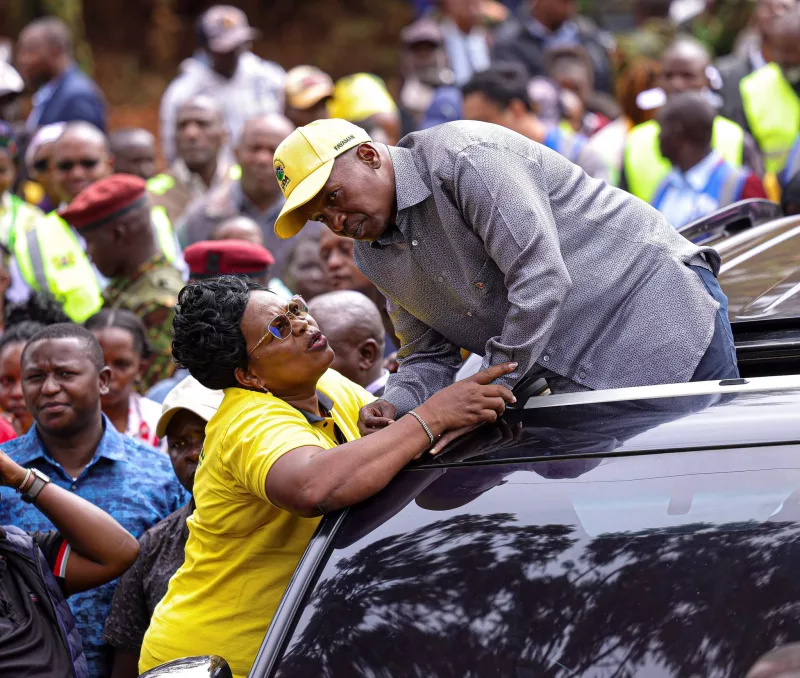
But perhaps the most uncomfortable dimension of Nyota is its political timing and symbolism. Youth programmes in Kenya have long served as instruments of mobilisation rather than transformation. When leaders personally front disbursements and empowerment becomes a travelling roadshow, development blurs into campaign theatre.
A policy designed to win applause cannot also demand structural patience. The incentives are fundamentally misaligned.
This does not mean Nyota is empty by design. Its architecture borrows from credible development thinking. But intention is not enough. A programme that fails to confront structural unemployment, industrial stagnation, labour informalisation, casualisation and pricarity cannot ethically promise empowerment. It can only manage expectations.
So, what is Nyota, really?
At present, it is neither an outright fraud nor a coherent economic strategy. It occupies a more troubling space: a policy that speaks the language of justice while practising the politics of postponement; that promises dignity while delivering precariousness; that offers hope without restructuring opportunity. Indeed, hope may be a classic meal for breakfast but certainly not dinner.
Kenya’s youth do not need more motivation. They need an economy that tells the truth about work, risk, and reward. They need policies that privilege outcomes over optics and dignity over delivery ceremonies.
Until Nyota is willing to make that shift, it remains political mobilisation dressed in the garb of economic transformation - however impressive the language, and however well-intentioned the design.