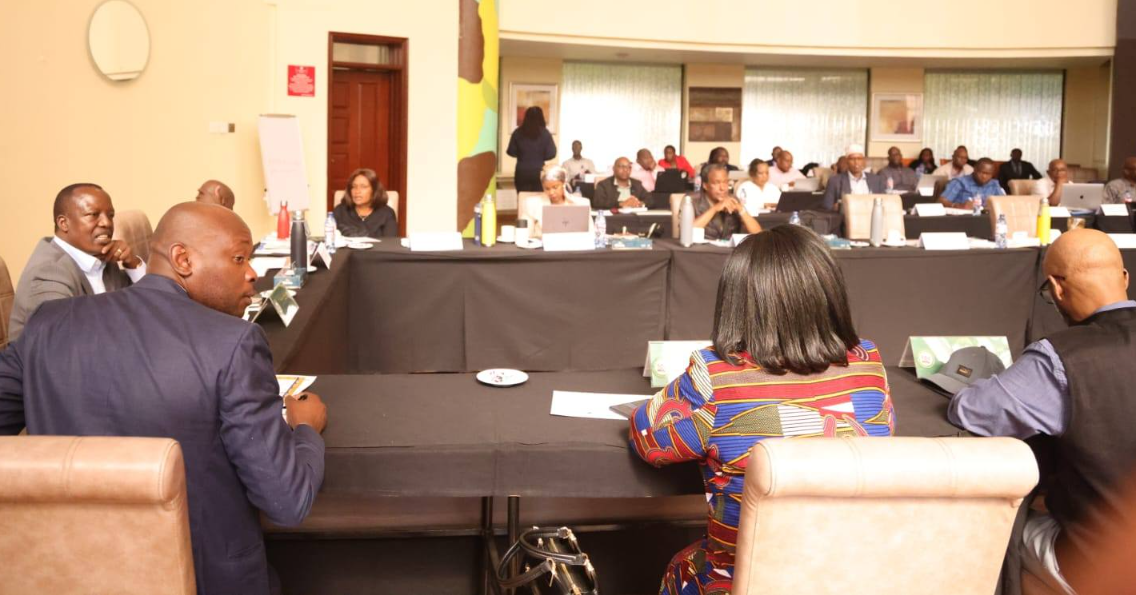
 The National Assembly Committee on Education receives proposed amendments to the Teachers Service Commission Act on February 4 in Naivasha. /PARLIAMENT
The Teachers Service Commission (TSC) is considering expanding its administrative and disciplinary powers through draft amendments to the Teachers Service Commission Act, aimed at strengthening discipline and professionalism within the teaching service.
The proposed Bill seeks to tighten entry requirements for teaching courses, reinforce the registration and employment framework for teachers, and align the commission’s disciplinary measures with national laws.
Under the amendments, TSC would have the power to suspend or deregister teachers found guilty of professional misconduct. An internal review committee would handle appeals before cases proceed to court.
The draft Bill also introduces new offences, including sexual exploitation of learners, and broadens the definition of serious offences to cover acts that “grossly offend public policy and interest.”
The commission presented the draft amendments to the Committee on Education on February 4 in Naivasha. The committee, chaired by Julius Melly, raised concerns over the wide-ranging changes, noting that they affect nearly every section of the existing Act.
“If the amendments touch on all provisions, why not repeal the entire Act and start afresh?” asked Abdul Haro.
A TSC representative said the commission opted for amendments rather than repeal to preserve institutional continuity. TSC Legal Director Cavin Anyuor added that the draft Bill was prepared under the guidance of the Attorney General’s Office to ensure it aligns with the Constitution and current administrative practices.
The legislative proposal would empower TSC to decentralise its functions through zonal offices, establish new directorates, and create an Institute of Teacher Support and Professional Development (ITSPD) to oversee continuous teacher training.
The idea is modelled on the Kenya School of Government, which provides capacity development programmes for public service officers.
The Bill also proposes expanding the definition of ‘institutional administrator’ to include heads of schools, deputy principals, registrars, deans, senior teachers, and other administrative staff.
Committee members sought clarification on structure and implementation. Phylis Bartoo asked whether junior secondary schools would have separate deputies or remain under a single principal.
Junior school teachers (Grades 7–9) have previously held demonstrations demanding autonomy from primary schools, citing the need for independent administration, separate management, and improved infrastructure.
They argue that being managed by primary school heads—who often lack secondary-level qualifications—undermines professionalism and the effective implementation of the Competency-Based Education (CBE).
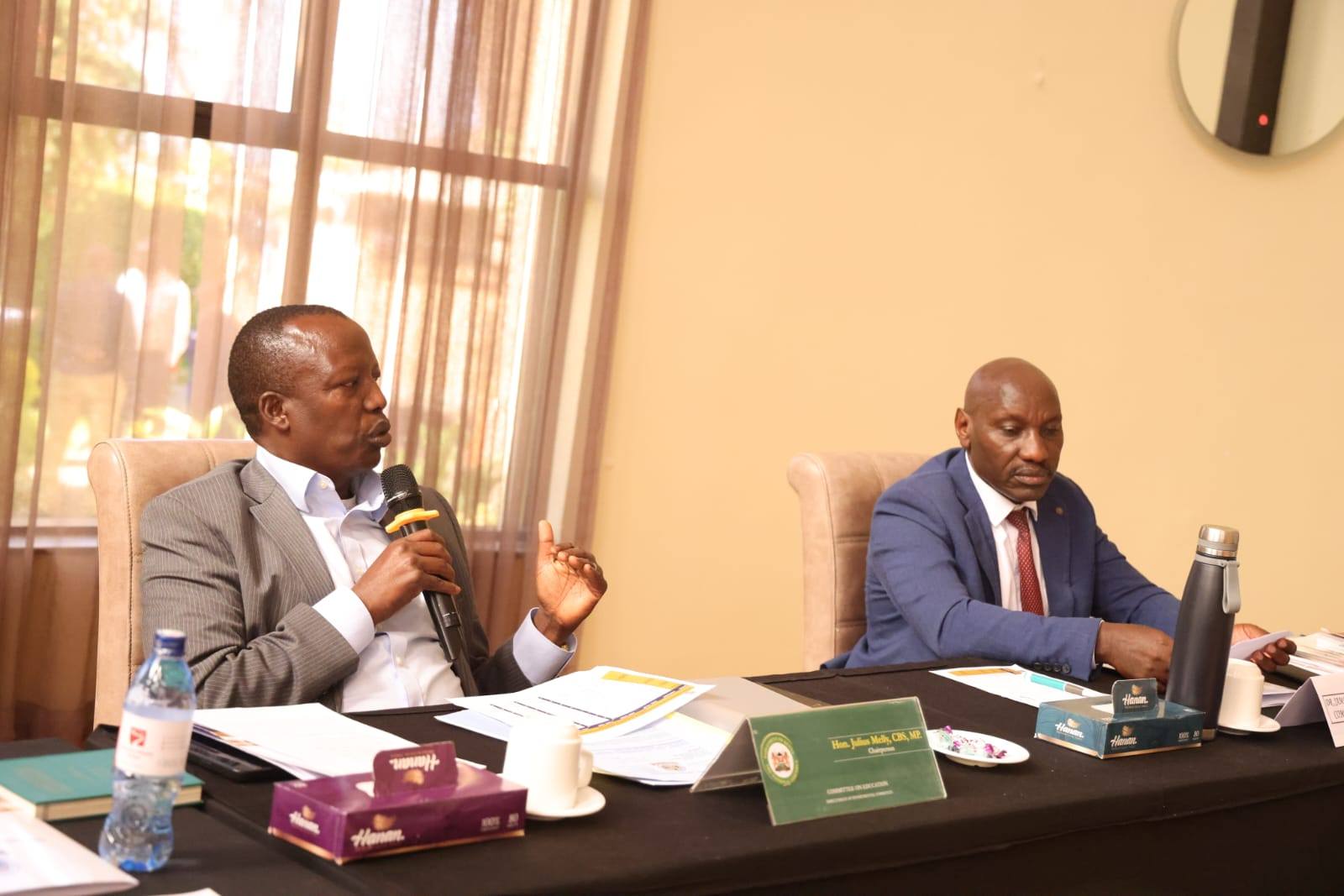 The National Assembly Committee on Education chairperson Julius Melly speaks on the proposed amendments to the Teachers Service Commission Act on February 4 in Naivasha. /PARLIAMENT
On the proposed decentralisation of TSC offices, Nabii Nabwera questioned the feasibility of establishing mandatory zonal offices, given the financial implications.
The commission currently does not have a budget allocation for offices in all more than 400 subcounties.
“What if there are no funds to establish an office in every zone?” Nabwera asked.
The commission also faced questions on disciplinary procedures and coordination with the Ministry of Education. “Section 35 places disciplinary control with TSC.
How will this converge with ministry directives, and what happens when a teacher disobeys?” asked Mary Emaase.
The Ministry of Education disciplines its officers under the Constitution, the Public Service Commission Act (2017), and the Discipline Manual for the Public Service (Revised 2022).
TSC, on the other hand, enforces disciplinary control through its Code of Regulations for Teachers, as provided under the TSC Act, and relies on Section 35 of the Act to ensure compliance with teaching standards, including mandatory career and professional development programmes.
Kitutu Masaba MP Clive Gisairo suggested technical corrections to the academic qualification clauses, saying that “C+ should be in both English and Kiswahili, not or.”
The TSC said the amendments aim to strengthen professionalism, promote uniformity in teacher management, and align disciplinary procedures with constitutional and sectoral laws.