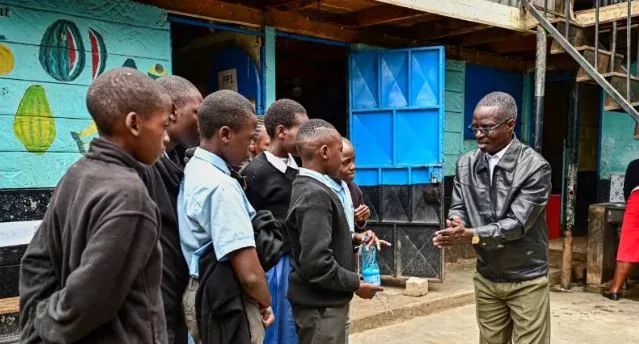
 AHF Kenya Country Program Director Dr Samuel Kinyanjui.
Kenya should stop taxing condoms if it is serious about preventing HIV, other sexually transmitted infections and unintended pregnancies.
Health advocates say the government’s decision to impose a 16 per cent Value Added Tax and additional import duties on condoms since the 2022/2023 financial year has driven up prices, reduced donations and contributed to severe shortages in free distribution. Condoms are currently classified as taxable medical devices rather than tax-exempt medical supplies.
The call to scrap the tax was amplified on Thursday during International Condom Day celebrations at the Mathare Youth Sports Association grounds in Nairobi, where officials from the AIDS Healthcare Foundation, the National Syndemic Diseases Control Council and county health teams addressed hundreds of young people.
Speaking on behalf of AHF Kenya Country Program Director Dr Samuel Kinyanjui, representatives delivered a blunt message: “Condoms are a public good, not a luxury item.”
“Countries should not tax condoms,” Dr Kinyanjui said in his speech. “Governments cannot rely solely on the private sector. If you have to choose between buying airtime or buying safety, we are setting you up to fail.”
International Condom Day is observed every February 13, on the eve of Valentine’s Day, to promote safer sex and reduce new HIV infections and other STIs. This year’s event carried the theme “Safer is Sexy, Just Use It!” and blended football, music and candid conversations about prevention.
Dr Kinyanjui warned that Kenya risks reversing hard-won gains in the fight against HIV if condom access continues to shrink.
“There is a dangerous play happening right now. Some people think condoms are ‘old school.’ They think, ‘Ah, we have pills for HIV now, we are safe,’” he said. “Here is the truth, straight from the coach’s playbook: We are losing ground — quietly.”
While Kenya has expanded access to pre-exposure prophylaxis (PrEP), which significantly lowers the risk of HIV infection, Dr Kinyanjui cautioned that it does not protect against other sexually transmitted infections.
“While we celebrate wins like PrEP for HIV prevention, we have left our defense wide open on the other wing. The data is flashing a red card. Sexually transmitted infections, particularly syphilis, are rising worldwide,” he said.
“PrEP is a fantastic goalkeeper for HIV, but it lets syphilis, gonorrhea, and chlamydia slide right past into the net.”
He framed the message in language familiar to the young footballers gathered at the Mathare grounds.
“To the ballers and youths here: You know that in sports, you don’t play without shin guards. So why play the game of life without protection?” he posed.
AHF, which provides medical care and services to more than 2.8 million clients in 50 countries, said condoms remain the only widely accessible method that simultaneously prevents HIV, other STIs and unintended pregnancy.
Dr Kinyanjui described prevention as the “real MVP” in the HIV response and warned against complacency.
“Progress is fragile. We didn’t fight the HIV pandemic for decades just to concede a goal now because we got comfortable,” he said. “You don’t need a complex new tactic to win this one. You need the tool that is proven, practical, and fits in your pocket.”
Officials also called for stigma-free conversations about sex and prevention in homes, schools and churches.
Stephen Muthoka, representing the National Syndemic Diseases Control Council, urged parents and community leaders to speak openly.
“Talking about sex does not promote immorality,” Muthoka said. “It promotes informed decisions. HIV is not just in hospitals. It is in our communities.”
He challenged young people to take responsibility for their health.
“Once you use protection, you have power,” he said. “When you protect your future, you protect your goals.”
Nairobi county health officials at the rally reiterated that condoms should be free or affordable and widely available, especially for young people who may not afford them in the private market.
As music played and youth groups shared prevention messages online using the hashtags #ICD2026 and #SaferIsSexy, the underlying message remained simple and direct.


![Africa CDC Director General Dr Jean Kaseya at a past event. [Photo: Arthur Mbuguah, WHM]](https://cdn.radioafrica.digital/image/2026/10/8ced213c-affb-4dff-97ca-1b6bac1f958e.webp)