 An injectable vaccine // file
Dr Wesley Ronoh, CEO of the Kenya Biovax Institute, which is building the plant, said this factory will cost Kenya between Sh6.45 billion and Sh10.32 billion by the time it is opened end of next year.
It is funded by the World Bank through its Health Emergency Preparedness Response and Resilience Programme to enhance Kenya's ability to detect and respond to disease outbreaks.
Dr Ronoh said full vaccine creation from research through trials and approval is far more expensive and takes many years.
Studies show that the average cost of developing a preventive vaccine can exceed $130 million to nearly $500 million when all stages are included, and the full process from early research to market can take 10 to 15 years or longer.
Only South Africa and Senegal have end-to-end vaccine manufacturing facilities in Africa.
“So, we are starting with the last part of that value chain. Fill and finish,” Dr Ronoh said at the ongoing Kemri Annual Scientific and Health (Kash) Conference in Nairobi.
"And our timelines are late 2027, that we actually have the fill and finish line installed, and we will be doing some trial runs."
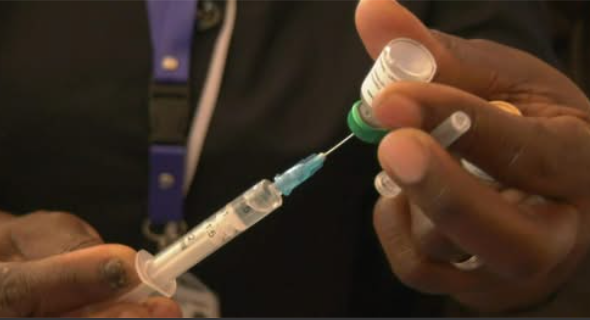
Fill and finish is the final step in making a vaccine and does not involve inventing or discovering the vaccine itself.
The vaccine liquid is first made in another country, then shipped in large sterile containers to Kenya.
At the fill and finish plant, the vaccine will be tested for quality then carefully poured into small bottles or syringes, labelled and packed.
After this process, the vaccines are ready for use in hospitals and clinics. Kenya plans to repackage 30 million doses a year when the plant is complete.
Dr Ronoh also said the philanthropic nature of the vaccine market in Africa makes it difficult for vaccine manufacturers to set up end-to-end facilities on the continent.
Most vaccines used in Africa are bought using donations channelled through Gavi, who use Unicef to procure the vaccines cheaply in bulk from big manufacturers.
“If you are an investor, this market is very uncertain. You are going to be competing with manufacturers in India and China, who are producing at scale,” he said.
"Gavi and Unicef are looking for the lowest price. However, because of Covid-19, this is a system that cannot continue. Everyone realises that it cannot."
Due to the lack of transparency of pharmaceutical companies, the exact cost of research and development and manufacturing of vaccines globally are largely unknown to the public.
However, research and development costs are the bulk of the estimated costs, running to about $500 million per vaccine.
Acting Kemri director general Prof Elijah Songok stressed the importance of local ownership and government support in moving research and production forward, saying that more local funding would improve confidence and drive Kenya’s vaccine agenda.
“When you have these particular partnerships, you will be able to access funding. But this funding is very competitive. There is a good amount of goodwill in terms of getting the funding to global partners, but it’s very competitive,” he said.
Dr Ondari Mogeni, country director of the International Vaccine Institute (IVI), spoke about the longer vaccine value chain and why partnerships matter at every stage, from research to approval and regional use.
He gave the example of South Korea’s experience to show what sustained local investment and partnerships can achieve.
He noted that South Korea had moved toward self-sufficiency and become a major global producer through long-term focus and collaboration.