Tatiana now sleeps in
dignity in a corner of Nairobi's Langata Cemetery. She is the
latest tenant of the city's public graveyard from the Mathare slums. She was just
17 months old.
Tatiana was born
with a heart defect to Damaris Asunta, a 26-year-old jobless single mother of
two. When her health problem was diagnosed at Mama Lucy
Kibaki Hospital, doctors referred the baby to Kenyatta National Hospital.
"They asked for Sh1,850 to see a
doctor but I didn't have the money," Asunta said.
She returned to Mathare with the sick
child, who was getting sicker. Again, she was taken to Mama Lucy, where
Tatiana was diagnosed with severe pneumonia in addition to her heart problem.
She struggled to breathe.
Advertisement
Advertisement
The doctors called KNH to book
emergency admission but the beds were full. No room for a dying street
girl. Tatiana slipped away on January 30.
Asunta didn’t have the money to bury
her daughter and sought help from Zero Street Child Foundation, a
community-based organisation in Mathare. A charity paid Tatiana’s hospital
bill, burial charges, donated a coffin and provided transport.
Tatiana is the tenth member
of a Mathare street family from Mathare to be buried at Langata
in two weeks.
On the day before she died, the foundation with the
support of well-wishers had buried nine homeless people there. At the
time of this writing, nine more bodies were lying at Mama Lucy and Nairobi Funeral Home (formerly City Mortuary), the organisation said.
Ordinarily when a person dies, family
and friends form funeral committees, raise funds, organise elaborate
dignified funerals and wakes for their loved ones and friends.
But who buries homeless
street people?Nobody.
After months in the mortuary, the
bodies are buried by the government in public cemeteries.
Peter Ndiboe doesn’t want to be
treated like trash. It is undignified.
Peter, as everyone calls him in
Mathare, is a former street boy and the founder of Zero Street Child
Foundation. In his office, he keeps a fat file of records of people whose
funerals he has organised over the years.
He began arranging the mass
burial of the nine bodies in December. He didn’t have the cash
because his organisation has no regular sponsors, so he made calls, sent
WhatsApp texts, made direct appeals for support to politicians and government
officials for help.
No one helped.
“Our MCA told me to my face that he
doesn’t deal with chokoras [homeless people],” Peter told the Star.
“I contacted the CEO of the Street
Families Rehabilitation Trust Fund about funerals for these people
but she did not respond.”
He sought help from
Nairobi governor aspirant Agnes Kagure. Her foundation offered to finance the
funerals. “We dug the graves ourselves at Lang’ata Cemetery,” Peter said.
He showed the Star
where some of the bodies were collected in Mathare. The causes of the
deaths include hunger, cold, beatings by police or city
inspectors, fights among themselves and untreated illnesses like Tatiana’s.
“Many of them also die of drug [abuse] and cheap alcohol.
One died by suicide after he had been threatened three times by the police. He
lived on the street, which was not his fault,” Peter said.
The government
appeared to think there was something fishy about the deaths. On February 5, the Directorate of Criminal Investigations detectives
summoned Peter to explain his involvement in the funerals. He was interrogated
and let go. That is the only contact he has had with the
government about the funerals.
The Star visited
the offices of the Street Families Rehabilitation Fund to inquire
about its programmes. Reporters were asked to leave questions for
acting CEO Caroline Towett. She has not responded.
“I don’t know what they do because
the numbers of street families keep rising,” Peter said. “Many of those who
come from rural areas first land here at Mlango Kubwa before they start moving
out to the other areas. When they are chased away from the CBD, where are they
supposed to go?”
They live in shacks in Mathare or any
available space.
“Whenever we ask for funds for rescue
and rehabilitation, we don’t get any. I have sent many proposals [to the SFRTF]
but received nothing,” Peter said.
The fund was established in 2003 by
the administration of then President
Mwai Kibaki “to spearhead the government’s response to the street families
phenomenon and the associated problems, realising its vision of
making Kenya free of street families.”
Chaired by former Othaya MP Mary
Wambui, the fund is supposed to coordinate capacity development, resource
mobilisation and monitoring programmes in prevention, rescue, rehabilitation,
reintegration and resocialisation of street families.
For its first 20
years, SFRTF did not have a policy, until 2023. It is not clear
what the fund has achieved.
Peter Mueke works with street
families in Kamukunji. His organisation, Street Changers, has failed to get
financial support from the SFRTF, despite sending several proposals.
Mueke said big
organisations that run rescue and rehabilitation centres benefit from
the fund while the small ones are ignored.
The Star was unable to verify this
claim because the SFRTF failed to provide information.
Activist and former street boy
Kennedy Chindi said demolitions and evictions by the government and private
developers have pushed more people into the streets.
“Families used to pay rent of around
Sh2,000 but when those houses were demolished, they could only find
accommodation in rentals for about Sh7,000, which they could not afford,” he
said.
“Many marriages broke up and the children were
left on their own and headed to the streets.”
Due to government
interventions, the population of street families has dropped
from 46,936 in 2018 to 18,049 last year.
Children ServicesCabinet SecretaryHannah Cheptumo said the government is committed to serving street families
“with compassion, care and respect both in life and in death”.
In a statement on February
2, following the burials in Lang’ata, the CS said
the bodies “had been held in mortuaries for several months in 2025 and well-wishers and community-based organisations facilitated the burials. The
Ministry for Gender, Culture and Children Services was not informed of these
developments prior to the burials.”
Peter, however, showed the Star
a message he sent to SFRTF’s acting CEO Towett on January 18, requesting
support for the funerals. She did not reply.
“At this stage, no official postmortem
reports or verified medical documentation have been availed to confirm the
identities, causes of death or circumstances surrounding the hospitalisation
and demise of the deceased,” CS Cheptumo said.
All the bodies, however, were
formally released by Mama Lucy hospital and the Nairobi Funeral Home with proper documentation.
The CS cited claimed reduction
in the number of street families by almost 29,000.
She said, “This progress has
been achieved through coordinated rescue, rehabilitation, reintegration,
psychosocial support, education, and economic empowerment programmes
implemented in collaboration with county governments, civil society
organisations and development partners.”
But Undugu Society, a
well-established organisation dealing with street children, expressed doubt
that the population is declining.
Executive director Eric Mukoya
detailed Undugu’s work across the country and said, “The numbers are
bigger than that. The government’s intervention is inadequate as the
problems are systemic.”
“We need targeted programmes that
deal with the challenges of livelihood that make these people remain in the
streets.”
The Star visited the
Department of Social Services of Nairobi City county to inquire about their
programmes for street families but were told the chief officer was out of
office. We left our questions and contacts as requested. We have not received a
response.
Nairobi governor
aspirant Kagure, who has sponsored funerals for Mathare homeless persons, said
the biggest failure is treating street families as a nuisance rather than as
citizens deserving protection and opportunity.
“We have relied on
reactive approaches that include crackdowns, displacement, or charity from
well-wishers like myself, rather than structured, humane systems that go into
the root of the problem,” Kagure said.
“There is poor
coordination between health services, social protection, housing and
rehabilitation. Nairobi residents, too, have grown comfortable looking
away, instead of demanding action and accountability.”
If elected governor next year, she
would prioritise a coordinated data-driven approach. “That means proper mapping
of street families, access to immediate healthcare and nutrition,
rehabilitation programmes, transitional shelters, skills-based training and
solid pathways back into society.”
She said she would pick up from
where former Local Government Minister Karisa Maitha
left off and establish a rehabilitation hub since the land is already
available in Ruai.
“Most importantly, I would work with
civil society, faith groups, community leaders and private organisations who
already understand these realities, instead of sidelining them.”
Until such effective measures are
taken, Kenya’s thousands of homeless street families will continue living a
wretched life of cold, hunger, disease and lack of basic rights, leading to
avoidable deaths like that of little Titiana.

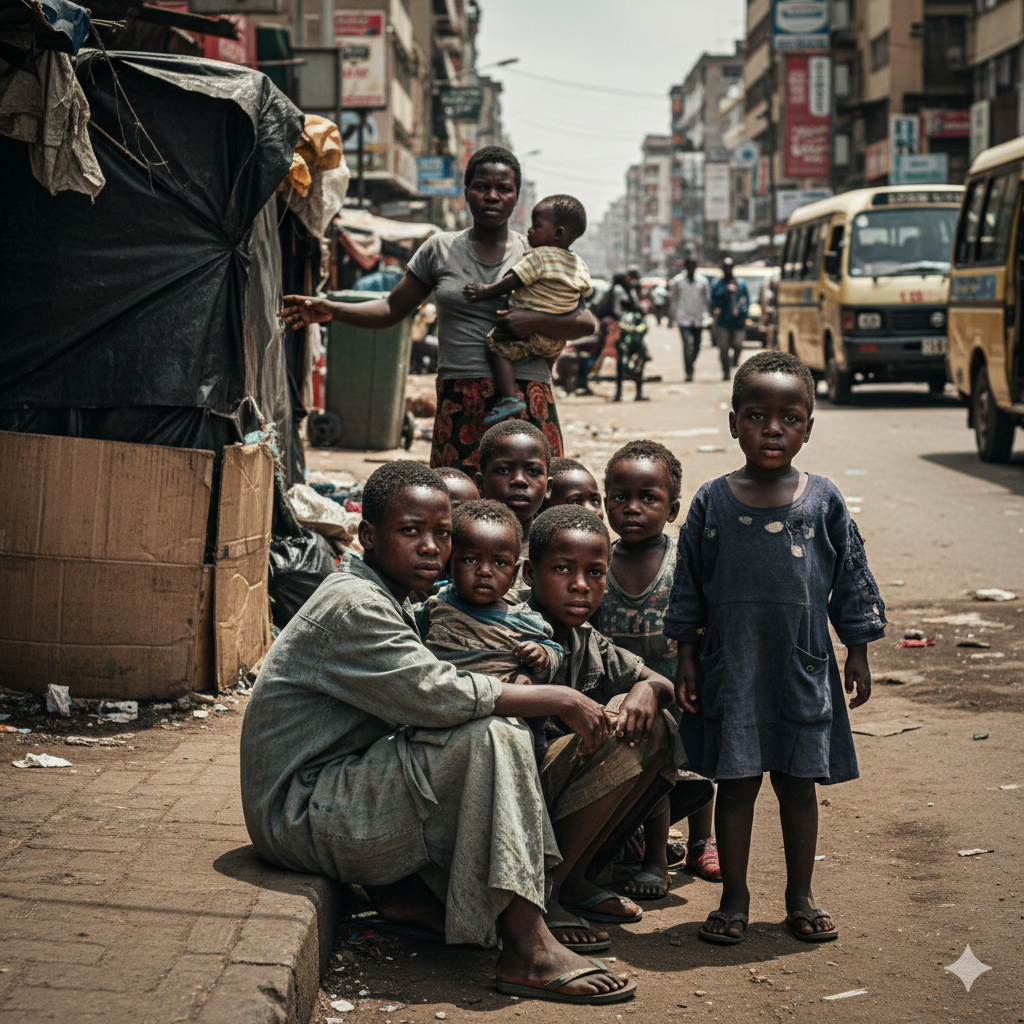 Street kids/AI illustration






