Kenya is intensifying efforts to build a resilient, self-reliant health system anchored in local research, vaccine manufacturing and digital health solutions, Cabinet Secretary for Health Aden Duale has announced.
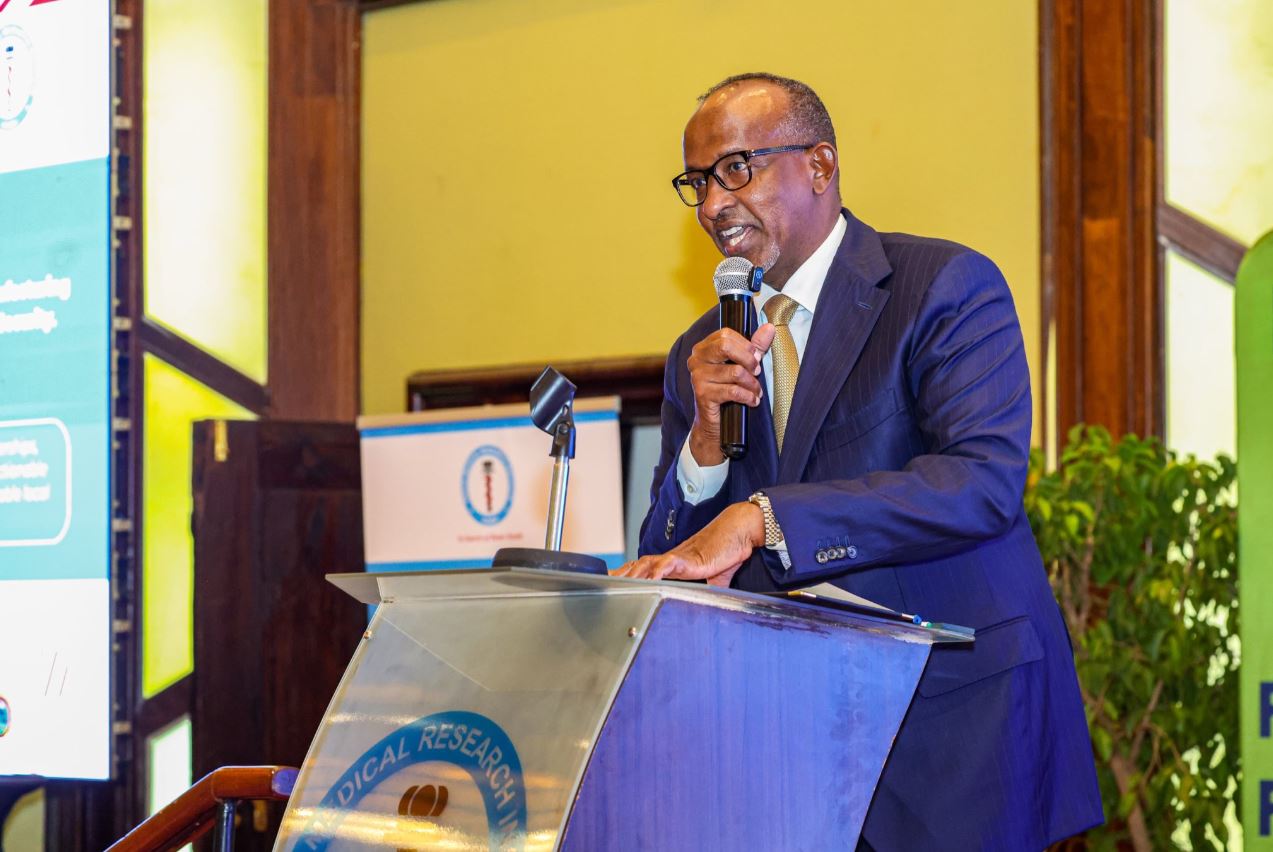
Speaking at the KEMRI Annual Scientific and Health Conference in Nairobi, Duale emphasised that health is a cornerstone of the government’s Bottom-Up Economic Agenda, with Universal Health Coverage at its centre.
“Health is a very key pillar of the Bottom-Up Economic Agenda of our administration. Our approach is clear: we want a health system that is accessible, affordable, efficient and locally anchored, while protecting families from catastrophic health expenditure,” the CS said.
He outlined four pillars underpinning Kenya’s UHC strategy: sustainable health financing, a robust healthcare workforce, community-based care and a digital health ecosystem.
Duale said the government has leveraged technology to track hospital bed occupancy in public, private and faith-based facilities through the Bed Access Room app, significantly reducing incidents of patients sleeping on hospital floors.
“This digital health system ensures hospitals operate efficiently. For instance, Kenyatta Hospital, with a bed capacity of 1,800, can now be monitored in real time, avoiding overcapacity admissions that were common before digitisation,” he said.
The CS further highlighted the government’s commitment to strengthening Kenya’s scientific, research and industrial capacity to support vaccine research, development and local manufacturing.
“It’s not just about science. It’s about health security, economic competitiveness, industrial growth, and job creation,” he said.
The government has also established the State Department for Science, Research and Innovation, implemented a 10-year Science, Research and Innovation Master Plan (2026–2036), and committed to increasing national investment in research from 0.8 per cent to 2 per cent of GDP.
“Our deliberate positioning of Kenya as a regional hub for health products and vaccine manufacturing is anchored by KEMRI, the Kenya Biobank Institute, universities and private biotechnology partners. Local manufacturing is not an option, it’s a strategic necessity for health, security, and economic transformation,” Duale said.
The CS noted Africa’s reliance on imported vaccines, with 99 per cent of vaccines used on the continent sourced externally.
He recalled that the COVID-19 pandemic exposed this vulnerability, prompting Kenya to prioritise domestic vaccine production. He stressed that by 2030, the country aims to graduate from external vaccine support under the Global Alliance for Vaccines and move decisively towards vaccine independence.
“The lesson from COVID-19 is clear: unless we are self-sufficient, future pandemics will leave us waiting while developed countries prioritise their citizens. Kenya Biobank aims to ensure that 60–70 per cent of vaccines can be locally manufactured,” he said.
KEMRI Director General Elijah Songok emphasised the importance of domestic vaccine capability, citing the need for African countries to take ownership of vaccine production.
“One of the lessons we learned is that without vaccines produced in Africa, we will continue playing catch-up. We must prepare for the next pandemic,” he said.
Songok also highlighted the significance of genotyping, molecular immunity and clinical trials in developing vaccines tailored to local populations.
Kenya BioVax Initiative CEO Wesley Ronoh described the Kenya Biobank as a major step towards enhancing local vaccine capacity.
“It provides the opportunity to produce vaccines locally, progressing toward the vaccine market while reducing reliance on imports. Greater investment is required to realise this vision,” he said.
Ondari Mogeni, associate research scientist at the International Vaccine Institute, stressed the importance of translating research into practical solutions. He cited the IQATE oral colorectal vaccine developed locally and highlighted the need for government and industry support to make vaccines accessible and affordable.
“We aim to build capability, ensure sustainability, and create a stable vaccine market across Africa,” he said.
Science for Africa Foundation CEO Tom Kariuki underscored the transformative role of science and innovation in vaccine development and public health.
“Vaccines are among the greatest innovations, saving billions of lives. Africa must invest in research, clinical trials, and skilled workforce development to translate discoveries into tangible benefits,” he said.
Duale urged policymakers, researchers and private sector partners to sustain investment in science and local manufacturing, intensify mission-oriented research and seize partnership opportunities to create jobs and deliver quality products.
“As we engage over the next three days, from genomics to natural products, from noncommunicable diseases to precision medicine, think boldly, collaborate deeply, and act decisively. Aligning science, policy, and investment will secure the health of our people and Kenya’s place in the global knowledge and manufacturing economy,” he said.
The three-day conference brings together policymakers, scientists, researchers and industry players to deliberate on strategies for linking research to industry, advancing local vaccine manufacturing and building a sustainable health ecosystem for Kenya and the region.