
A report by the Institute of Economic Affairs (IEA) has flagged a Sh116 billion funding gap that is undermining the success of the Social Health Authority (SHA).
The analysis, released on Tuesday, laid bare the scale of the crisis, portraying a system struggling with sustainability and capacity constraints.
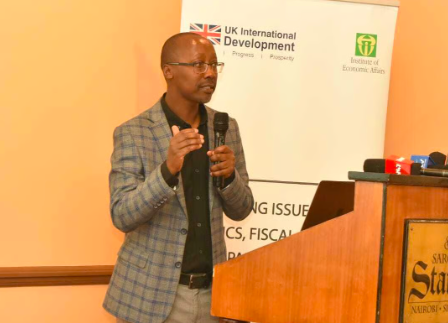
“The standard has to be that with the comprehensive SHA benefit package, there should be enough money to sustain it,” said IEA Programmes Coordinator John Mutua.
Mutua noted that although SHA is mandatory on paper, gaps in primary healthcare (PHC) capacity are weakening its effectiveness.
Speaking during an assessment of SHA’s design and implementation, he said patients are bypassing primary healthcare facilities in favour of higher-level hospitals, putting further strain on the system.
“Many people ignore the Primary Healthcare Fund and take patients to Level Four or Five hospitals because of the lack of specialists, and this contributes to the strain on SHA,” he said.
Conducted between November 2025 and January 2026, the assessment examined the performance of SHA’s three funds; the Primary Health Care Fund (PHC Fund), Social Health Insurance Fund (SHIF), and Emergency, Chronic and Critical Illness Fund (ECCIF); through the lens of four core components of any social health insurance scheme: financing, pooling, strategic purchasing, and administration.
Mutua emphasised that while SHA is legally mandatory, operational gaps are hindering its success. “Government reports show that SHA is working, but individuals say it is not. We have operational ability gaps in the system,” he said.
PHC facilities remain poorly resourced and often lack specialist services, despite the PHC Fund being intended as the first point of care.
As a result, patients frequently opt for Level Four and Five hospitals, putting pressure on higher-level facilities and weakening the referral-based model that SHA depends on.
“For SHA to work, primary healthcare must work,” Mutua said, noting that routine bypassing of PHC facilities has significantly affected the performance of the health financing system.
“These gaps are not about policy intent, but about execution.”
The assessment found that SHA faces significant funding gaps across all three funds, driven by low compliance rates estimated at just 18% and weaknesses in the means-testing tool, raising concerns about fiscal sustainability.
An ambitious but fiscally misaligned benefit package also creates risks in service delivery, given limited resources and system capacity.
"A crisis in claims processing and reimbursements is disrupting facility operations and health service delivery," Mutua said.
According to the assessment, operational and capacity gaps including sub-optimal digital connectivity, understaffing of specialists, and inadequate health infrastructure, persist despite heavy investment in technology.
The IEA also flagged governance risks, funding gaps, and equity concerns in SHA’s rollout. Kenya’s transition to SHA represents one of the most consequential health financing reforms in recent years, designed to anchor Universal Health Coverage.
Yet public debate has intensified amid concerns over design, implementation, and governance.
The assessment noted that while SHA has made progress, including the digital registration of over 29 million Kenyans, weaknesses in execution particularly funding gaps, low compliance, and means-testing challenges threaten its sustainability and effectiveness.







