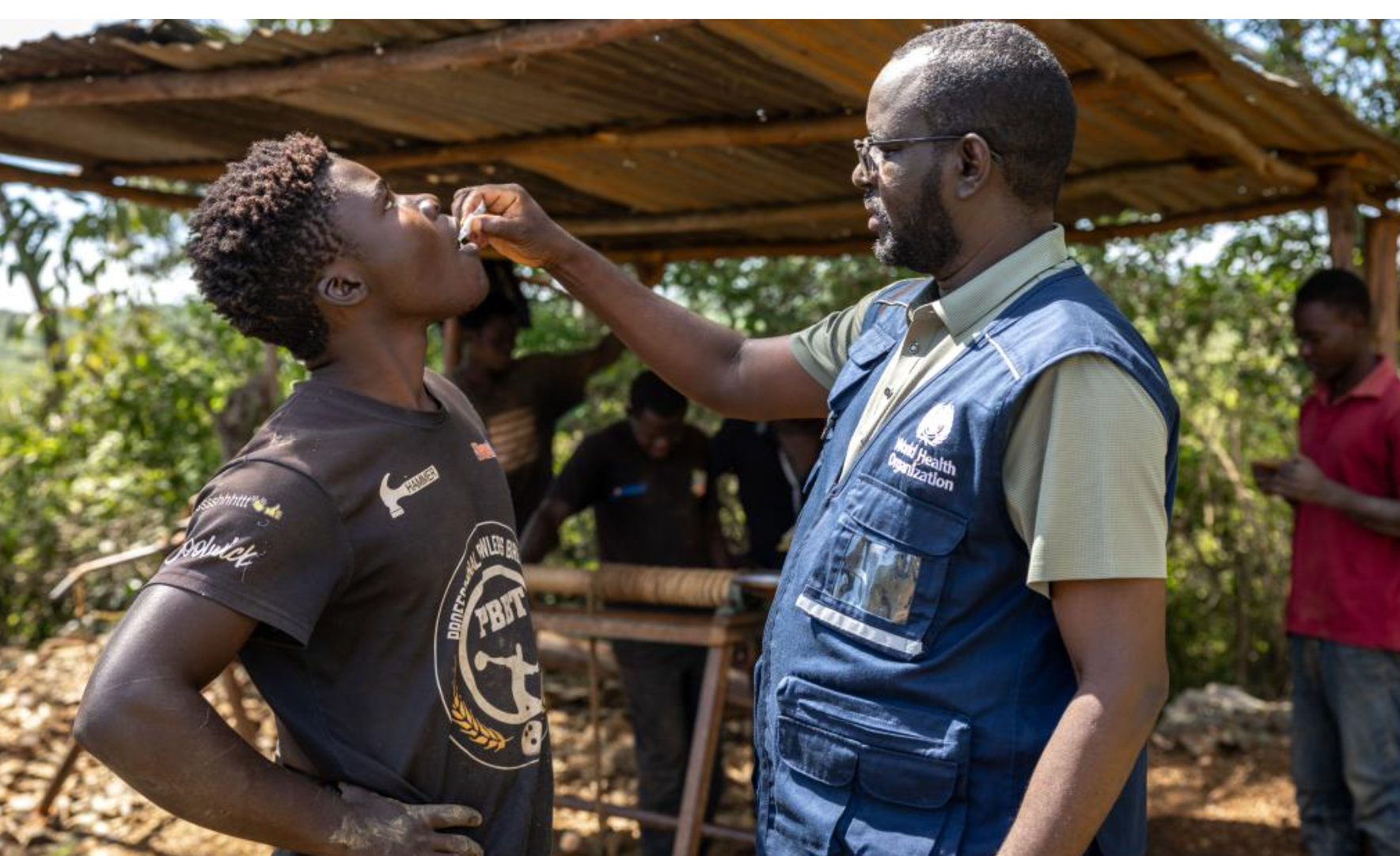
 A man receives cholera vaccine during a recent drive. Photo/ WHO
This is the first time in more than three years.
The move follows a sharp increase in global vaccine supply, ending a period when countries like Kenya relied mainly on reactive vaccination during outbreaks.
The World Health Organization (WHO), Unicef and Gavi, said global stocks of oral cholera vaccine (OCV) have reached levels sufficient to restart preventive campaigns.
These campaigns were halted in 2022 after a surge in global cholera cases drained supplies and forced health authorities to prioritise outbreak response.
Mozambique has become the first country to restart preventive vaccination. Bangladesh and the Democratic Republic of the Congo are scheduled to follow.
The restart comes as Kenya continues to report cholera cases in multiple counties, often linked to floods, poor sanitation and unsafe water sources.
In October last year, more than 231 cases and 13 deaths were reported in three counties, including Narok, one of the hardest hit.
Kenya has relied on emergency vaccination drives in recent years, rather than preventive campaigns, due to global vaccine shortages.
Some 239 341 people were vaccinated that month during a two-week campaign, achieving an administrative coverage of 93.7 per cent.
The global agencies said a first allocation of 20 million doses is now being deployed for preventive campaigns. Of these, 3.6 million doses have been delivered to Mozambique.
Another 6.1 million doses have gone to the Democratic Republic of the Congo, which is facing major outbreaks. A further 10.3 million doses are planned for delivery to Bangladesh.
The scale-up follows years of effort to increase global production. Annual global supply of oral cholera vaccines has doubled from 35 million doses in 2022 to nearly 70 million doses in 2025. The vaccines are financed by Gavi and procured and delivered by Unicef.
“Global vaccine shortages forced us into a cycle of reacting to cholera outbreaks instead of preventing them. We are now in a stronger position to break that cycle," WHO director general Tedros Ghebreyesus said.
"I thank EUBiologics, currently the only manufacturer producing cholera vaccines at the scale needed for mass vaccination campaigns, for its efforts, and urge others to enter this vital space. These vaccines will save lives,” Kenya is among countries that could benefit from restored preventive vaccination."
The country has experienced recurrent cholera outbreaks in recent years, especially during rainy seasons.
On Wednesday, the Kenya Meteorological Department said there is a high risk of an outbreak in the long rains that begin next month.
Gavi CEO Dr Sania Nishtar said the surge in cases exposed weaknesses in global preparedness.
“The multi-year surge in cholera cases and resulting unprecedented demand for vaccines were stark reminders that sustainable, accessible vaccine supply is a global public good – and the world cannot afford complacency,” she said.
“We are grateful to our partners and manufacturers, particularly EUBiologics, for the collaboration that has made the resumption of these essential preventive campaigns possible, and to Gavi’s donors, whose support enables us to finance the global OCV stockpile and life-saving outbreak and preventive campaigns.”
Unicef executive director Catherine Russell said preventive vaccination would help protect children, who are often most affected during outbreaks.
“For the first time in years, this increase in vaccines will allow us to better prevent large-scale cholera emergencies,” she said.
“Resuming preventive cholera vaccination will protect children and help stop this highly contagious disease in its tracks. But it must go hand in hand with other efforts, including better access to safe water and basic sanitation.”
The three countries selected for the first preventive campaigns were chosen using criteria developed by the Global Task Force for Cholera Control.
The task force brings together more than 50 organisations and aims to ensure vaccines are distributed equitably and transparently.
“This milestone shows the power of bringing together diverse partners to build a more reliable response to cholera,” said Dr Ilesh Jani, chair of the task force’s steering committee.
“Preventive vaccination helps shield communities and buys critical time. However, lasting progress will depend on long-term investment in infrastructure, for which political commitment is indispensable.”
Cholera spreads through contaminated food and water. It causes severe diarrhoea and dehydration and can be fatal if untreated. The disease mainly affects communities without access to safe water and sanitation. These conditions are common in areas affected by poverty, conflict, or climate shocks.
More than 600,000 cases of cholera or acute watery diarrhoea and nearly 7,600 deaths were reported to WHO from 33 countries last year.