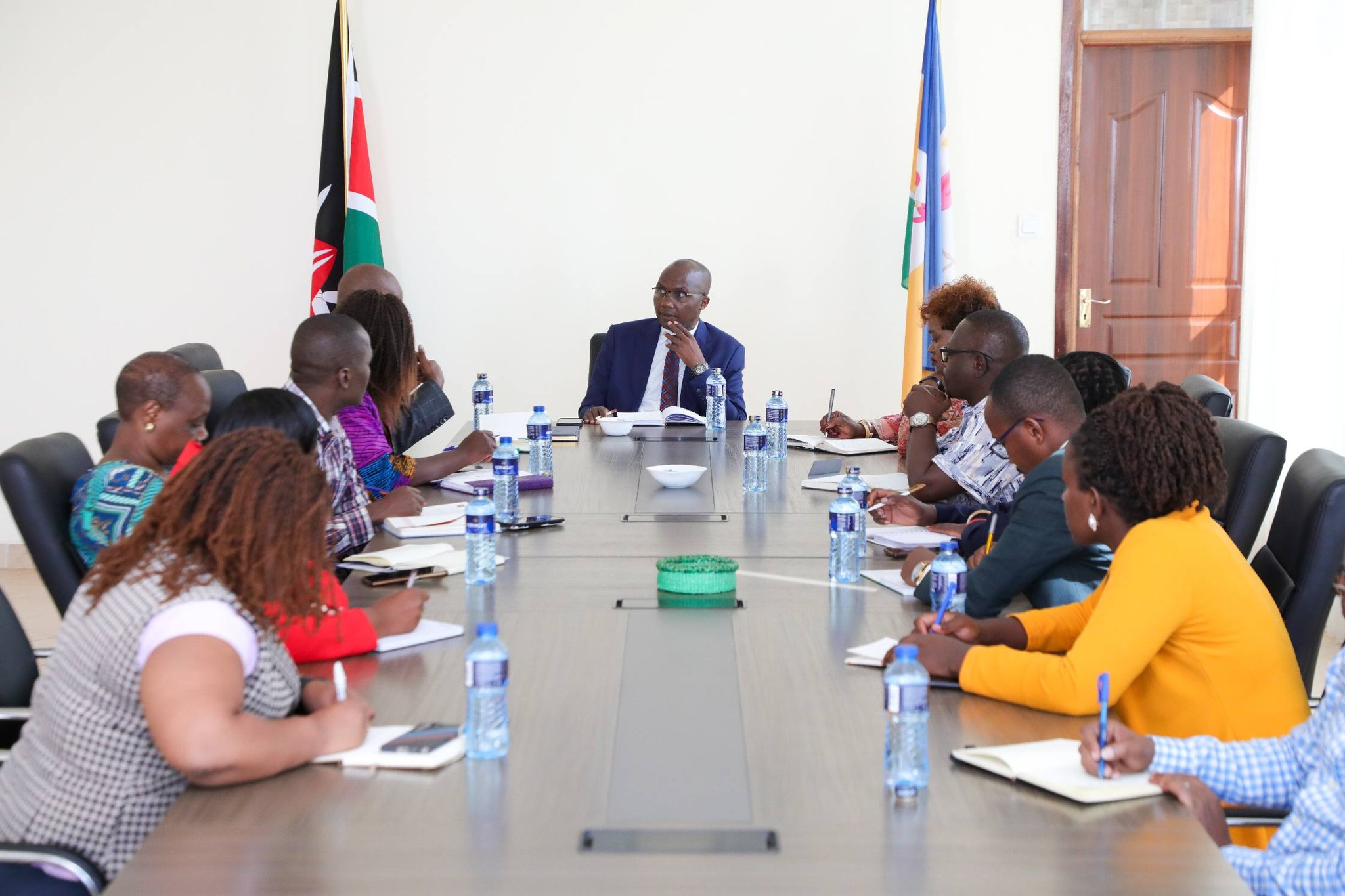
The government has reiterated its commitment to enhancing opportunities and capacity for women and other vulnerable groups to participate in national development and to reinforce evidence-based decision-making on gender issues.
Secretary Administrator at the State Department for Gender and Affirmative Action Moses Ivuto noted that the government had launched the 2023–2027 plan, which seeks to fulfil the constitutional mandate of advancing gender equality, non-discrimination and the empowerment of all women and girls.
Ivuto noted that the gender sector will play a crucial role in ensuring the achievement of aspirations and various interventions under Kenya Vision 2030.
The secretary made the remarks in Nakuru during a meeting with Deputy Governor David Kones to finalise preparations for the upcoming International Women’s Day celebrations slated for March 8, which will be hosted by the county.
This year’s global theme is “Rights. Justice. Action. For ALL Women and Girls.”
The official said that Kenya’s prosperity and stability depend on unlocking the full potential of women and girls, and assured that the government would continue prioritising their inclusion.
While noting that no country could prosper sustainably when it excludes more than half of its population, the official said women’s empowerment was not just a human right, but also good governance, good security and the foundation of a healthy society.
Ivuto stressed that deliberate action was required to ensure women were fully engaged in new and emerging spaces and assured that the government had put in place a robust policy regime to enable it to achieve gender equality and empowerment.
Kones reaffirmed the county’s commitment to gender equality, noting that, under the leadership of Governor Susan Kihika, Nakuru continues to champion inclusive policies that empower women in leadership, business and community development.
He urged employers in both the public and private sectors to conduct regular gender audits to improve equity in workplaces and identify gender disparities in recruitment, promotion, pay, policies, practices and organisational culture.
He added that by addressing gender inequalities, organisations could contribute to broader national development goals, improve workplace dynamics and promote a more equitable and inclusive society.
He said Nakuru's county government unveiled a new gender policy aimed at promoting equality and addressing gender imbalances.
The gender policy is crafted to push for the realisation of sustainable development and offers guidelines for gender-responsive planning and budgeting, while providing a legal framework to fast-track initiatives that seek to promote gender inclusion and equality.
He explained that the new framework aims to embed gender considerations into the county’s development initiatives and tackle issues including gender-based violence, female genital mutilation.
He pledged that the county was determined to ensure gender parity, especially in recruitment and appointments, and underscored the importance of investing in women as a fundamental human rights issue. He further emphasised the need for urgent action to address barriers to women’s economic empowerment and participation.
Kones said that by ensuring safety, access to quality education and the empowerment of women and girls, they would be liberated from fear and violence to be able to unleash their full potential, thereby contributing significantly to the growth and advancement of society.
Kones added that achieving gender equality and empowering all women and girls by 2030 is Goal number 5 of the 17 Sustainable Development Goals, but the reality is that gender parity remains far off the mark.