The government will spend Sh4 billion every month to procure food and non-food items, livestock feeds and water as part of ongoing drought response measures.
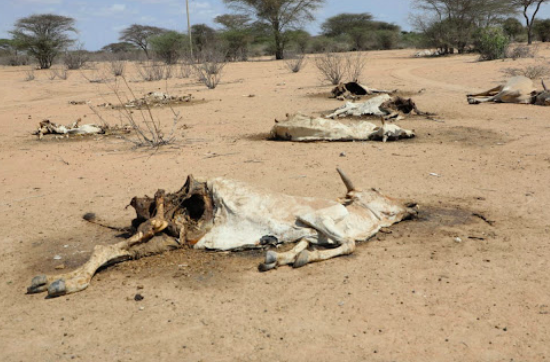
The funds will go towards food and water for people, livestock and wildlife in areas hit by drought.
In addition to the monthly allocation, the government has asked development partners to top up the response with an additional Sh2 billion, saying the combined funding would strengthen the effectiveness of drought interventions.
Speaking during a press conference on Monday, Deputy President Kithure Kindiki said up to 23 counties are currently in need of drought response measures, with about 3.3 million people affected.
“We also need food to reach schools to ensure that learning is not interrupted,” Kindiki said, adding that the government has reviewed ongoing interventions and resolved to diversify food supplies to address the needs of “sensitive and special sections of society.”
He said county drought steering committees will be fully activated to improve coordination and address delays in aid delivery.
“Food is taking too long to reach the population. We have directed that the committees be activated to deal with last-mile delivery,” Kindiki said.
The Deputy President added that the government is also scaling up water interventions and has directed that procurement and delivery processes be expedited.
“The government is seized of the situation, and we assure Kenyans that we will spare the necessary resources to mitigate the impact of the drought,” he said.
According to the National Drought Management Authority (NDMA), the drought has affected an estimated 2.1 million people across arid and semi-arid counties.
In a statement issued to newsrooms last week, the Kenya Red Cross Society said eight counties are currently experiencing a critical phase of drought, marked by severe deterioration in nutrition, particularly among children.
The counties in the critical category are Turkana, Mandera, Samburu, Garissa, Isiolo, Marsabit (North Horr and Laisamis), West Pokot (East) and Baringo (Tiaty).
Wajir, Tana River, and West Pokot (West) are classified as being in a serious phase.
The humanitarian agency estimates that about 784,000 children are malnourished, while nearly 300,000 households lack adequate food supplies.
The situation follows three consecutive failed rainy seasons: the October to December 2024 short rains, the March to May 2025 long rains, and the October to December 2025 short rains.