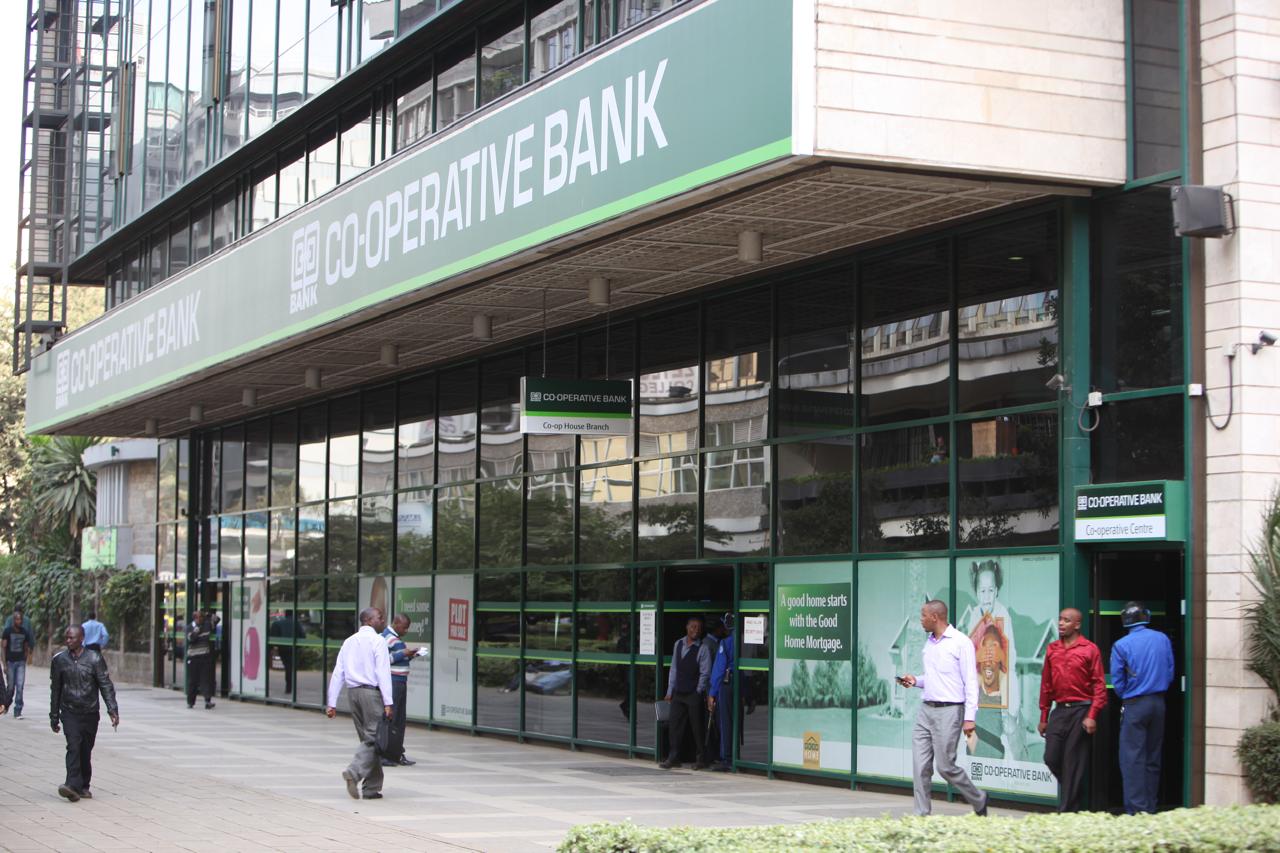
Global ratings agency Moody’s Investors Service has upgraded its credit outlook on key Kenyan banks, reflecting improved macroeconomic conditions in the country, including a more stable shilling, easing lending rates, and lower default risks that are bolstering confidence in the financial system.
The
move comes on the heels of Moody’s sovereign
credit upgrade of Kenya to B3 from Caa1, the highest level since July 2023, citing strengthened
external liquidity and reduced near-term default risk.
The agency raised the country’s rating from
Caa1 to B3 in late January, six notches below investment grade, while revising the
outlook to stable from positive.
In
its latest ratings action, Moody’s has
raised the long-term deposit ratings of three major Kenyan banks — Co-operative
Bank of Kenya (Coop Bank), Kenya Commercial Bank (KCB) Group and Equity Bank
Kenya — to B3 from Caa1, and changed
their outlooks to stable from positive.
According
to the rating firm, Kenya’s macroeconomic backdrop has shifted appreciably in recent
months.
Advertisement
Advertisement
“After
a period of sharp volatility, the Kenyan
shilling has stabilised, supported by higher foreign-exchange reserves
and inflows, helping to anchor inflation expectations and reduce
currency-related risk.”
Until
this action, Moody’s had placed long-term deposit and senior unsecured ratings
for the three banks at Caa1 with
a Positive outlook, a
non-investment-grade designation signaling very high credit risk but with
potential for improvement.
The
upgrade to B3 moves the banks
higher on Moody’s speculative grade scale — still below investment grade but
indicating a reduction in assessed
credit risk relative to the prior category.
The
Stable outlook suggests Moody’s now sees the banks’ credit profiles as less
susceptible to short-term deterioration.
“This
action reflects closer alignment with
the sovereign’s improved credit fundamentals — particularly stronger
liquidity and access to finance — which, in turn, limits direct and indirect
risks to the lenders’ balance sheets.”
The
rating firm cited steady performance by the country’s top banks in the first
nine months of the year, where they generated a combined net profit of Sh120
billion, with Cooperative Bank Group posting Sh21.6 billion, KCB Sh47.3 billion
and Equity at Sh51.1 billion.
Total
operating income reached Sh633.8 billion, a 6.7 per cent increase from 2024.
Equity Group maintained its position as the largest operator by revenue at Sh156.3
billion, with KCB Group close behind at Sh149.4 billion.
Together,
these two institutions accounted for 48.2 per cent of all operating income in
the sector. Cooperative Bank delivered the fastest operating income
growth at 13.9 per cent.
This is attributed to sound monetary
policies employed recently, including the cutting of Kenya’s Central Bank Rate (CBR) over a prolonged easing cycle — marking at
least nine consecutive policy rate cuts
culminating in a drop to nine per cent.
“This
reflects a broader effort to stimulate private sector lending and support
economic activity amid stable inflation and resilient economic conditions.”
Banks
have commenced adjusting their loan pricing under the new framework to align
with this lower benchmark.
Kenya
is also implementing significant
regulatory reforms to bank capital requirements, aimed at strengthening
financial stability and resilience.
The Business Laws (Amendment) Act, 2024, mandates an increase in the minimum core capital requirement for commercial banks in Kenya from Sh1 billion to Sh10 billion by 2029. This increase is being phased in progressively to give banks sufficient time to raise the required capital.
“The hike is intended to bolster bank resilience, protect the financial system against shocks, enhance risk absorption, and enable banks to support larger-scale financing and economic development. As smaller banks work to meet these thresholds, there may be increased mergers, acquisitions, and capital-raising activities in the sector.”
Moody’s highlighted the
relevance of Kenya introducing the Kenya Shilling Overnight
Interbank Average Rate
(KENSONIA) in September last year,saying
that thereform modernizes the
country’s monetary policy transmission mechanism by shifting from the traditional
Central Bank Rate (CBR) to a market-determined benchmark,
similar to global standards like the UK’s SONIA or the US’s SOFR.
Under the Risk-Based Credit Pricing Model, the interest rate charged to borrowers will be KESONIA + a borrower-specific premium (“K”), improving transparency and aligning lending costs with actual market conditions and borrower risk profiles.
On Friday, another rating agency, S&P, indicated that Africa’s
banking sector will remain resilient in 2026, supported by favourable economic
and financing conditions that are projected to sustain credit growth and keep
asset quality stable.
The latest outlook report shows that about 50 per cent of bank
ratings across the continent carry a positive outlook this year, largely
reflecting improving sovereign credit profiles, particularly in Kenya, Nigeria and South Africa.