
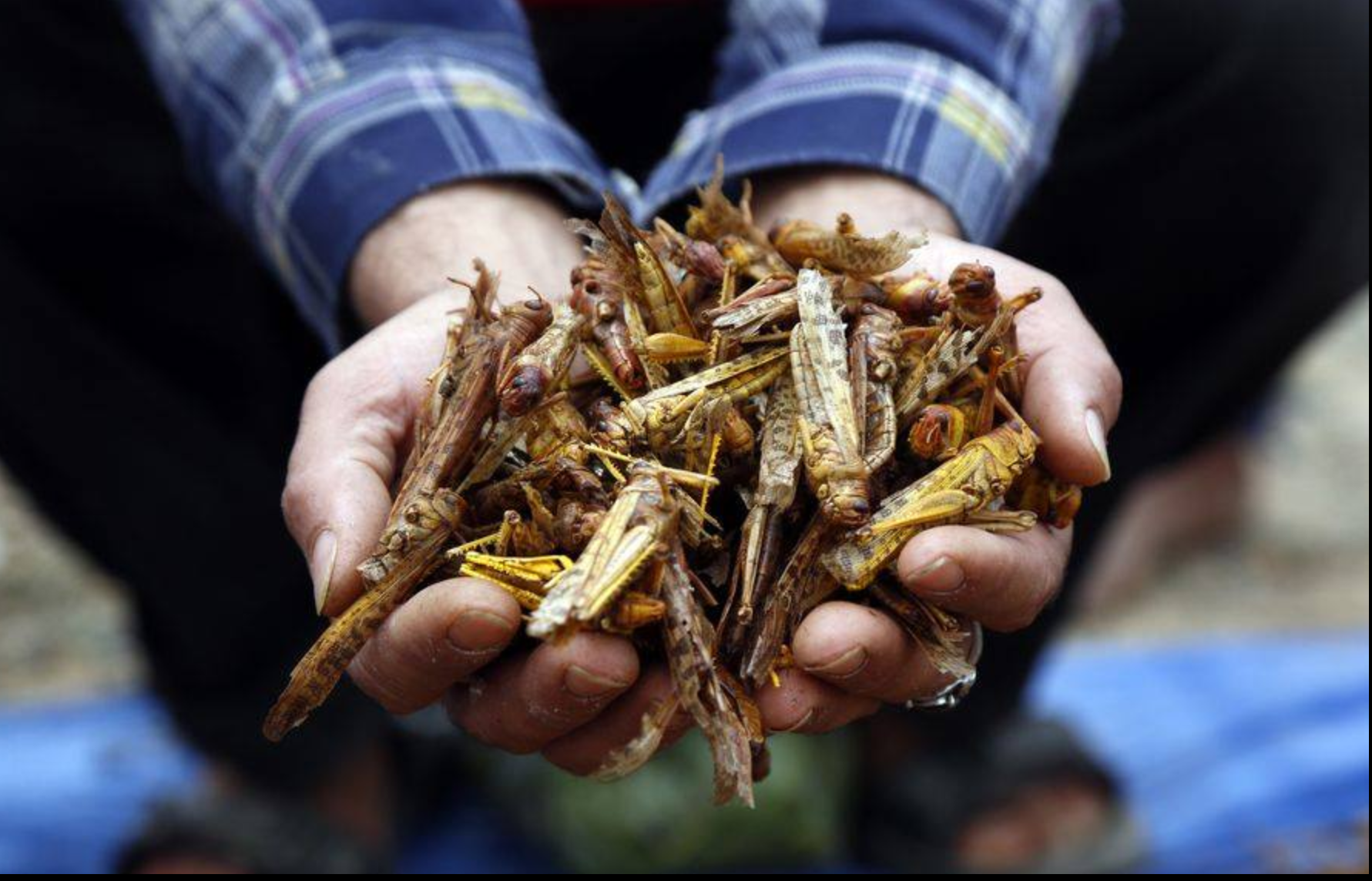
 Locusts. Their oils often go to waste when the insects are used for other purposes.
Kenyan researchers suggest one secret to fighting off mosquitoes may lie within the bodies of other insects.
A new study reveals
that extracting oil from termites and locusts, then mixing it with common
plant-based repellents, doubles the effectiveness of these natural repellents.
This eco-friendly discovery
comes at a critical time. In Kenya alone, malaria is responsible for roughly
3.5 million new clinical cases and more than10,000 deaths every year.
Furthermore, mosquitoes are increasingly developing resistance to the synthetic
pesticides currently used on bed nets.
The combination is as
powerful as commonly used synthetic chemicals that the world is trying to eliminate,
according to scientists from the Kasarani-based International Centre of Insect
Physiology and Ecology (Icipe).
Synthetic chemicals
are effective, but they sometimes cause skin irritations and allergic reactions
and so a natural replacement is safer.
“Botanical repellents
derived from natural sources such as citronella, neem, eucalyptus and
lemongrass oils are increasingly favoured due to their biodegradability,
ecological safety and consumer preference for natural products,” the
researchers wrote in a paper published last week in the Scientific Reports
journal.
The problem with many
plant-based repellents, however, is that they evaporate too quickly and so
provide only limited protection.
The researchers
theorised that because insect oils are heavy and stable, they can trap the
active plant scents and release them slowly over time instead of letting them
vanish into the air all at once. It is similar to how a high-quality perfume
uses certain base oils to make the scent last all day.
“Yet, their potential
role in extending the protection duration, improving adherence and stabilising
natural repellents has not been systematically investigated,” they wrote in
their paper titled “Harnessing insect-derived oils for enhanced efficacy of
plant-based repellents against disease-transmitting mosquitoes.”
The Icipe team, led by
senior research officer Dr John Ochola, used standard laboratory techniques to
extract oils from desert locusts, bush crickets and termites. These insects are
already farmed for food, and the oils are often a byproduct of that process
that would otherwise go to waste.
The plant essential
oils, such as citronella and lemon eucalyptus, were extracted separately using
similar methods.
Dr Ochola’s team then
mixed the plant and insect oils together in different proportions.
To see if the blend
actually worked, a small amount of the blend was applied to volunteers’ arms,
which were then exposed to a cage full of hungry, disease-free mosquitoes.
Researchers measured
the Complete Protection Time (CPT), which is the length of time before a
mosquito finally lands and tries to bite.
This study's
breakthrough was using insect oils to make those natural scents
"stick" to the skin longer.
In these tests,
the 50-50 termite and citronella mix kept mosquitoes away for about three and a
half hours. This is nearly identical to the protection time of the chemical
repellent DEET, the world’s most widely used synthetic chemical used for for
repelling biting insects such as mosquitoes.
The researchers said
insect oils are not only effective but also eco-friendly. These oils are often
a byproduct of the growing edible insect industry that raises insects for food and
animal feed. Instead of throwing the fats away, they can be repurposed into
life-saving medical products, they said.
The goal is to ensure the
protection is reliable enough to prevent the transmission of dangerous
parasites.
"In addition to repelling or killing the mosquitoes, they could prevent human-mosquito interaction and prevent the transmission of malaria parasites or other vector born disease, ensuring protection is long enough to avoid mosquito bites and disease transmission,” the researchers said.




![Africa CDC Director General Dr Jean Kaseya at a past event. [Photo: Arthur Mbuguah, WHM]](https://cdn.radioafrica.digital/image/2026/10/8ced213c-affb-4dff-97ca-1b6bac1f958e.webp)