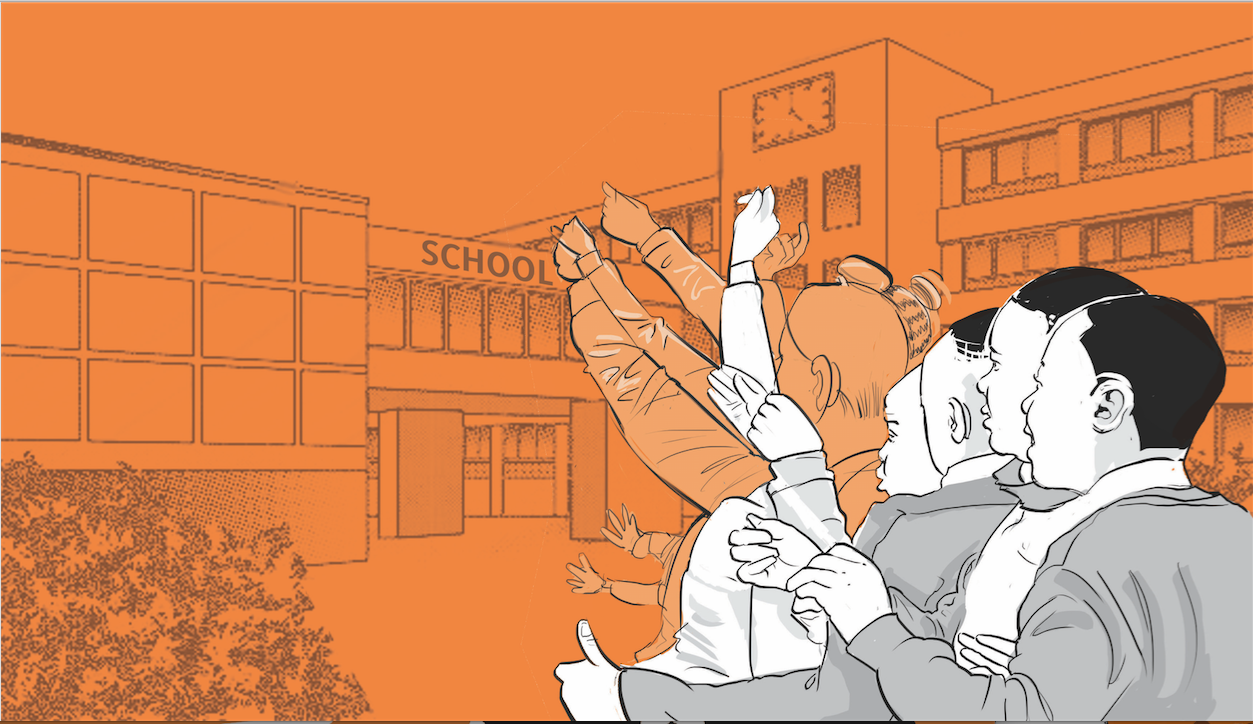
When Kenya passed the Basic Education Act in 2013, the message was explicit and powerful: education was henceforth no longer just a privilege of those who could afford it, but rather a compulsory right for every child.
By 2020, the government even stamped its feet down by introducing the 100 per cent Transition Policy. Again, the goal was simple and noble – to ensure that every child completing primary school level moved straight to secondary school, supported by government funding and a streamlined curriculum. The idea was to ensure that the government firmed up the closing of the equity gap in education, which had persisted for far too long.
But five years on, a major crack has appeared in the functioning of this foundational academic promise.
The apparent hiccup in the well-intentioned Transition Policy stems from an unintended side effect of how we categorise students. Currently, learners are essentially lumped into four distinct learning groups based solely on two factors: their family’s bank balance and the learner’s own exam scores.
Effectively, therefore, we have the “bright and needy”, the “bright and not needy”, and those who are not necessarily top academic performers, again comprehensively divided into two more bands by their financial status.
Whereas this categorisation might seem like a frugal way of reorganising resources, it has, nonetheless, created a very desperate situation for the “not bright and needy” learners.
Today, most government bursaries and scholarships, even those offered by private philanthropic foundations and such outfits to supplement public funding programmes, are strictly merit-based, where merit implies academic achievement on the part of the learner.
In other words, if you are a high achiever, whether needy or not, you have a safety net for you. In a sharp contrast, though, woe betide you if you are a student who struggles academically and comes from a family with no financial stamina. You simply immerse into invisibility and oblivion.
For this latter vulnerable group of learners, the 100 per cent transition is nothing more than a broad daylight myth. Why? Without the grades to win a bursary – public or otherwise – or family wealth to pay the requisite fees at the next academic rung, these children are the first casualties of the deception that is the much hyped 100 per cent Transition Policy. They simply fall through the cracks. And where they go is actually a begging question. Never mind that they are in their hundreds of thousands, if not millions.
To remedy this situation, we need to move beyond the 'one-size-fits-all' meritocracy as it is empirically counterproductive. The real solutions require a shift in how Kenya distributes learning aid to its learners.
First, we must, for all intents and purposes, decouple financial support from subject grades and or exam results. If the law says education is a basic and compulsory right for all children, then a bursary should be a tool to unfetter access to quality education and fight poverty, as opposed to a trophy for high marks.
To that end, a review of the Basic Education Act, 2013 to address the glaring contradiction therein with Article 53(1) b of the constitution becomes a necessity if the envisioned parity in learning is to be realised. This will ensure that the “academically dim” and financially challenged school-going children are not treated any less but are assured of the same seat in a classroom as their high-scoring counterparts. After all, education remains the only all-time equaliser in our backyard.
Furthermore, we must embrace a broader view of what “transition” really is, how it looks like and what we want out of it for our children. We may be compelled to come to terms with the fact that not every child is genetically wired for a purely academic high school path.
By investing more resourcefully in vocational training, technical skills, talent nurturing and outsourcing, and similar options, we can provide a more holistic, richer and rewarding future, free of mental agony and physical strain for the children who might struggle with traditional subjects but are excellently dexterous.
Ultimately, the 100 per cent Transition Policy is a colourful dream that is currently limping because it forgets the most vulnerable and deserving cohort of learners. However, by refocusing our resources on household needs rather than just school report cards, we can turn this policy into a reality that leaves no Kenyan child behind. Otherwise, as it is, it harshly admonishes the fish for its inability to climb the tree. Nothing could be more unfair.
Social safeguards specialist, Nairobi