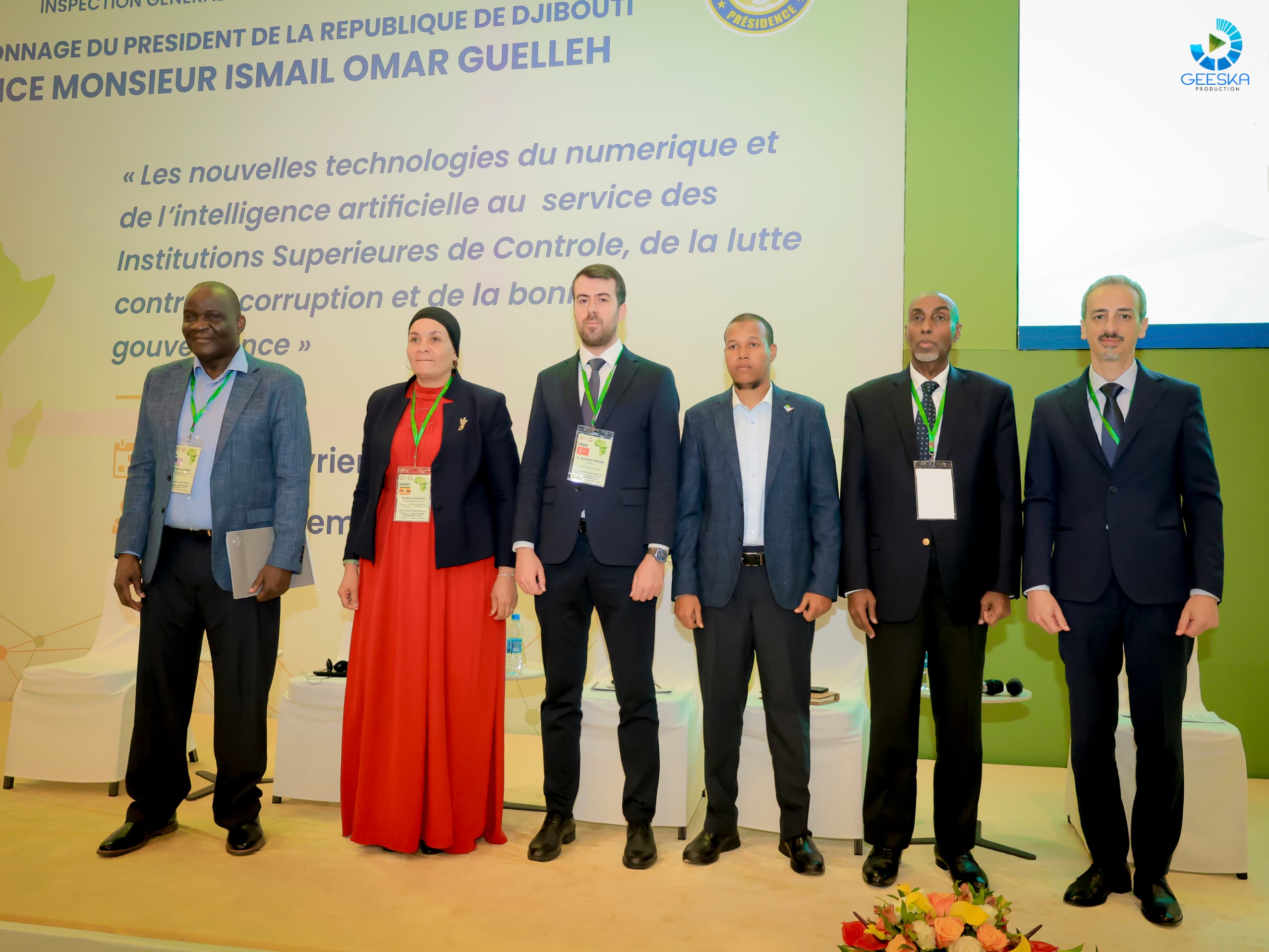
 EACC CEO Abdi Mohamud (second from left) alongside other delegates attending the 13th International Syposium of FIGE in Djibouti/HANDOUT
The Ethics and Anti-Corruption Commission (EACC) has urged African enforcement agencies to accelerate the adoption of artificial intelligence (AI) and digital technologies to strengthen efforts against corruption and financial crimes.
Speaking at the 13th International Symposium of the Forum of State Inspections of Africa and Assimilated Institutions (FIGE) in Djibouti, EACC Chief Executive Officer Abdi Mohamud highlighted the growing importance of innovation as criminal networks become more sophisticated.
Addressing delegates at the symposium, held from February 3 to 5, 2026, Mohamud said emerging technologies, including AI, blockchain, and data mining tools, are increasingly important in detecting, investigating, and preventing corruption-related offences.
He noted that financial crimes are evolving rapidly, particularly with the rise of virtual assets and complex digital transactions, and stressed that enforcement agencies need to keep pace.
Drawing from Kenya’s experience, Mohamud outlined the EACC’s efforts to leverage technology to enhance investigations, resource management, and institutional efficiency.
He cited the country’s Digital Super Highway initiative, which has expanded internet connectivity and e-government services, as providing opportunities for greater transparency in public service delivery.
According to Mohamud, digital platforms can reduce human discretion and improve traceability, making it harder for corrupt practices to go unnoticed.
He also highlighted that Kenya is among a few African countries that have enacted laws regulating virtual assets, providing a legal framework for innovation while addressing risks such as money laundering and fraud.
Mohamud cautioned, however, that technological progress must be matched with investment in technical skills within enforcement agencies.
“The use of artificial intelligence, blockchain, and data mining tools is essential to stay ahead in the investigation of crimes involving virtual currencies and complex financial transactions,” he said, adding that institutions must continuously upgrade their technical capacity to respond effectively to emerging threats.
The EACC has already automated 58 per cent of its processes and is working toward full digitisation of its operations, supported by robust ICT infrastructure and a technology-driven strategic plan.
The Commission also employs internally developed digital systems to enhance controls in resource management and uses digital forensic tools to extract, analyse, and manage evidence from electronic devices.
Mohamud said wider application of AI could further improve the analysis of large datasets, enabling faster detection of suspicious transactions and patterns linked to corruption and fraud, while reducing investigation timelines.
He also announced that Kenya, through the EACC, will host the Centre for Anti-Corruption Studies and Research in Africa (CEREAC), scheduled for launch in June 2026 during the Annual General Meeting of the Association of Anti-Corruption Agencies of Africa (AAACA).
Mohamud encouraged African anti-corruption agencies to use the Centre to develop locally driven solutions to corruption and fraud.
The symposium, themed “New Digital Technologies Serving Audits and Control Institutions and Good Governance: What Contribution and What Limits,” was officially opened by Djibouti President Ismael Omar Guelleh.
Leaders and delegates highlighted the growing role of digital technologies and inter-agency cooperation in addressing transnational corruption. The conference brought together representatives from 24 African countries and several international partners.