Kenya’s healthcare system is edging closer to crisis as mounting debt repayments undermine spending on essential services, health advocates have warned.
The warning raises fresh doubts about the country’s ability to achieve Universal Health Coverage (UHC).
It was issued during the CSO Webinar on Africa Leadership for Health Sovereignty, a high-level forum convened by AIDS Healthcare Foundation (AHF) Africa alongside Africa Reach, WACI Health and Rana.
It brought together civil society leaders, policymakers and health experts to examine how debt, shrinking donor aid and weak domestic financing are undermining health systems across the continent, ahead of the African Union Heads of State Summit.
Participants described Kenya as trapped in a “fiscal trilemma” — forced to juggle ballooning public debt, growing development needs and rising public resistance to taxation.
The result, they said, is a slow but deliberate dismantling of the health system as debt servicing takes precedence over public welfare.
According to Parliament’s 2025 Medium term Debt Management Strategy, Kenya’s debt servicing costs are projected to hit Sh 1.87 trillion by June last year, consuming about 60 per cent of national revenue.
Health advocates argued that nearly all new borrowing is now being used to repay existing debt, leaving little fiscal space for healthcare, education and social protection.
“This is a direct trade-off between people and payments,” speakers at the webinar said, noting that the government is spending significantly more on interest payments than on the health of its citizens.
The pressure on Kenya’s health sector is being intensified by a sharp decline in external financing. Official Development Assistance to Africa is projected to fall by 70 per cent between 2021 and 2025, a contraction that has already had severe consequences in Kenya.
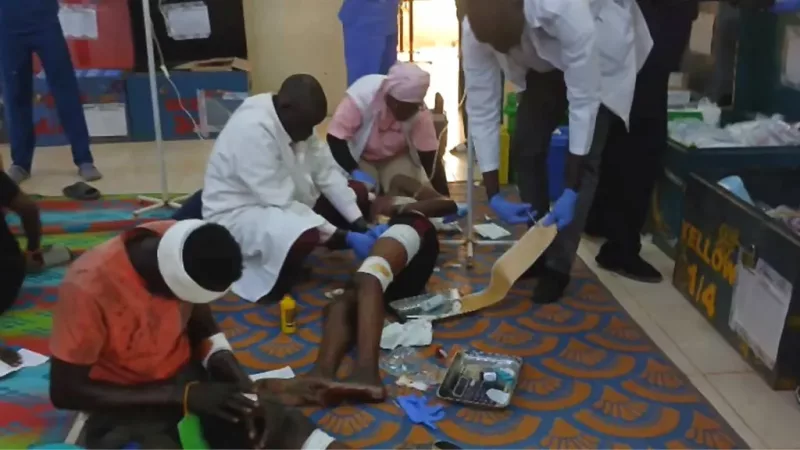
An estimated 54,000 health workers have lost their jobs following the termination of donor-funded programmes, weakening service delivery at community and facility levels.
Funding cuts to major global health initiatives have compounded the problem. Allocations to the Global Fund for HIV, tuberculosis and malaria dropped from Sh 28.7 billion in the 2024-25 financial year to Sh 17.3 billion in the latest budget, raising fears of setbacks in disease control and treatment outcomes.
The Kenyan experience, experts noted, reflects a wider continental emergency.
“Data from the Africa Centres for Disease Control and Prevention (Africa CDC) and the United Nations Economic Commission for Africa (Uneca) presented at the forum shows that Africa faces an annual health financing gap of $66 billion,” the advocates said.
Despite carrying 23 per cent of the global disease burden, the continent accounts for just one percent of global health expenditure.
Per capita health spending in most African countries ranges between $8 and $129, compared with about $4,000 in high-income nations.
Speakers said underinvestment in health is not only a social injustice but also an economic risk, pointing out that every dollar invested in health delivers a four-fold return in economic growth through increased productivity and reduced long-term costs.
“Africa is at a decisive moment to reshape the future of its health response,” AHF executive director Peninah Iutung said.
“We cannot beg our way out of a $43 per person deficit. Our leaders must renegotiate debt terms as a bloc to reclaim the fiscal space for health investments. Investing sustainably in health is providing security for the future of our nations.”