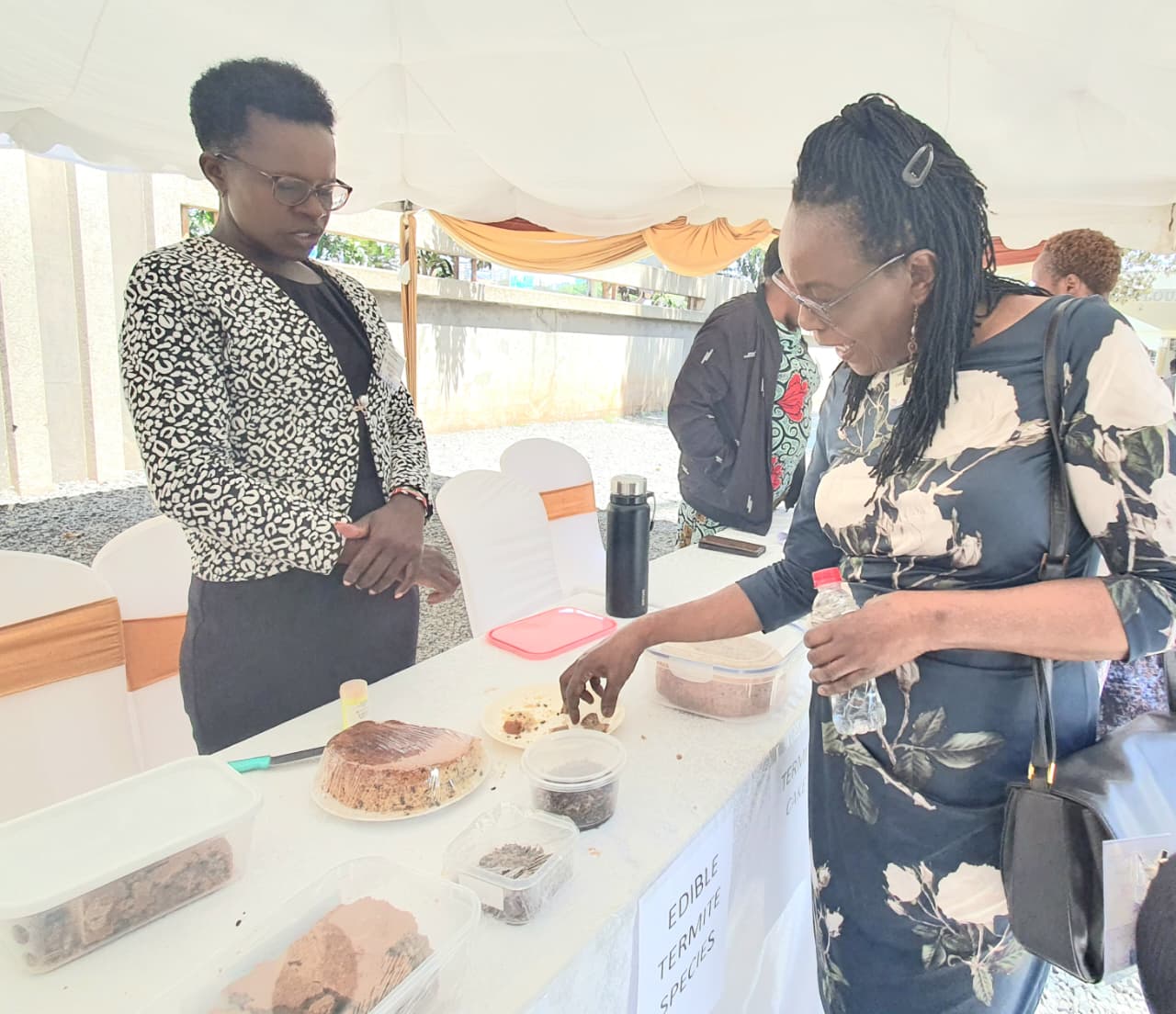
 Anne Nyandiala from the National Museums of Kenya’s invertebrate section, zoology department looks on as a visitor samples a cricket cake during exhibition on underutilised indigenous food/Gilbert Koech
A cake made from crickets and termites stole the spotlight at the National Museums of Kenya, highlighting a bold initiative to revive forgotten food treasures.
The cake was among indigenous foods such as millet, sorghum, Ethiopian dock and traditional vegetables showcased during a public exhibition, themed 'Histories and futures of under-utilised crops reimagined'.
It aimed to reconnect communities with resilient, culturally significant foods while inspiring innovation among young people.
Anne Nyandiala, from the museum’s invertebrate section, explained that insects like crickets and termites are not only highly nutritious but also offer opportunities for job creation and biodiversity conservation.
“When we assign value to our resources, we understand why we must conserve our environment,” she said.
Nyandiala encouraged youth to see insects as a source of livelihood.
“They can make flavoured cakes with termites and crickets, farm edible insects and incorporate them into porridges for children and the elderly. These foods are rich in protein, fatty acids, zinc and other minerals,” she said.
The project is a collaboration between the National Museums of Kenya, Moi University, the University of Lincoln, and the University of Nottingham, funded by the British Academy.
Researchers combine expertise in agriculture, nutrition, climate science and cultural heritage to highlight the value of underutilised foods.
Students from partner institutions play a central role, developing innovative food products, capturing cultural narratives and creating educational materials that blend historical knowledge with modern culinary creativity.
Regional exhibitions, such as those at Sot Technical Training Institute in Bomet county and Baringo National Polytechnic, feature digital storytelling, sensory evaluations and community engagement.
Dr Taita Terer, NMK director of the Directorate of National Repository and Research, said the exhibition addresses a global food challenge.
“Maize, wheat and rice account for about 50 per cent of global calorie and protein consumption, while 95 per cent of food needs come from only 30 plant species. Yet more than 12,000 edible species exist. Reviving these crops promotes food security, agro-biodiversity, and climate resilience,” he said.
Prof Esther Kioko, NMK’s principal researcher, highlighted innovations in using forgotten crops to make juices and drinks, noting that young people have a critical role in developing new food products and exploring related job opportunities.
Dr James Chelang’a of Moi University noted that many young people dismiss indigenous foods as bitter or time-consuming to prepare, a perception the exhibition seeks to change.
Prof Prisca Tanui added that awareness is growing as communities learn about the nutritional benefits of these foods.
By celebrating indigenous foods and promoting innovation, the initiative seeks to strengthen food sovereignty, safeguard cultural heritage, and provide sustainable livelihoods.
From cricket and termite cakes to traditional grains and vegetables, Kenya’s forgotten foods are making a modern comeback, connecting history, health and opportunity in every bite.