This Sunday, hundreds of Kenyans and members of the local Chinese community will gather in Nairobi to welcome the Chinese Lunar New Year, this being the year of the Horse.
The Year of the Horse is the seventh position in the 12-year cycle of the Chinese zodiac. It is the year of people born in years like 1966, 1978, 1990, 2002, 2014, and 2026.
The Chinese zodiac operates on a repeating 12-year cycle, with each year represented by a specific animal and its associated attributes.
The other 11 animals are the Rat, the Ox, the Tiger, the Rabbit, the Dragon, the Snake, the Goat (or Sheep), the Monkey, the Rooster, the Dog and the Boar (or Pig).
According to Chinese literature, 2026 is deemed a Fire Horse year, of which the last occurred in 1966, and the next will be in 2086. The event occurs only once every six decades.
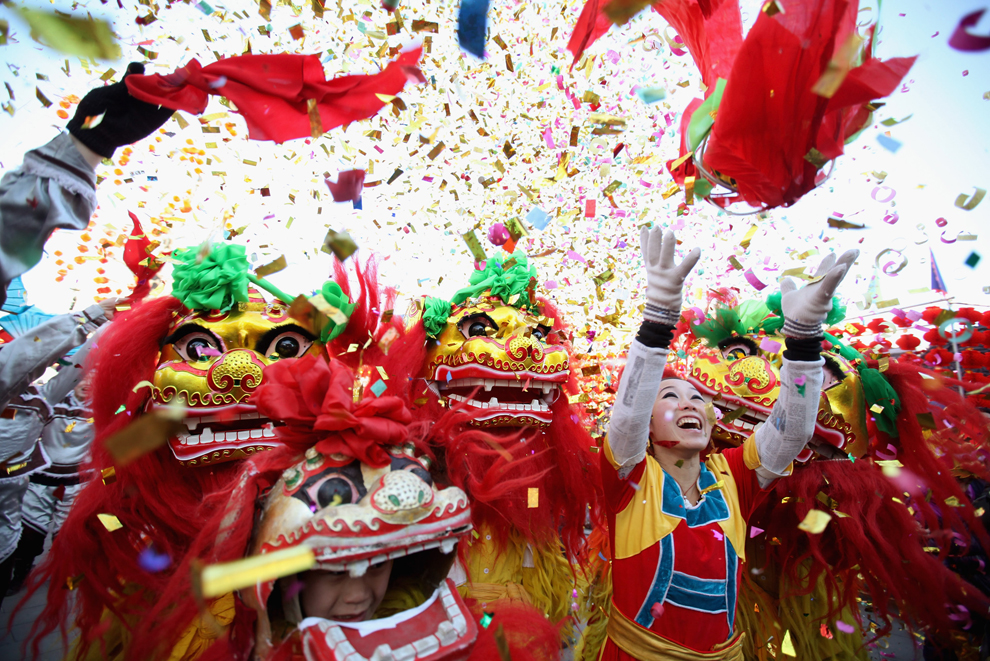
Sounds of beating drums, clashing cymbals and roaring lions are expected to fill the air as Nairobi joins billions worldwide in welcoming the Chinese Lunar New Year.
The Year of the Horse is a zodiac sign synonymous with energy, freedom and unstoppable forward momentum.Representatives of the Chinese Embassy in Kenya, in partnership with local cultural groups, and the government, will gather to mark the big moment.
The celebrations are a powerful testament to the deepening cultural and economic ties between Kenya and China.China will, on the much-anticipated day, showcase its culture through dance, food and the unveiling of the mascot for the current year.
The festival usually gives a sensory appeal of traditional Chinese culture, such as the Lion Dance performed by students from local universities.
Visitors will also get a chance to sample the delicate art of Chinese calligraphy, especially the character for “Fortune” (Fu) on red paper.
For many Kenyan families, the day provides an opportunity for them to immerse themselves in an educational experience.
Children have a chance to watch wide-eyed as artisans demonstrate paper cutting and create horse silhouettes. They will also get a chance to try their hand at traditional games.
Attendees will also have an opportunity to sample sizzling dumplings (known as jiaozi in Chinese) for an introduction to the reunion foods of the New Year.
The majestic Dragon Dance will also be on display, as well as a mix of traditional Kenyan and Chinese music, marking a vibrant fusion of cultures.
TRAVEL RUSH
In China, the Spring Festival’s epicentre, a human migration is in the horizon. The period, known in China as Chunyun, is usually characterised by a travel rush.
In the weeks surrounding New Year’s Day, an estimated three billion passenger trips are undertaken across the country, thanks of an efficient railway system.
Airports, railway stations and highways are normally pushed to capacity as hundreds of millions of workers and students embark on long journeys to their hometowns.
The voyages are driven by the culture of holding a family reunion dinner on New Year's Eve (on February 16).The public holiday in China generally lasts for nine days, from February 15 to February 23.
Even so, the celebration period extends 15 days, concluding with the Lantern Festival on March 3. The mass homecomings are the heartbeat of the holiday.
Across the nation, families gather for the reunion dinner, a lavish feast featuring symbolic dishes like fish and dumplings.
At the stroke of midnight, the skies of every city, town and village erupt in a deafening cascade of fireworks and firecrackers.
The traditional practice is meant to scare away the mythical beast, known as Nian in Chinese, and usher in good luck.In some provinces, locals follow strict traditional customs, like dressing in new clothes, mostly red, to visit their eldest family members and neighbours.
They exchange blessings of a happy new year and also give and receive envelopes bearing gifts of all kinds.The second day is traditionally reserved for married daughters to visit their birth parents, while the third day is often a quieter day.
Folk tradition advises against social visits, hence most people spend their time resting at home. The Lantern festival is also marked with fanfare.
LOCAL FIESTA
Nairobi's celebrations are typically spearheaded by the Chinese-Kenyan community, cultural centres like the Confucius Institute at the University of Nairobi, and the China Cultural Centre in Kenya.
The organisations, in collaboration with the Chinese Embassy in Kenya, often host public events during the New Year season.
Celebrating the Chinese New Year in Nairobi is more than a cultural event; it’s a reflection of strong bilateral ties.The festival deepens people-to-people exchanges as it fosters cultural exchange between Kenyans and the Chinese community.
It also highlights the extensive economic and infrastructure partnerships between Kenya and China, evident in projects like the Standard Gauge Railway (SGR), Nairobi Expressway and the upcoming Nairobi-Mau Summit highway.