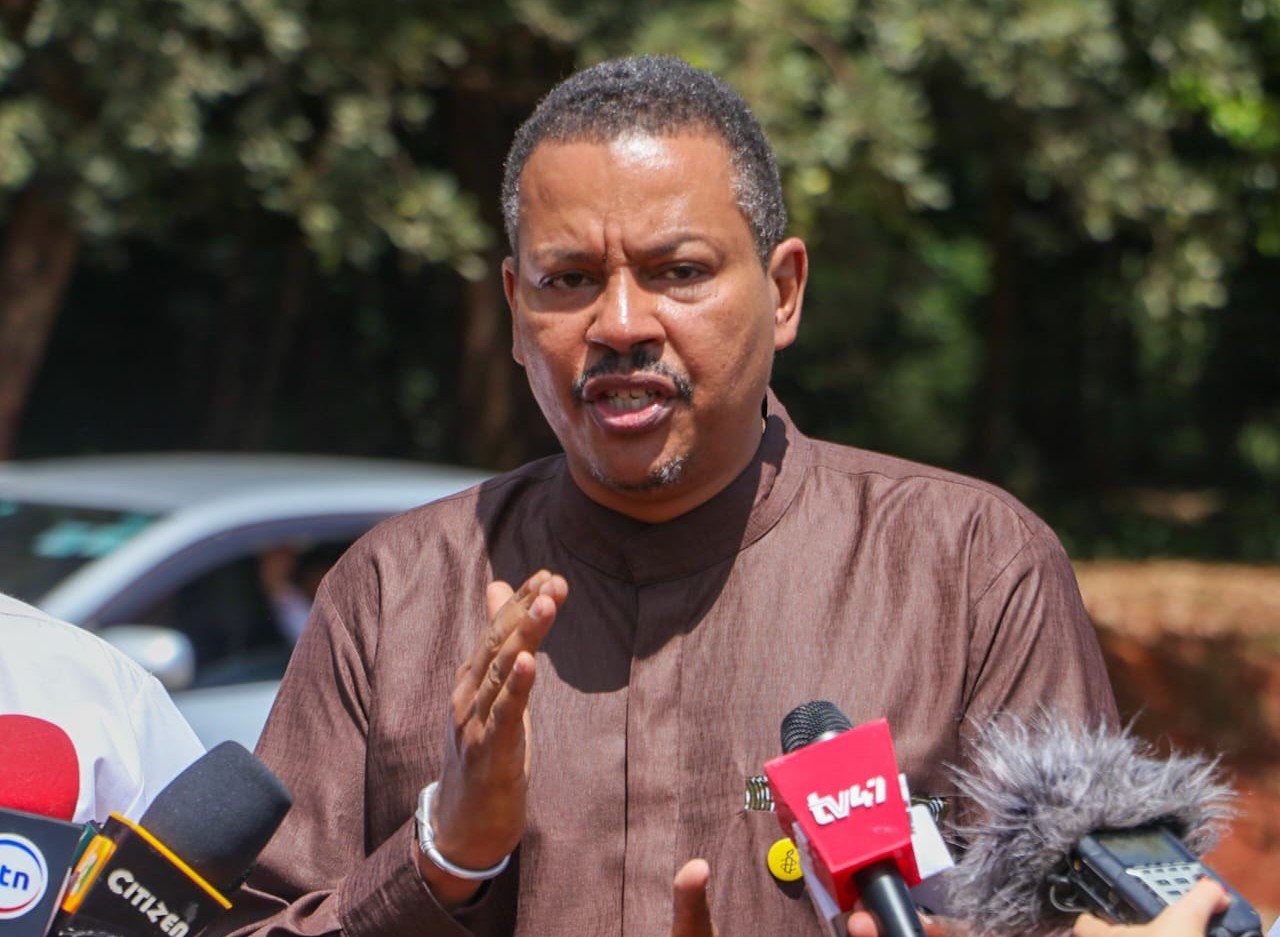
 Amnesty International Kenya Executive Director Irũngũ Houghton/FILE
Amnesty International Kenya has opened the recruitment process for a new Section Director, marking the beginning of a leadership transition as Executive Director Irungu Houghton prepares to conclude his tenure in June 2026.
In a public notice issued on Friday, the human rights organisation said it is seeking a courageous and principled leader to guide the section into its next chapter after eight years of what it described as transformative leadership.
"We are looking for a courageous, principled and inspiring leader committed to defending human rights for all," the notice said.
The organisation said the incoming director will be expected to defend human rights for all, speak truth to power and lead a broad movement of members, supporters and human rights defenders across the country.
Amnesty encouraged qualified candidates to apply and urged the public to share the opportunity with individuals they believe embody strong values, integrity and a commitment to justice.
The closing date for applications is February 23, 2026.
Amnesty International Kenya board chair Stellah Bosire confirmed that Houghton, who joined the organisation in January 2018, will step down after completing his second term.
She credited his leadership with significantly expanding the organisation’s reach and strengthening its institutional capacity.
“After eight years of service, Irungu Houghton will conclude his tenure as Executive Director of Amnesty International Kenya in June 2026,” Bosire said.
“Under his relentless stewardship, our membership grew eightfold, establishing 165 Circles of Conscience across 35 counties.”
She noted that the period of growth was also marked by financial resilience, positioning the organisation as a stable and independent voice within the global Amnesty International movement.
According to Bosire, Amnesty Kenya evolved during Houghton’s tenure into a democratic and autonomous national section, aligned with international standards while remaining grounded in local human rights struggles.
Bosire reiterated the board’s commitment to a competitive and transparent recruitment process, saying the aim is to identify a successor capable of building on the gains made while responding to emerging human rights challenges in Kenya.
In his own statement, Houghton reflected on his time at the helm with a sense of fulfilment as he approaches the final phase of his leadership.
“As I approach the last lap and the end of my tenure as Amnesty International Kenya executive director in June, I feel only a sense of accomplishment and pride,” he said.
Houghton expressed confidence in the organisation’s governance structures and the board’s ability to ensure a smooth transition.
He said there would be more time to reflect on the journey and achievements in the coming months.
“For now, my appreciation, commitment and solidarity are with all our members, supporters, staff and the wider movement of human rights defenders,” he said.
During his tenure, Amnesty Kenya has been vocal on a range of issues, including police accountability, civic freedoms, governance, economic justice and the protection of vulnerable groups.
The organisation has also strengthened grassroots engagement through its Circles of Conscience, expanding its footprint beyond major urban centres.
The board said the new director will be expected to provide strategic leadership, uphold Amnesty’s values and sustain the momentum built over the past eight years, as the organisation charts its next phase.