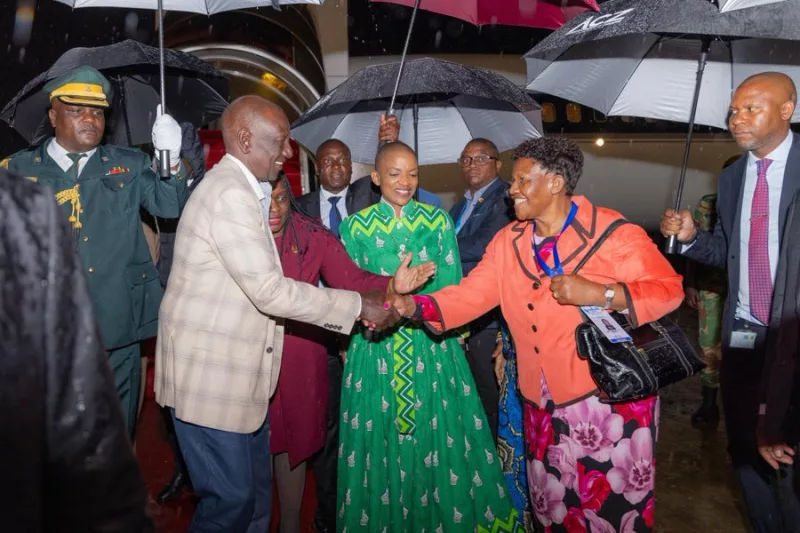
 Independent Electoral and Boundaries Commission chairman Erastus Ethekon /HANDOUT
Details have emerged regarding the trail of controversial, multibillion-shilling procurement decisions that led to the “mutual separation” of Hussein Marjan, the chief executive officer of the IEBC.
Marjan’s fate was sealed at a plenary meeting last week after the Independent Electoral and Boundaries Commission’s (IEBC) leadership, headed by chairman Erastus Ethekon, reviewed internal reports and audit findings.
While the Tuesday decision by Marjan to leave was framed as a mutual agreement, multiple sources indicate a deep unease over procurement practices, particularly those relating to election technology and legal services.
Ethekon, who spearheaded the process that resulted in Marjan’s exit, urged the media and the public not to exaggerate the event, denying any “hidden scandal”.
However, sources reveal that central to this fallout is the Kenya Integrated Elections Management System (KIEMS) tender, valued at about Sh7 billion. The KIEMS kits, essential for voter identification and electronic transmission of results, are vital to ensuring election integrity.
Under IEBC rules, the procurement of election technology is considered strategic, making it one of the most sensitive and tightly regulated transactions within the commission.
Other crucial items governed by these regulations include ballot papers, ballot boxes and ballot seals—all of which directly affect the credibility of elections.
Insiders have indicated that the most contentious issue was a two-year extension of Smartmatic’s contract for KIEMS, signed in 2024 and set to expire at the end of 2026.
At that time, the IEBC lacked a fully constituted commission, as the previous term had lapsed. Attempts to reach Marjan for comments on these claims went unanswered until the commission officially announced his termination on Tuesday.
In his exit statement, he avoided mentioning any coercion, describing the separation as a mutual agreement with the commissioners. In previous court rulings, it has been stipulated that independent agencies like the IEBC are only recognised as a “commission” when commissioners are actively in office.
As a result of these developments, the Smartmatic tender now hangs in limbo. It remains uncertain whether Ethekon’s team will nullify it, particularly since this decision has been flagged as a potential violation of the IEBC’s Standard Operating Procedures (SOPs).
According to these rules, all procurement involving strategic election materials must have the collective sanction of commissioners, not just the CEO acting unilaterally.
The commissioners are now arguing that the extension of the KIEMS contract should be deemed illegal, thereby exposing the commission to potential legal and reputational risks.
Beyond the issues surrounding election technology, the latest audit report raised concerns regarding governance in procurement and human resource practices. Other concerns outlined by sources include the extension of framework contracts beyond standard periods and early procurement steps for 2027 election materials.
Some extensions allegedly exceeded the permissible 25 per cent increase in contract time, reaching a maximum of nine months for a threeyear contract. Additionally, the tender for printing ballot papers, currently held by Dubai-based printer Al Ghurair, has also sparked disputes among IEBC leadership.
It is understood the new commissioners are seeking fresh and transparent processes for all major contracts leading up to the next election. In a press briefing yesterday, Ethekon reassured journalists in Nairobi that Marjan’s departure was standard practice—a mutually agreed separation based on contractual exit clauses rather than a dramatic firing.
He described the decision as a management change, legally undertaken after six months of review, aimed at bringing in new skills and ensuring effective election preparation within the tight 2027 timeline.
Ethekon urged the media and the public not to exaggerate the situation, firmly denying any hidden scandal. He praised Marjan as a dedicated professional and promised a transparent recruitment process for the next CEO in accordance with the IEBC Act.
“We, as commissioners, have been in this institution for six months,” Ethekon explained.
“We’ve held discussions with our staff and our decisions are guided by law.” Elog national coordinator Mulle Musau pointed out that tension between new commissioners and a well-established secretariat is not uncommon.
“When you have a secretariat that knows everything and a new commission, the latter usually has no confidence in working with a CEO who knows more than them,” he said, referring to past dynamics at the IEBC.
“This situation mirrors what happened with the team led by Wafula Chebukati and Ezra Chiloba, where the chairman had political responsibility, yet the CEOs were in charge. The arrangement often leads to normal tension,” Musau elaborated.
Separately, members of the Justice and Legal Affairs Committee have recently requested documentation from the IEBC regarding pending bills, including payments to lawyers, for scrutiny. This National Assembly panel seeks this information to determine whether the Auditor General should conduct a special audit.
Recruitment processes and the acquisition of election materials are also part of the ongoing standoff. When the new commissioners commenced their roles, they were initially asked to agree to further modify the contract to allow for the purchase of new equipment, a request the commissioners adamantly refused.
The situation surrounding Marjan’s departure reveals broader implications for the IEBC as it navigates the intricate web of politics and governance leading up to the 2027 general election. As the commission seeks to maintain its integrity, the challenges ahead will determine its credibility in managing one of Kenya’s most critical democratic processes.