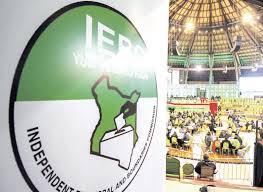
The IEBC has unveiled a list of electoral laws it wants urgently amended, warning that any delay could derail preparations for the 2027 polls.
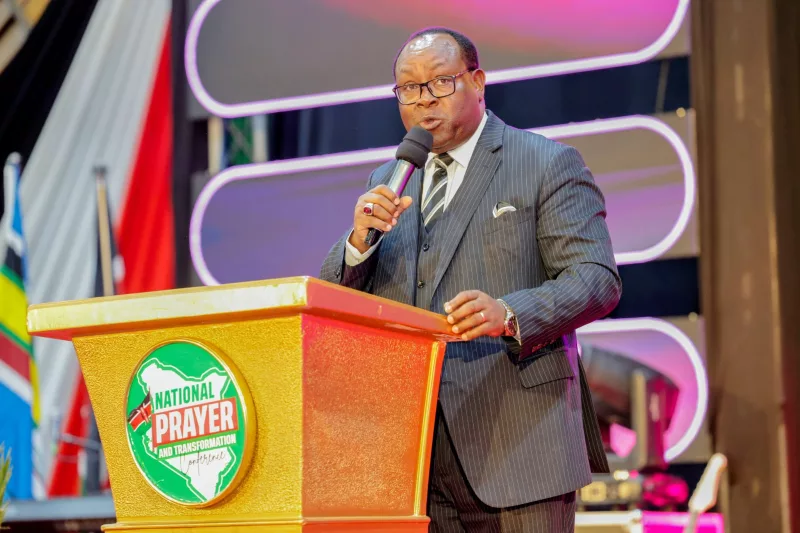
The electoral commission chairperson, Erastus Ethekon, said the proposed changes are necessary to fix long-standing gaps, contradictions and ambiguities that have complicated election management in past cycles and fuelled post-election disputes.
“Elections do not begin on polling day,” Ethekon said. “They begin with a clear, predictable and harmonised legal framework. Without this, even the most well-intentioned preparations are exposed to unnecessary risk.”
The commission is seeking amendments to at least seven statutes, including the Elections Act, EBC Act, Election Offences Act and Election Campaign Financing Act, alongside a new Referendum Bill and revisions to multiple election regulations.
At the centre of the proposals is the Elections Act, which Ethekon said requires urgent alignment with court decisions and operational realities on the ground.
Among the key changes sought are clearer definitions on nominations and candidate registration, revised timelines for voter inspection, biometric verification and nomination processes and explicit provisions governing the scrutiny of election technology.
“The lack of clarity around timelines has repeatedly placed the commission at the centre of litigation,” Ethekon said. “Harmonisation will reduce disputes and enhance certainty for all stakeholders.”
IEBC is also seeking amendments to the results transmission and declaration framework to reflect the Supreme Court’s 2022 presidential election decision, which clarified how results flow from polling stations to constituency and national tallying centres.
“This is not about rewriting the election,” Ethekon said. “It is about ensuring the law reflects what the courts have already pronounced.”
The commission has also proposed stronger legal backing to enforce the two-thirds gender principle at the nomination stage, requiring political parties to comply before submitting candidate lists for parliamentary elections.
“Compliance cannot remain a post-election debate,” Ethekon said. “It must be embedded at the nomination stage if we are serious about constitutionalism.”
For independent candidates, IEBC wants symbols ring-fenced at the county level to prevent duplication and voter confusion, a recurring challenge in previous elections.
The electoral agency has further proposed amendments to its own enabling law to delete spent provisions, review quorum requirements and clarify internal decision-making processes.
According to Ethekon, these changes are critical to institutional stability, particularly in light of past periods when the commission was unable to transact key business due to quorum challenges.
“A constitutional commission must not be structurally vulnerable to paralysis,” he said.
One of the more consequential proposals concerns the Election Offences Act.
Following a Supreme Court ruling affirming IEBC’s authority over enforcement of the electoral code of conduct, the commission wants Section 20 of the Act repealed to avoid duplication with the Office of the Director of Public Prosecutions.
“The law should reflect constitutional mandates clearly,” Ethekon said. “Overlap creates confusion and weakens enforcement.”
IEBC is also urging Parliament to make operational the long-delayed Election Campaign Financing Act.
Proposed amendments include tighter controls on donations, clearer identification of permissible donors and an explicit ban on direct campaign funding from foreign governments.
“Unregulated campaign financing distorts competition and undermines voter choice,” Ethekon said. “Transparency in campaign funding is not a luxury — it is a democratic safeguard.”
The commission is also pushing for the enactment of a standalone Referendum Bill to provide a clear legal framework for conducting referenda, noting that Kenya currently lacks detailed procedures despite constitutional provisions.
In addition, IEBC has submitted draft amendments to several election regulations covering voter registration, party primaries, voter education, election technology and campaign financing.
“These regulations operationalise the law,” Ethekon said. “Without updating them, reforms remain theoretical.”
The commission has warned Parliament that international best practice requires electoral laws to be enacted at least one year before a general election to allow adequate preparation, training and public awareness.
“Late enactment disrupts planning and creates uncertainty,” Ethekon said. “We have lived through this before, and the consequences are well known.”
He recalled that similar reform proposals were developed after the 2017 general election but were not enacted before the 2022 polls, forcing the commission to operate under a legal framework it had already flagged as problematic.
Beyond legislative reform, IEBC raised concerns over its legal capacity, revealing it is burdened by more than 100 election-related cases per cycle with only four in-house lawyers.
The electoral agency is also grappling with unpaid, audited legal fees exceeding Sh3.8 billion dating back to 2013, a situation Ethekon said has constrained its ability to secure external legal representation.
“These challenges weaken our ability to defend electoral outcomes and manage disputes effectively,” he said.
Ethekon framed the proposed reforms as a national, not institutional, priority, urging Parliament to move with speed and consensus.
“Electoral law is not about political advantage,” he said. “It is about protecting the sovereign will of the people and the stability of the republic.”
The commission plans to convene joint stakeholder engagements with Parliament, political parties and civil society to build consensus around the proposed reforms and broader election preparedness.
“As a country, we have a choice,” Ethekon said. “We can prepare early and deliberately, or we can repeat the cycle of last-minute fixes and post-election disputes. The path we choose will define the credibility of the 2027 general election.”