
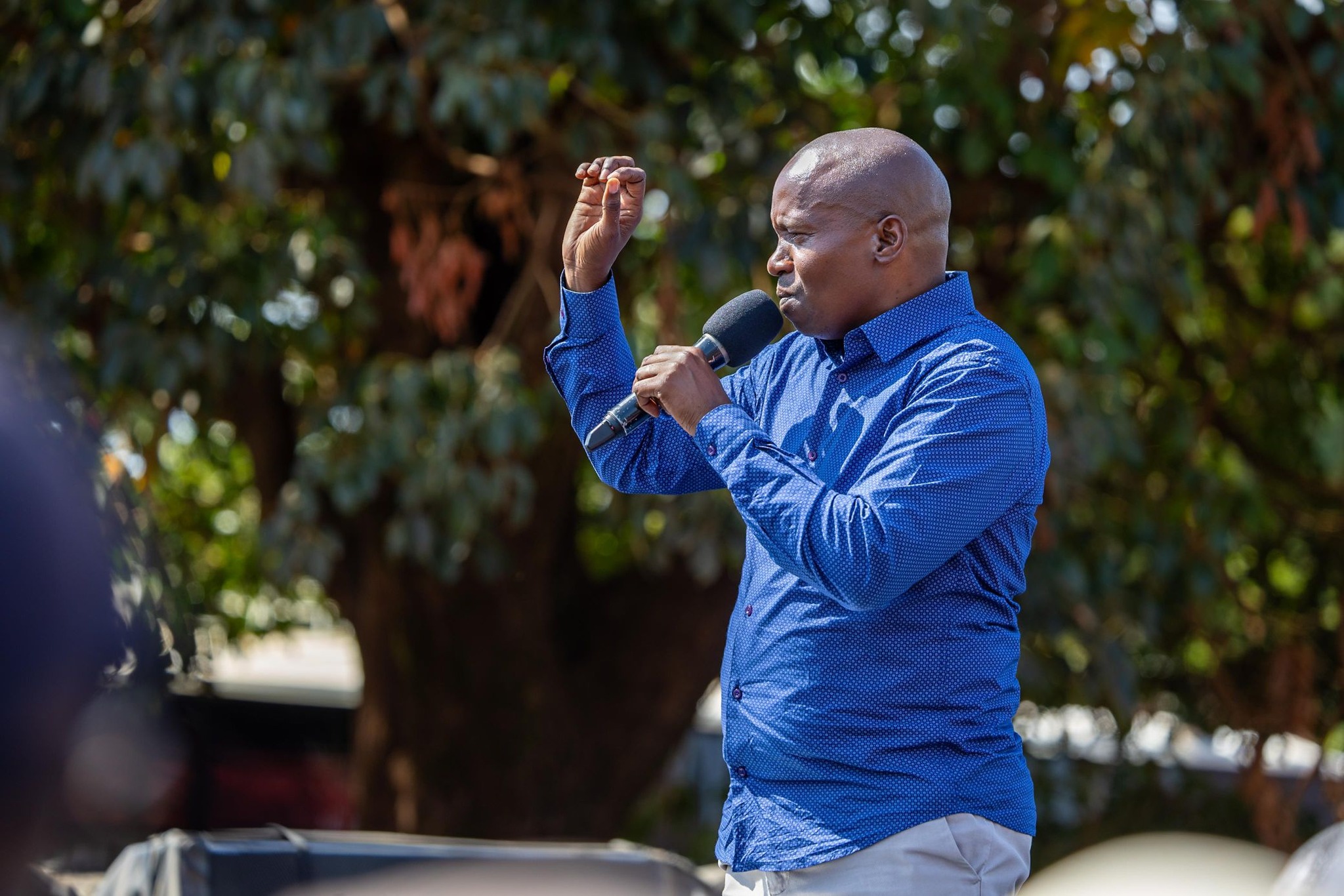
UDA top guns have embarked on a subtle but salient campaign for President William Ruto to retain Kithure Kindiki as his deputy in the 2027 election.
This follows the sustained onslaught by ODM, which is seeking the seat in its pre-negotiation demands for a coalition with Ruto’s United Democratic Alliance.
For the ruling party’s top players, a meticulous and calm deputy is proving to be the President’s most valuable fixed asset, and they would not want a situation where uncertainty prevails.
The DP is being quietly but firmly cemented as the indispensable figure in Ruto’s reelection machinery as delicate talks with potential 2027 partners begin to take shape.
While the campaign is being run behind the shadows, the clearest signal yet came on Monday at the UDA National Governing Council meeting.
UDA chairperson Cecily Mbarire was the first to make the call, saying Kindiki played a huge role in restoring Kenyan’s confidence in the Kenya Kwanza administration.
“He gave us fresh impetus. We have seen him criss-cross the entire country, talking about projects and progress without fear,” the Embu governor said.
She argued that from the proven record, the President shouldn’t gamble by opting for another candidate apart from his current DP.
“This was the best decision the President ever made. We will continue to support the DP, and we have asked him to keep helping our cause. He has the support of the entire leadership of UDA,” the UDA chairperson said.
“We didn’t know the President was suffering in silence until he (Kindiki) came, and we are happy he is making and doing a great job.”
The calls escalated during a meeting the DP graced at Maemba in Sigowet constituency, Kericho county, when he joined worshipers for an interdenominational service.
“We are looking forward to supporting him for the presidency in 2032, with Aaron Cheruiyot (Kericho senator) as his running mate. He has proven his worth as a dependable deputy,” Sigowet MCA Weldon Rogony said.
Nandi Senator Samson Cherargei has also been on the campaign, with reminders to ODM to seek other seats in their talks, other than that of the DP.
“The projects we have managed to achieve are as a result of the work of the principal assistant,” the lawmaker said, reiterating that the two top seats – president and DP- are not up for any discussion.
He asked those in the broad-based to consider the first two seats taken. “We will appreciate him by supporting him in the 2032 election.”
Besides ODM, Ruto has a long list of political figureheads angling to be his deputy in the next election run.
They include Prime Cabinet Secretary Musalia Mudavadi, in anticipation that he could look Western; Homa Bay Governor Gladys Wanga, her Kirinyaga counterpart Anne Waiguru, Cooperative CS Wycliffe Oparanya and his Mining counterpart Hassan Joho.
At the NGC, it was DP Kindiki, the party’s deputy leader, who was handed the task of detailing the status of the party’s manifesto implementation.
For nearly an hour, he held the room captive. Before an audience of more than 1,500 delegates, including governors, MPs and MCAs, he delivered a data-driven presentation.
He traversed ministries, quoting project milestones, budgetary allocations and completion percentages with the conviction of a true believer.His mastery of the government’s portfolio, from security sector reforms to agricultural revitalisation programmes, left delegates in awe.
Those in support of the call for Ruto to keep his DP around until after 2027 drew a contrast to his predecessor, Rigathi Gachagua.
President Ruto himself has become Kindiki’s chief promoter. At every turn, he amplifies the narrative of the deputy as the administration’s stabilising core.
“I owe the momentum of government projects and programmes to my deputy because of his capacity to understand the UDA manifesto, rally together all role players… and his composure, tenacity and follow-up to unclog any bottlenecks,” Ruto has said on multiple occasions.
Pundits say that the pronouncements are more than mere praise; they are political branding.
”He continues to demonstrate that being Deputy President is not about trying to be a co-president, but to be a key lever within the Executive in helping the President in coordinating and supporting Cabinet Secretaries in rolling out the president's agenda,” political commentator Javas Bigambo said.
In a first term marked by economic headwinds, public discontent over taxes and internal factionalism, Kindiki is presented as the antithesis of chaos.
From his days as Interior CS, the DP has cut the image of a silent, effective executor.
His low-profile, results-oriented approach, particularly in the sensitive docket he previously held, has earned him respect, if not public adulation, across the political aisle.
Some UDA insiders, however, intimated to the Star that the situation remains dicey.
“The President has a soft spot for ODM, and the Western region, so anything can happen,” a UDA lawmaker said, asking for anonymity so as not to jeopardise his relationships.
The coming election is where the “Kindiki factor” becomes critical to Ruto’s 2027 plan.
The head of state has openly initiated a season of “broad-based” consultations, with the aim of building a grand coalition for national stability.
Any such alliance would be fractious and require meticulous management; the DP’s role in such a government would be paramount.Kindiki, with his measured demeanour and lack of abrasive tribal rhetoric, is seen as a more palatable figure for potential ODM entrants than his predecessor would have been.
“A coalition government needs glue, not grit,” political strategist Mark Oloo explains.
“Ruto is looking at 2027 and seeing that his base alone may not be enough. To attract the western Kenya and Nyanza votes, or at least neutralise them, he needs a running mate who doesn’t actively repel them.”
He argued that, “Kindiki, from Tharaka Nithi, doesn’t carry the Mt Kenya ‘ownership’ baggage that became problematic with the ex-DP. He is perceived as a national figure.”
Some observers say that by having the DP lead the manifesto audit, Ruto is repositioning the heart of his 2027 campaign on a ledger of delivery.
The big ask is: Who is better to sell that ledger than the deputy portrayed as the chief implementer?For Kenya Kwanza honchos, the coalition talks may be just beginning, but Ruto seems to have already decided on his most important negotiator.
Members of the opposition, however, hold that with Mt Kenya’s support appearing to be leaning towards Gachagua’s Democracy for Citizens Party, President Ruto may be forced to opt for a deputy from a region that will ‘close the gap’.





