The Kenya Universities and Colleges Central Placement Service is considering scrapping C+ as the minimum university entry grade to align with the Competency-Based Education system.
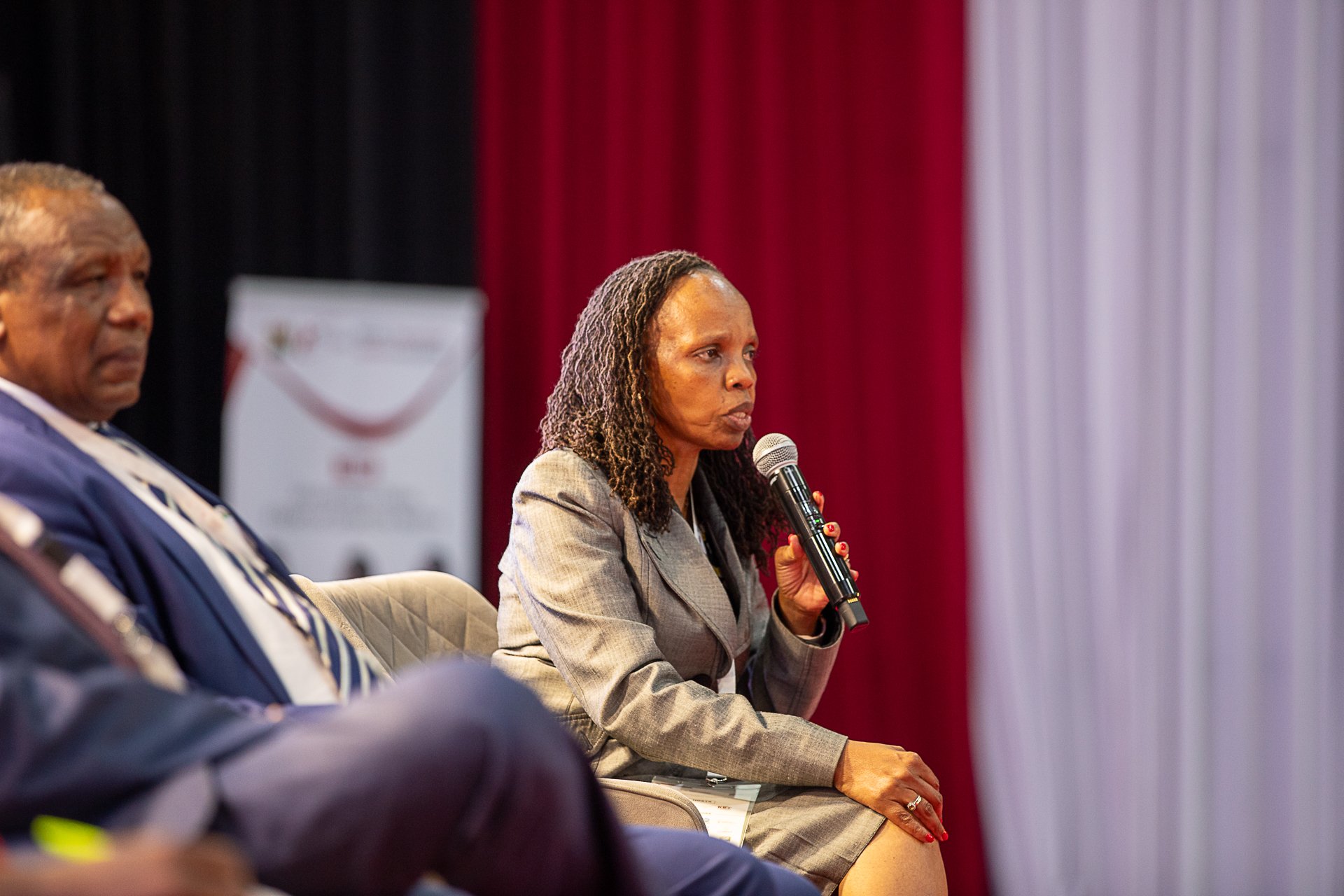
KUCCPS Chief Executive Officer Agnes Wahome said too much emphasis has been placed on the number of learners who attain the C+ and above cut-off point, while alternative career progression pathways for those who do not meet the threshold are often overlooked.
“Remember, some don’t get to university but take another pathway in life, starting with a certificate and proceeding to a diploma, and still end up in university, but nobody talks about them,” Wahome said.
She spoke on Tuesday during a panel discussion on career pathways, skills alignment and the evolving world of work in Kenya at the start of the inaugural National Career Conference & Exhibition at the Kenyatta International Convention Centre (KICC).
Wahome was responding to concerns raised after a large number of 2025 KCSE candidates failed to attain the minimum university entry grade.
While releasing the results on January 9, Education Cabinet Secretary Julius Ogamba said that of the 993,226 candidates who sat the examination, only 270,715 (27.18 per cent) attained the direct university entry qualification of a mean grade of C+ and above.
The figure was an improvement compared to 246,391 candidates (25.53 per cent) who attained a similar grade in the 2024 examination, which had 962,512 candidates.
A mean grade of C+ first became the minimum university entry requirement for degree programmes for government-sponsored students with the 2016 KCSE examination cohort.
It was introduced to increase university access, replacing the previous system used by the Joint Admissions Board (JAB), which varied between B (plain) and B- (minus).
Wahome said the current standard would shift once the country fully transitions to the Competency-Based Education system, which is currently at the Senior school phase.
She noted that thousands of learners who do not immediately qualify for university admission can still take certificate and diploma courses in Technical and Vocational Education and Training (TVET) institutions before eventually enrolling in universities.
“This is a conversation that needs to start dying off as we get fully into CBE because we have overemphasised grades and measuring success by the number of people who get to university,” Wahome said.
It is important to note, however, that the minimum university entry grade will naturally be phased out once the remaining final classes of the 8-4-4 system exit Form Four in 2027.
Currently, secondary schools are hosting Form Three, Form Four and Grade 10 learners, the pioneer cohort of the CBE system, which uses a different grading framework of Exceeding Expectations, Meeting Expectations, Approaching Expectations and Below Expectations.
The new grading system assesses learners’ skills and competencies on a scale of one to eight points, with one representing below expectation and eight exceeding expectation.
Unlike the 8-4-4 system, which was exam-oriented and focused on high scores in national tests, the CBE system emphasises hands-on skills, talent and other practical work rather than examination scores alone.
Launched in 1985, the 8-4-4 curriculum was often criticised for being overly theoretical, placing excessive pressure on cramming and ignoring holistic development in favour of academic ranking.
“I think we have overglorified Grade C+ and above, and that is a conversation that will definitely change when we look at Competency-Based Education,” Wahome said.
For now, C+ remains the official cut-off point for government-sponsored students for the 2025, 2026 and 2027 KCSE cohorts.
However, should KUCCPS scrap the standard before the 8-4-4 system is fully phased out, the move would result in an influx of students into Technical and Vocational Education and Training institutions.
The shift would also significantly alter the higher education funding model, moving from the current automatic approach to a needs-based system in which only students who demonstrate extreme financial need receive high-percentage scholarships.
Universities would also be forced to look beyond government capitation due to a drop in enrolment, relying more on research income, industry partnerships and potentially increased revenue from self-sponsored or Module II programmes.
Using the 2025 KCSE cohort as a case study, this would mean that 722,511 students out of the total 993,226 candidates would miss out on direct university entry.
This group would find ample space in the growing number of public and private TVET institutions across the country, where they could pursue a wide range of technical courses.
There are at least 885 documented public and 255 private TVET institutions, encompassing national polytechnics, technical and vocational colleges, and more than 1,500 youth polytechnics.
These institutions cater to a diverse group of learners, ranging from KCSE leavers with grades from C+ down to E seeking specialised skills, to out-of-school youth, the unemployed and individuals looking to upgrade their skills, including those with little or no formal education.
They provide vocational training for diplomas, certificates and artisan courses across technical, business and service sectors.
Upon completion of senior school at Grade 12, the pioneer CBE cohort can choose to pursue higher education at universities, enrol in TVET institutions, or enter the workforce directly in entry-level positions.