A profound reckoning on gender, harassment and the exploitation of young lawyers is shaping the race to lead the Law Society of Kenya (LSK).
Vice-presidential candidates have used the campaign platform to issue a sharp critique of a professional culture they say too often fails its most vulnerable members.
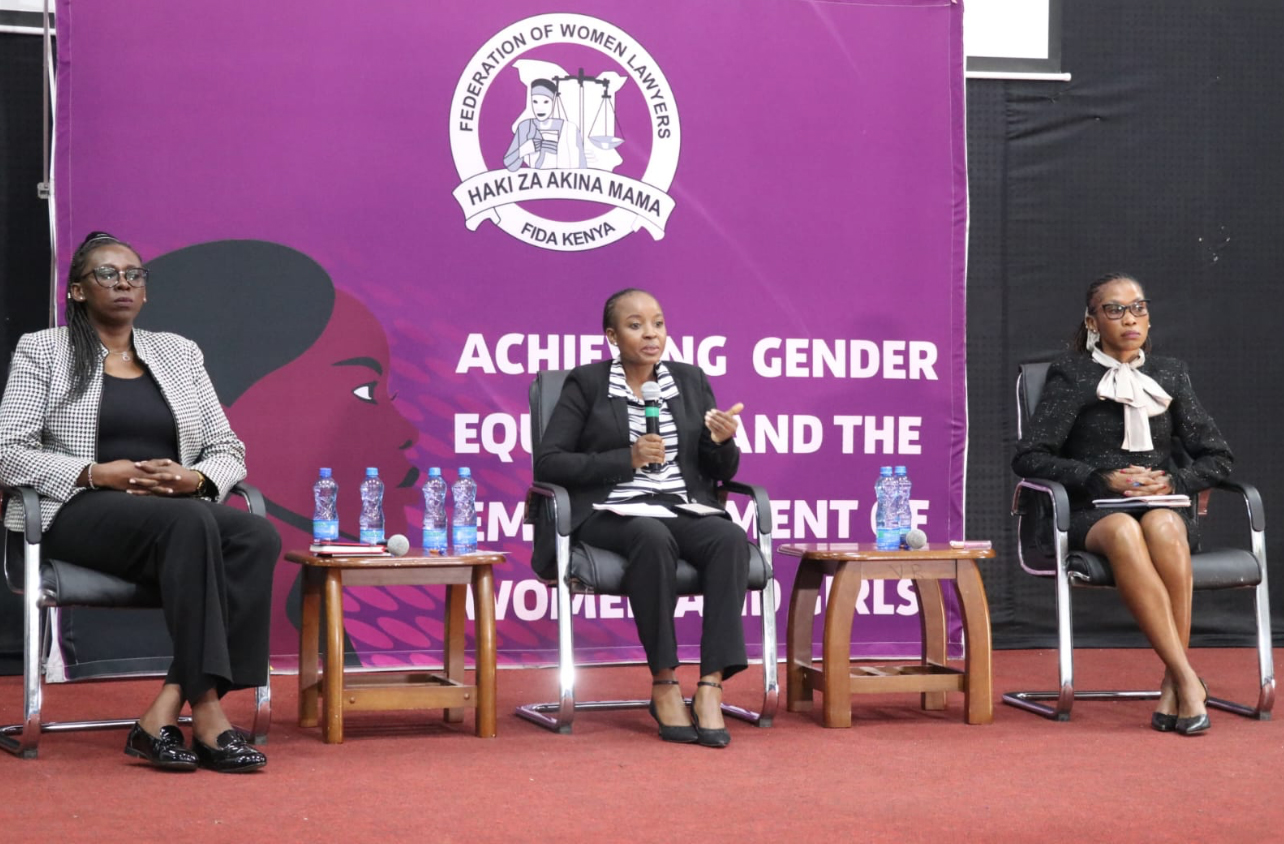
During a vice-presidential debate on Thursday, candidates Debora Ajwang, Teresia Wavinya and Elizabeth Wanjeri described a profession in which progress on women’s representation, they argued, has not been matched by adequate protection, economic security or effective institutional responses to abuse.
The candidates said that, despite its prestige, the legal profession can be an unwelcoming and precarious environment, particularly for women and young entrants.
Their proposals went beyond questions of representation to focus on what they described as systemic failures that allow exploitation and abuse to persist. Central to their arguments was the economic vulnerability of young lawyers, which they identified as a key factor underpinning wider mistreatment within the profession.
“Exploitation of young lawyers is a precursor to harassment,” Wavinya said, linking financial insecurity to diminished personal dignity.
“When you pay a pupil Sh5,000 or nothing at all, you have already stripped them of their dignity and made them vulnerable,” she added.
This framing of economic disempowerment as a gateway to other forms of abuse featured prominently throughout the discussion, with candidates urging the profession to look beyond surface-level welfare interventions.
The candidates also addressed concerns about sexual harassment within law firms, pointing to power imbalances that they said discourage reporting.
Ajwang argued that fear plays a significant role in silencing victims, noting that alleged perpetrators may be individuals who control career progression or remuneration.
“We must acknowledge that sexual harassment is happening in our law firms, but the victims are silent because the perpetrator is often the one who signs their pupillage form or their paycheck,” she said.
Wanjeri characterised the problem as a broader cultural issue within the profession.
“We have a code of silence in this profession that protects seniors at the expense of juniors,” she said, calling for institutional reforms, including an independent whistle-blowing mechanism.
The candidates’ proposed responses focused on structural and regulatory measures. Ajwang suggested stricter consequences for firms found to repeatedly violate professional standards.
“I will push for a policy where any firm found to be a serial offender in matters of sexual harassment or exploitation of young lawyers loses its eligibility to take in pupils or interns,” she said.
Wanjeri linked workplace conditions to wider wellbeing concerns, arguing that sustained exposure to exploitative environments can have lasting effects on young advocates.
“The exploitation and harassment we see is not just a legal issue; it is a mental health issue,” she said, warning that some lawyers leave the profession disillusioned by toxic work cultures.
On broader welfare issues, the candidates connected financial stability to professional integrity. Wavinya emphasised the enforcement of fee guidelines, arguing that fair compensation is central to advocate welfare.
Ajwang proposed the establishment of a dedicated welfare desk to provide timely support, while Wanjeri called for the formalisation of mental health services and parental leave policies, particularly for sole practitioners.
“The greatest welfare for an advocate is the ability to earn a decent living,” Wavinya said, framing economic justice as the foundation of professional dignity.
Taken together, the candidates’ positions signal a campaign focused on institutional and cultural reform rather than incremental change. The discussion shifted from responding to individual cases of distress to addressing the conditions that, in their view, give rise to those cases.
Proposals such as an independent gender desk, stricter oversight of firms, and reforms to the Benevolent Fund were presented as part of a broader effort to position the LSK as a more proactive protector of its members.
As the society prepares to elect new leaders, the candidates have placed the wellbeing of the profession’s human capital at the centre of the debate.
Collectively, they argue that the effectiveness of LSK leadership should be judged not by ceremonial milestones, but by tangible improvements in safeguarding advocates from exploitation within their own ranks.