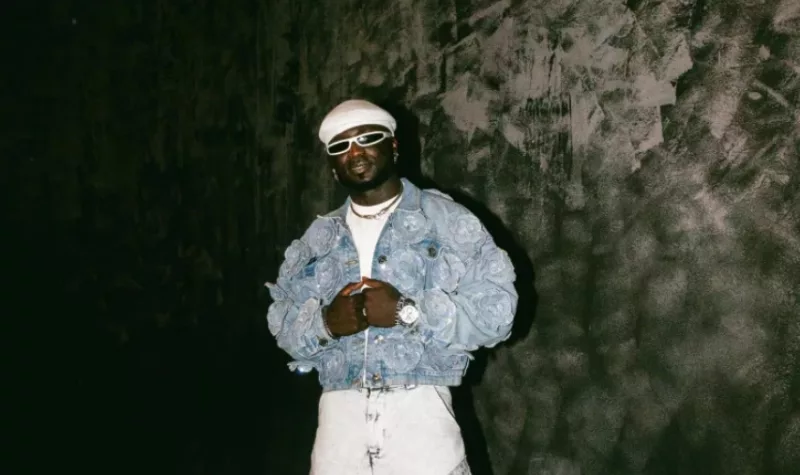
Snoopy, as filmmaker
Ibrahim Ahmed likes to be called, is a third-culture kid. With his camera, he
bridges worlds and amplifies unheard voices, particularly from communities
shaped by conflict and migration. These are not just themes; they are his lived
experience.
Born in Lebanon in 1992, where his parents lived at the time, Snoopy moved to Sudan in 2009 to discover a homeland he had never fully known. He studied information technology at the University of Science and Technology, but film quickly claimed him.
When the fighting broke out in Sudan in 2023, Snoopy made the difficult decision to leave Khartoum. Months later, with a friend beside him, he travelled overland to Kenya, crossing Ethiopian borders and landscapes he knew well from his earlier filmmaking.
“This decision comes after doing a similar journey a few years back in 2019, when I was doing a short film,” he told bird.
His familiarity with checkpoints, border procedures and the rhythm of the road made the escape both practical and emotionally charged.
“After a few months of the 2023 Sudan war, I decided to go to Kenya with a friend. And we came by land passing through Ethiopia. Stayed for a while there and then moved all the way to Nairobi,” he said.
Travelling by land was also the only financially viable option during a time of uncertainty and sudden uprooting.
NEW CREATIVE HOME
In Nairobi, Snoopy found more than safety. He discovered a vibrant filmmaking ecosystem that transformed his career.
“Being here despite the war has somehow taken my career to the next level because I’m world-connected right now, not only locally but also around the world,” he said.
He found Kenya’s filmmaking community active, supportive and generously collaborative. It offered opportunities rarely accessible in Sudan due to years of isolation under the former regime.
Nairobi opened new doors: filmmaker gatherings, workshops, artistic exchanges and international connections that amplified his presence globally. Snoopy also began connecting with Sudanese refugees in Kenya.
Through short films, documentaries and music videos, he began examining the emotional landscape of exile, how displaced Sudanese navigate loss, distance and the lingering weight of war. He directed the short documentary New Beginnings, which follows three Sudanese nationals rebuilding their lives in Nairobi, and produced and directed the music video Will Return Again, a piece anchored in hope and the inevitability of return.
“Through my work as a filmmaker, I always wanted to establish some kind of connection with the local community. So I did many activities between feature film and music videos,” he said.
His message to the community was steady and heartfelt. “You are not forgotten,” he said. Through cinema, he kept a fragile thread between the displaced and their homeland alive. One of the most significant initiatives he contributed to was Aflam Sudan, a Sudanese films week in Nairobi held on the first anniversary of the war.
The event brought together Sudanese families, artists and refugees to watch films, share grief, remember and celebrate their identity. It became a moment of collective healing, a testament to Sudanese culture’s endurance despite immense destruction.
Snoopy began filming Khartoum (2025) in Sudan shortly before the war, alongside Rawia Alhag, Timeea Ahmed and Anas Saeed, each portraying a different story in the capital.
When the war halted production, the other filmmakers joined Snoopy in Nairobi to complete the film. The resulting feature-length documentary, released as the world sought to understand Sudan’s catastrophe, resonated deeply. It reveals the soul of pre-war and wartime Khartoum, a cosmopolitan city rich in diversity yet marked by unspoken tensions beneath its surface. The film’s international acclaim reflects how strongly its story connected with Sudanese and global audiences alike.
After premiering at the Sundance Film Festival, the film screened at the Berlin International Film Festival (Berlinale) in 2025, where it received the Peace Film Prize. It later showcased at Hot Docs 2025, North America’s largest documentary festival, and screened at the Nairobi Film Festival, further strengthening its impact across global and regional audiences.
CINEMA AS LIFELINE
Snoopy’s most intimate work is still unfolding. Over the past 20 years, he has lived through multiple displacements across several countries. These experiences have shaped his upcoming feature documentary, Where Do I Belong?
It is a deeply emotional exploration of generational exile. The film echoes the experiences of millions who have been forced to leave home and live suspended between everywhere and nowhere.
“It depicts my personal story but also the story of millions of people who are facing displacement. During this time, with all the wars happening around the world, there is also this duality where we feel we don’t belong to any place we go to,” he said.
The film begins in Nairobi, his current refuge, and traces a return journey to Sudan, where his parents live amid shifting conflict. It also explores his family’s origins, stretching from Sudan and Sri Lanka to the Middle East, examining cycles of displacement shaped by the Sri Lankan Civil War (1983-2009), the Lebanese Civil War (1975-90) and Sudan’s own conflicts (1983-2005 and 2023 to present). Through these intertwined histories, the film reflects on identity, memory and the search for belonging.
Snoopy travelled to Amsterdam, Cairo, Doha and other destinations to pitch the project to funders and producers.
Where Do I Belong? has already received recognition from festivals in Cairo, Doha, Amman and the Red Sea. For Snoopy, the film’s universality is unmistakable: While deeply personal and Sudanese, its emotional truth speaks far beyond borders.
For Snoopy, filmmaking is not merely a craft. It is a lifeline, a way to preserve memory, confront loss and reconnect fragmented identities. His camera follows him wherever conflict forces him to go. Through it, he continues the search for a place he can finally call home.