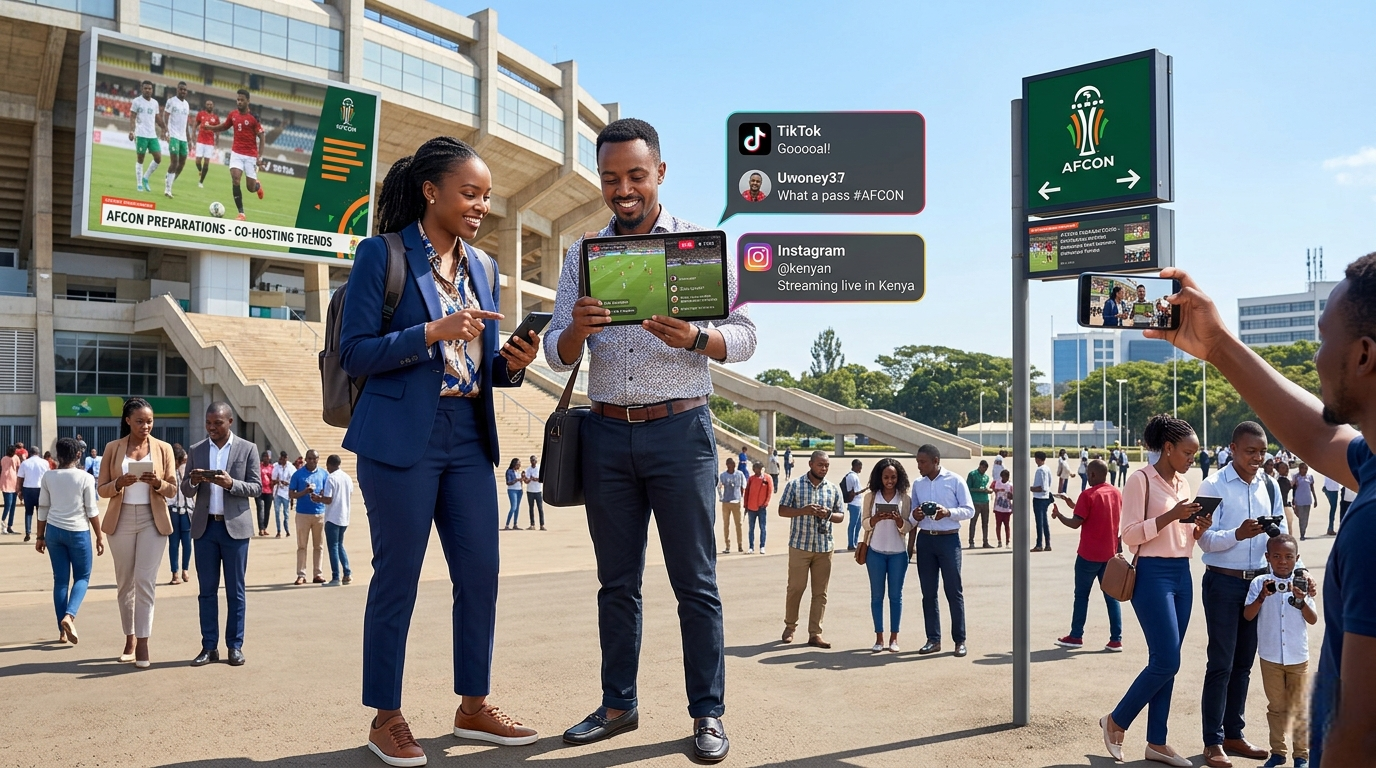
For decades, global sport followed a familiar script. Events were centralised, broadcasts tightly controlled and narratives largely fixed. Audiences watched. Broadcasters decided what mattered. Meaning flowed in one direction.
That model is breaking down. Today, sport unfolds across a fragmented media landscape, including streaming platforms, social media feeds, short-form video and real-time commentary. Matches are no longer singular events. They are distributed experiences, clipped, remixed and reinterpreted by millions of viewers at once. The meaning of a moment is no longer settled at the final whistle. It evolves as it circulates.
This transformation is not just technological. It is cultural. Audiences are no longer passive consumers of sport; they are participants in shaping its significance. A goal scored in one city can take on entirely different meanings as it moves through different platforms, languages and communities. What matters is not only what happens but how it is seen, and by whom.
The 2026 FIFA World Cup, co-hosted by the United States, Canada and Mexico, will amplify this shift. With an expanded format of 48 teams and matches spread across multiple cities, the tournament will not unfold as a single, coherent narrative. It will emerge as a constellation of overlapping stories, shaped by local cultures, media ecosystems and digital audiences.
A match in Mexico City will circulate differently from one in Los Angeles or Toronto. Broadcasts will intersect with TikTok edits, fan commentary and viral moments. In this environment, narrative authority becomes diffuse. No single institution fully controls the story.
This is not a marginal change. It alters the balance of power in global sport. For much of modern sporting history, visibility has been the primary currency. To be seen on the global stage was, in itself, a form of influence. But in today’s attention economy, visibility is no longer enough. What matters is authorship, the ability to frame how events, places and people are understood.
Narrative has become a form of power. This is especially significant for regions that have long been present in global sport but underrepresented in shaping its meaning. East Africa offers a clear example. The region has produced some of the most accomplished athletes in the world, particularly in long-distance running. Their performances are globally recognised, their victories widely celebrated.
Yet the broader contexts that produce this excellence (the environments, cultures and systems behind it) rarely receive the same attention. Athletes are visible. Their worlds are not.
HOSTING AFCON
The result is a familiar imbalance: presence without authorship. This is what makes the 2027 Africa Cup of Nations, to be co-hosted by Kenya, Tanzania and Uganda, more than a sporting event. It is an opportunity to redefine how a region is seen, not just through competition but also narrative.
Hosting a tournament, however, is not the same as shaping its meaning. Infrastructure can bring the world’s attention. It does not guarantee control over how that attention is directed. Without deliberate investment in storytelling through media production, cultural programming and creative industries, the narrative will be shaped elsewhere.
And in a distributed media environment, narratives travel fast and often without context. A single image or moment can circulate globally within seconds, detached from the conditions that produced it. What reaches audiences is frequently filtered, reframed and repurposed across platforms.
For host nations, this creates both an opportunity and a risk. Those that actively construct their narratives through film, music, fashion and digital media can influence how they are perceived. Those that do not innovate risk being interpreted through external lenses.
The Paris Olympics offered one model. By turning the city itself into a stage, it projected a distinct cultural identity and invited audiences into a curated story. The 2026 World Cup will push the model further, dispersing narrative across multiple locations and media systems.
For East Africa, the stakes are clear. The region is not entering global sport; it is already there. What remains uncertain is whether it will claim a greater role in defining what that presence means.
This requires thinking beyond the event itself. It means investing not only in stadiums and logistics but also in the ecosystems that produce narrative: filmmakers, designers, journalists, digital creators and cultural institutions. It means recognising that global perception is not shaped solely by competition, but by the stories that surround it.
In an era where attention is contested and constantly shifting, storytelling is not an accessory to sport; it is central to it.
The next phase of global sport will not be organised around a single broadcast or narrative. It will be shaped by networks of interpretation, by audiences who engage, remix and redistribute meaning in real time.
In that environment, the most influential actors will not only be those who compete but also those who frame the context in which competition is understood.
The world will be watching. The question is who will decide what the world sees.



Comments 0
Sign in to join the conversation
Sign In Create AccountNo comments yet. Be the first to share your thoughts!