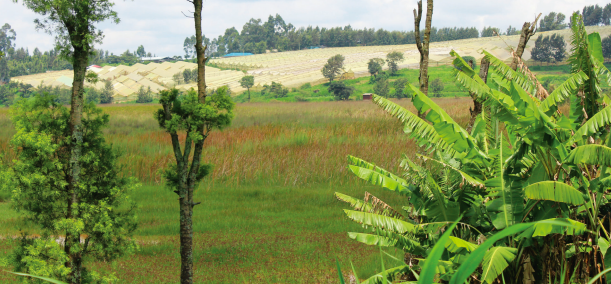
 Ondiri swamp/handout
Hidden just 200 metres south of Kikuyu town, Ondiri Wetlands is a sanctuary of life with a lush, green expanse of crystal-clear waters that quietly nourishes both locals and nature.
It is one of the sources of the Nairobi River, Kenya’s lifeblood, and a haven for birds, fish, and countless plant species.
However, this environmental treasure is facing renewed threats that could erase it from the map of existence.
“The swamp is battling pollution from waste, chemicals, sewage, illegal encroachment, unregulated water abstraction, and the planting of exotic eucalyptus trees,” says David Wakogy, coordinator of Friends of Ondiri Wetland Kenya. “These challenges are pushing it to the brink once again.”
Ondiri, Kenya’s largest natural peat bog and Africa’s second-deepest wetland after Douala in Cameroon, spans roughly 34.5 hectares, with waters running three to four metres deep.
Its waters, once freely tapped by farmers and landowners, feed Kikuyu Springs — Nairobi’s oldest water source that supplys residents as far as Karen.
Over the decades, encroachment, crop
cultivation, and eucalyptus plantations have quietly shrunk the swamp from 74
acres, endangering its delicate ecosystem.
Conservation efforts have sought to reverse this decline. A 3.7-kilometre fence has been erected to protect the wetland and 7,000 indigenous trees that are friendly to water sources have been planted to restore the ecosystem.
A botanical nursery, souvenir shop, toilets, and a snack outlet have been established to encourage respectful visitation.
Support from the Kiambu County Government, the Kenya Forest Research Institute, the National Environment Management Authority, and the Water Resources Authority has helped strengthen these critical interventions.
In 2021, Nema gazetted Ondiri Wetlands to offer it legal protection.
Beyond its natural beauty, Ondiri sustains communities by providing water for domestic and livestock use, irrigation and also offers fodder during the dry season.
Its waters and vegetation shelter fish and a remarkable variety of birds — from storks, egrets, and ibises to hamerkops, kingfishers, and cranes — making it a strong candidate for an Important Bird Area designation.
Yet human pressures persist with illegal harvesting, land conversion, unregulated water use, peat extraction, infrastructure development, and weak enforcement continuing to strain the wetland.
Each lost tree, and litre of diverted water, chips away its resilience.
"Ondiri Wetlands is a living, breathing ecosystem — a place where water, wildlife, and communities intersect. Its fate is a reflection of our choices. Protecting it is not just about conserving nature; it is about safeguarding a lifeline for generations to come," Wakogy said.
Instant analysis
Ondiri Wetlands is a vital ecological and community resource, serving as a water source, habitat for diverse wildlife, and livelihood support for surrounding communities. Its degradation highlights the tension between human activity and environmental conservation, as pollution, encroachment, water overuse, and exotic tree planting threaten its fragile ecosystem. Conservation interventions — including fencing, indigenous tree planting, and gazettement efforts — demonstrate that collaborative action can restore and protect such environments. The swamp’s plight underscores the importance of legal enforcement, community engagement, and sustainable resource management to preserve Kenya’s natural heritage while ensuring equitable access to water and biodiversity.