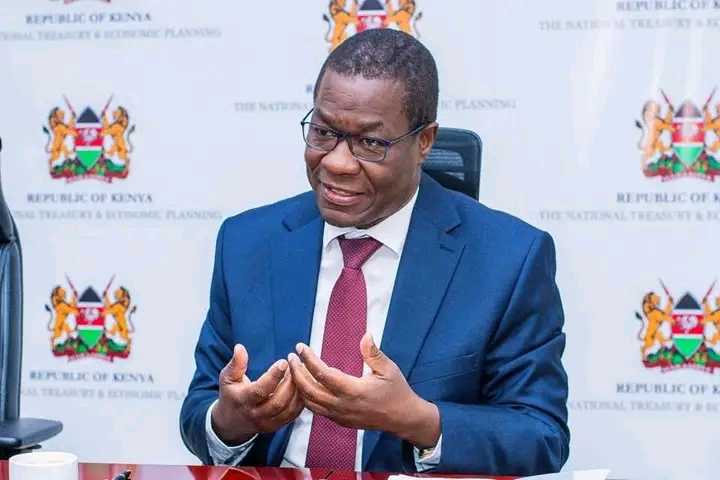
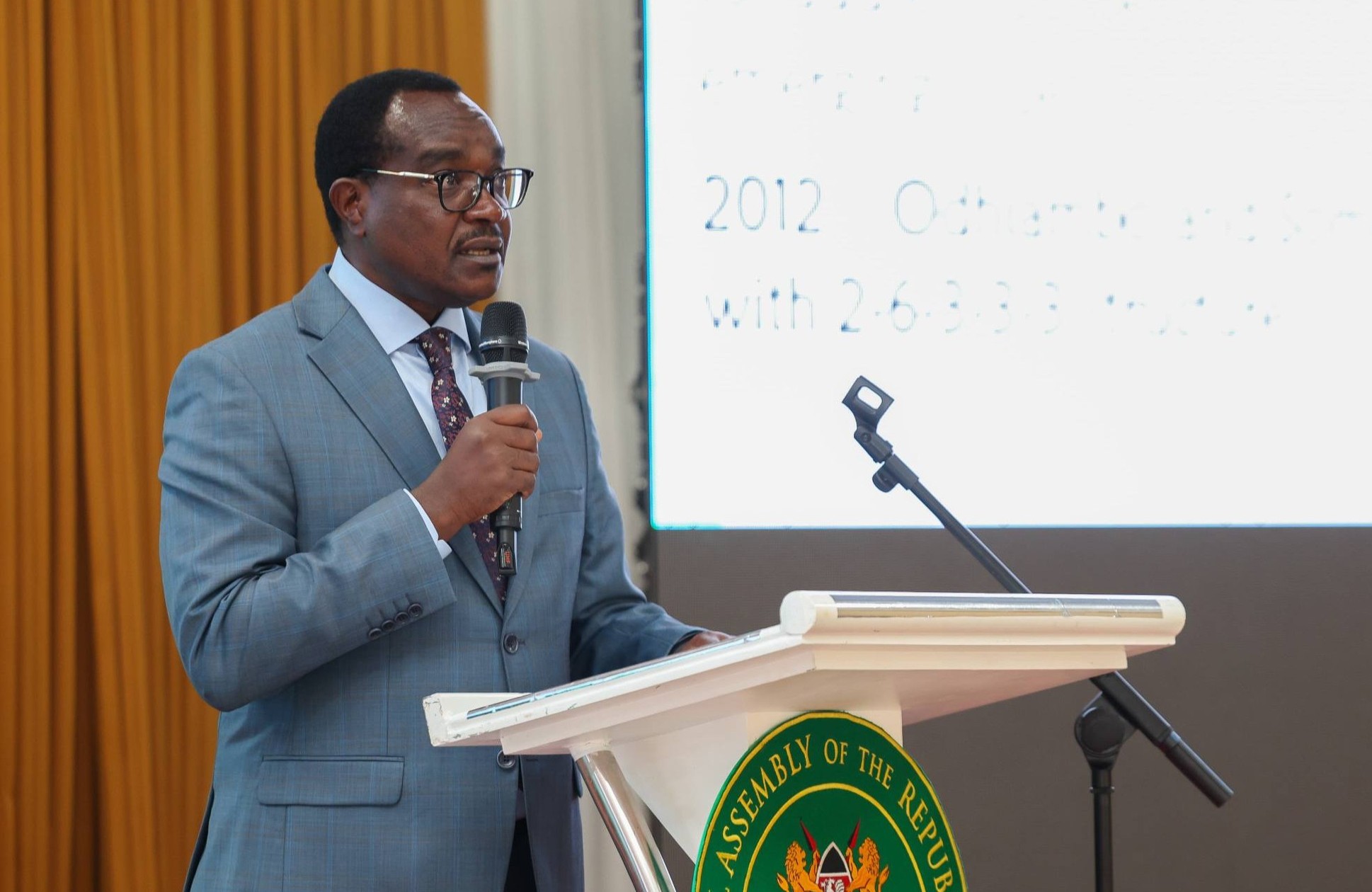
 Education Cabinet Secretary Julius Ogamba speaks during MPs' legilslative retreat in Naivasha on Wednesday, January 28, 2026. /PARLIAMENT
The education ministry is grappling with a Sh48 billion capitation funding deficit, a shortfall that threatens the full implementation of free and compulsory education across the country.
Education Cabinet Secretary Julius Ogamba told MPs on Wednesday that the ministry requires Sh727 billion to adequately fund education, compared with the Sh702.7 billion allocated in the 2025–26 financial year.
He said the additional funding would raise education spending to the World Bank-recommended threshold of 30 per cent of the national budget, from the current 28 per cent.
Ogamba was speaking during Parliament’s legislative retreat in Naivasha, Nakuru county.
He said primary education received Sh7 billion against a requirement of Sh9.7 billion, resulting in a Sh2.7 billion deficit. Junior secondary education was allocated Sh28.9 billion against a requirement of Sh49.7 billion, leaving a shortfall of Sh20.8 billion, while senior secondary education received Sh51 billion against a requirement of Sh76 billion, creating a Sh24 billion gap.
Despite the heavy investment in the sector, Ogamba said the ministry was still struggling to meet its funding obligations.
In the 2025–26 financial year, the government allocated Sh702.7 billion to education, translating to 28 per cent of the total budget. A significant portion went to the Teachers Service Commission, Free Secondary Education, Junior Secondary School capitation and teacher recruitment.
The Teachers Service Commission received Sh387.2 billion, including Sh7.2 billion for intern teachers.
Free Day Secondary Education was allocated Sh51.9 billion, Junior Secondary School capitation Sh28.9 billion, Free Primary Education Sh7 billion, while the TVET and Entrepreneurship project received Sh4 billion.
Ogamba said that for the current education calendar, the ministry has so far released Sh44 billion, representing 50 per cent of the Sh87 billion allocated by the Treasury.
“So from where we stand as a ministry we’ve done our part,” he said.
Meanwhile, Ogamba stunned MPs with an admission that the government does not know how much it costs to educate a child in Kenya, even as it runs a structured capitation programme for basic and higher education.
“We actually do not know as a country how much it costs to educate a child from Grade 1 all the way to university,” he said.
Currently, the government provides Sh1,420 per child per year for primary education, Sh15,042 for secondary education and Sh22,244 for free senior secondary education.
University and Technical and Vocational Education and Training students are funded through a mix of sponsorships and loans allocated on a needs basis using a Means Testing Instrument.
The tool analyses student data, including household income, to determine the appropriate mix of scholarships, loans and household contributions. Learners are classified into five bands ranging from vulnerable to less needy.
Needy students qualify for scholarships of between 30 per cent and 70 per cent, alongside upkeep loans of between Sh40,000 and Sh60,000, depending on their band.
The University Fund manages scholarships, while the Higher Education Loans Board administers the loans.
Ogamba said that although capitation amounts for basic education were arrived at following a taskforce analysis, it remains impossible to quantify the total cost of educating a child because government funding is supplemented by other sources.
“Government gives capitation which is tuition fees, CDF gives bursaries, county governments give bursaries (and) we are called to harambees and we donate to that same same number of children,” he said.
He added that philanthropic individuals and private sector players also provide bursaries to deserving students.
“So no actuarial analysis has been done to determine what is the actual cost,” Ogamba said.
He said the government is now collating data through the Kenya Education Management Information System, which tracks learners from early childhood education to university.
“We are creating a module which will give all our learners a unique number from ECD all the way to the universities so that when you are supporting a child, that amount has to be allocated to that child in that number,” he said.
“So that we can have a discussion — what is the total amount of money that we are putting in the sector other than the Sh702 billion which is what the government is giving.”
Ogamba said data generated through the system would help the ministry determine the true cost of educating a child once all funding streams directed at an individual learner are consolidated.
“If we put all these funds in one basket, then we will be able to meet the requirement of Article 53 on free and compulsory education across the board including issues relating to uniform and other expenses,” he said.
“We have had a challenge, and you will agree with me, this analysis has never been done. We need to face it, we need to do it, we have to be courageous about it so that we have a clear picture.”