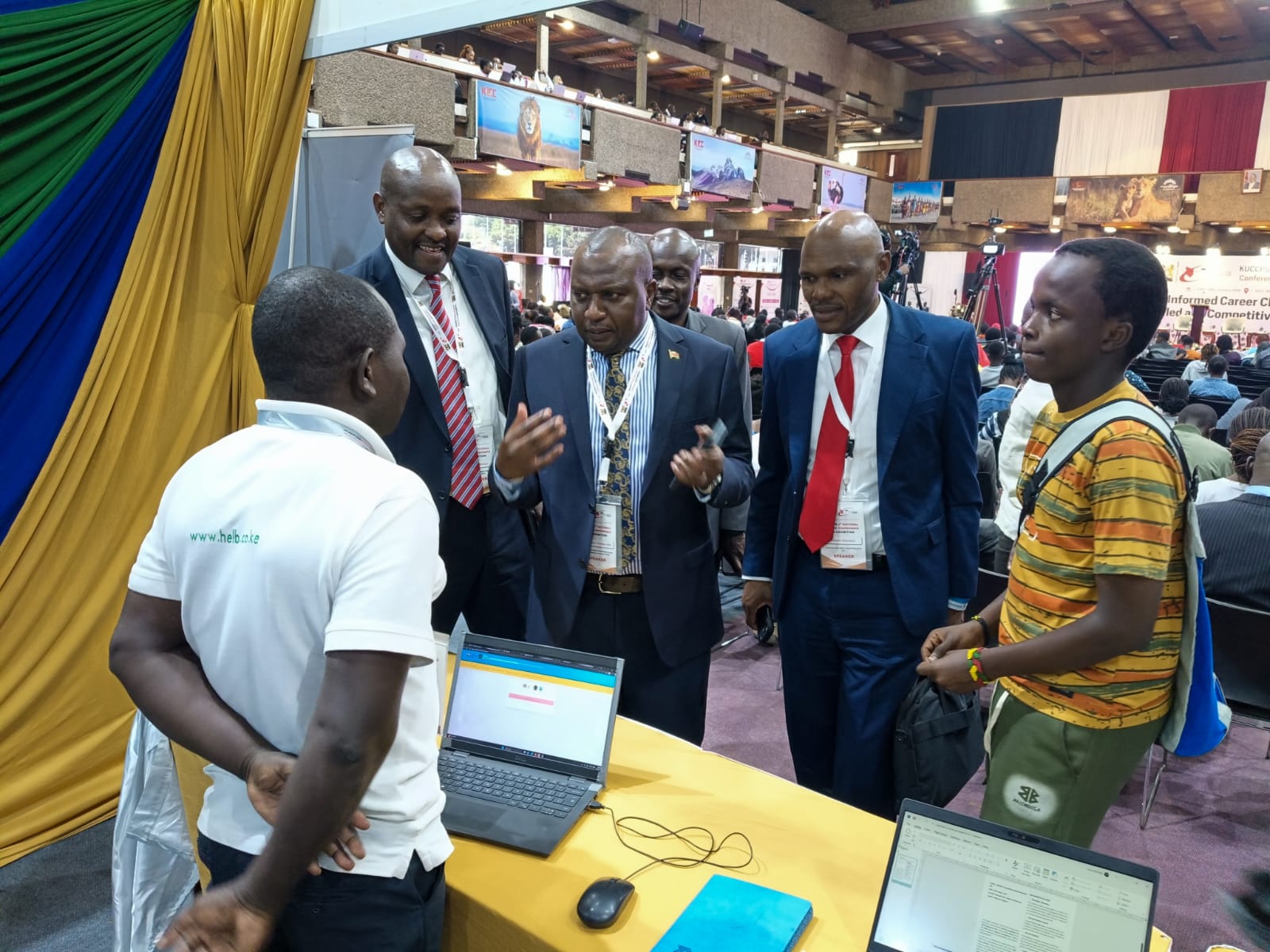
 MCK chief executive officer David Omwoyo visits an exhibition desk during a careers fair organised by the Kenya Universities and Colleges Central Placement Service at KICC, January 28, 2026.
The Media Council of Kenya has advised Form 4 leavers planning to advance their education to make career choices guided by skills and talent, rather than the perceived prestige of certain courses.
MCK chief executive officer David Omwoyo said shifting labour market dynamics—particularly in the media industry—have widened the gap between classroom training and newsroom expectations, leaving many graduates ill-prepared.
“There is an increasing divide between the newsroom and the classroom. We must ensure aspiring media practitioners are thoroughly prepared before entering the industry,” Omwoyo said.
The MCK boss warned that academic qualifications alone are no longer sufficient in a rapidly evolving media environment where practical skills, adaptability, and clarity of purpose increasingly define employability.
He urged students to make deliberate and personal career choices, cautioning against following paths shaped by societal pressure or expectations inherited from previous generations.
“As students choose their careers, we hope they take meaningful paths. Let us not force them to become who we were,” he said.
Omwoyo was speaking on Wednesday at the Kenyatta International Convention Centre (KICC) during the inaugural National Career Conference organised by the Kenya Universities and Colleges Central Placement Service (KUCCPS).
The forum, held under the theme “Informed Career Choices: A Skilled and Competitive Workforce,” brought together students, parents and other stakeholders.
Attendees had the opportunity to engage directly with representatives from various institutions, learning more about academic programmes, career pathways, and campus culture as KUCCPS prepares to open the next cycle of placement.
The MCK works closely with universities to ensure journalism and media studies programmes integrate hands-on training alongside academic instruction, enabling graduates to transition more smoothly into professional roles.
Omwoyo said the council has intensified collaboration with universities and media organisations to help bridge the gap between theory and practice.
He noted that the alignment between training institutions and industry players is critical to building a professional and competent media workforce.
A key pillar of the council’s intervention, Omwoyo noted, is its structured internship and industry attachment programme, which is designed to expose students to real newsroom environments before they graduate.
Through Memoranda of Understanding with 67 media houses across the country, the MCK facilitates placements that allow trainees to work alongside experienced journalists and editors, sharpening their practical skills and professional judgment.
“We have MoUs with 67 media houses, where trainees are attached to work alongside journalists and editors, ensuring they are industry-ready before they graduate,” he said.
Omwoyo observed that the media job market has become more competitive and fluid, with employers increasingly prioritising demonstrable skills, versatility and a clear sense of purpose over paper qualifications alone.
“The market and employers are not simply looking for the degree. There is work for everyone who knows what they want to do,” he added.
The conference also heard that changing education pathways are reshaping how students should think about training and financing.
Higher Education Loans Board (HELB) chief executive officer Geoffrey Monari said student financing models are evolving to reflect emerging skills needs and labour market demands.
Monari said the shift is intended to give learners more flexible and targeted access to training, especially in areas aligned with economic transformation and employment creation.
“Access to higher education financing should empower graduates to pursue courses that build relevant skills and open pathways to meaningful employment in a changing economy,” he said.
He encouraged students and graduates to make informed choices about courses and careers, stressing that education financing should be treated as a long-term investment tied to clear professional outcomes rather than short-term convenience.