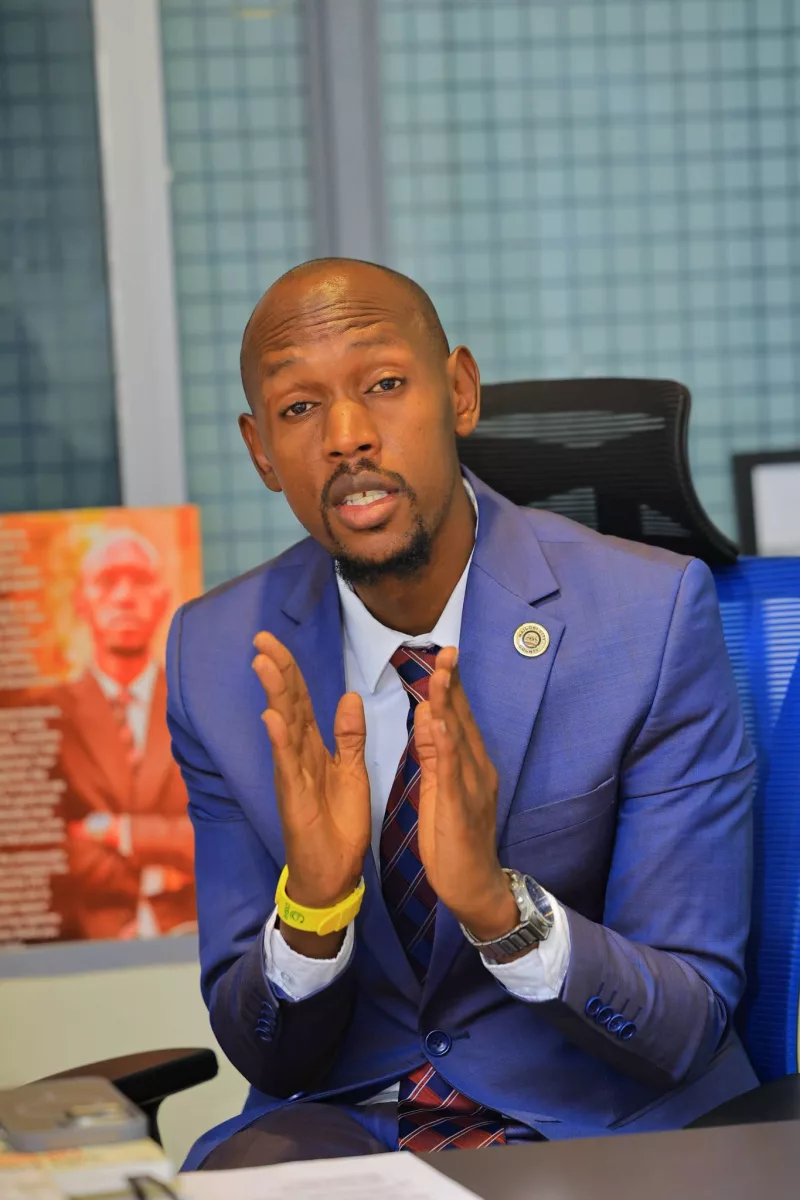
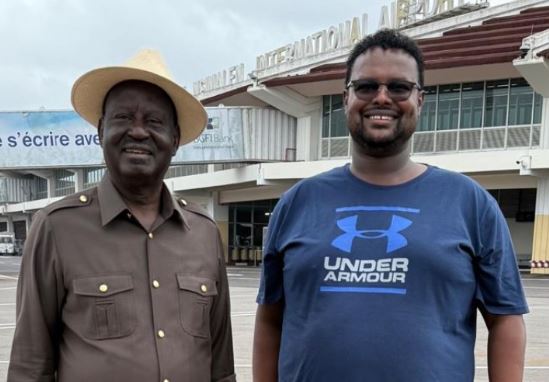
 Businessman Oketch Salah with former Prime Minister Raila Odinga./FILE
On Tuesday night a public dispute erupted between EALA MP Winnie Odinga and Oketch Salah, a figure who, until recently, was known to few outside select political and social circles.
The catalyst was a clash over Salah’s widely shared account of the final days of former Prime Minister Raila Odinga, whose death in October 2025 remains one of the most significant moments in Kenya’s recent political history.
Salah, a businessman and self-described close associate of the late former Prime Minister, had published an emotional narrative claiming he was with Odinga “from the time he first fell ill until his final moments on earth.”
In his statement, which he later said he stood by, Salah said that the experiences he recounted were “real, painful and lived,” and insisted that he would address the matter further in due course.
But Winnie Odinga—Raila Odinga’s daughter—strongly rejected these assertions, describing them in a sharp televised interview as “misleading” and, at times, “dangerous.”
She categorically denied that Salah was part of Odinga’s inner circle or was present at his death, stating bluntly that the idea he was there “is a flat-out lie… and talking about things that did not occur makes me question his intentions.”
Winnie’s critique was stark: “I have met Oketch Salah before, yes, but nobody really knows him,” she said during a live interview on Citizen TV on Tuesday night, underscoring the distance she perceives between her family’s reality and Salah’s public claims.
She also suggested that such statements, made amid national grief and ongoing political transition, should be subject to scrutiny to prevent misinformation.
Salah, for his part, responded by emphasizing respect for Raila Odinga’s widow, Mama Ida Odinga, noting that out of deference he initially remained silent after Winnie’s comments were aired. Yet he stood firm on his version of events, saying that despite public criticism, “I stand by everything I said about my last moments with Baba.”
This clash has not only sparked debate online and across national media—it has thrust Oketch Salah into the spotlight, raising questions about his relationship with one of Kenya’s most influential political figures and the narratives that surround the final chapter of Raila Odinga’s life.
Who is Oketch Salah?
Born and raised in Migori County in southwestern Kenya, Salah’s early life was reportedly grounded in a modest yet respected local family.
His father—the late Abdi Salah—was a well-known entrepreneur in Migori town, owning a bakery and one of the early multi-story buildings in the area.
Childhood friends say growing up in this environment, Salah learned the value of hard work, community ties, and cultural fluency, including speaking fluent Dholuo despite his paternal lineage tracing back to Somali roots.
A former schoolmate even revealed that Salah was a student at Migori Boys, but he left the school and may have cleared his secondary school education elsewhere.
Salah, the Kenyan businessman and political figure, gained national attention through his close association with the late opposition leader Raila Odinga.
He is widely described as Odinga’s adopted son or close confidant, having spent significant time with the veteran politician, especially during Odinga’s illness and treatment abroad.
For many years he lived a relatively private life before entering the public spotlight in 2025. He reportedly lived abroad and always flew to Kenya to join Odinga in his business and political trips.
He also stayed in Mombasa for some time for business.
Some supporters describe him as a loyal companion continuing Odinga’s legacy, while critics question the nature of his sudden prominence and his influence within political circles.
Philanthropy
He has also engaged in community activities, including pledges to support youth empowerment programmes and backing civic forums like Bunge la Wananchi, a grassroots platform for public debate.
Salah has provided financial support to several Bunges, including Jacaranda Bunge in Nairobi, Kisumu Bunge and Manyatta Bunge.
At Jacaranda Bunge, one of the country’s most visible civic assemblies, Salah’s support has been directed toward essential operational needs such as organising forums, maintaining sound systems and facilitating transport for moderators and participants.
Organisers say these contributions, though modest, have had a tangible impact.
Meetings have become more consistent, allowing sustained discussion on governance, youth participation and accountability without frequent interruptions caused by logistical constraints.
In Kisumu, a city with a long history of political mobilisation, Salah’s assistance has helped Kisumu Bunge increase the regularity of its meetings and broaden participation.
Manyatta Bunge, based in a densely populated area facing acute social and economic challenges, has also benefited.
Support has enabled the creation of more organised and secure meeting spaces, encouraging wider participation and reducing the likelihood of disruption.
Organisers say having a dependable supporter has boosted morale and affirmed the relevance of their work.
What distinguishes Salah’s involvement is his hands-off approach. He does not set agendas or attempt to influence debate outcomes, instead allowing each Bunge to determine its own priorities. This, he says, is deliberate.
“Bunges must remain independent and true to the people they serve; support should never compromise that autonomy,” Salah has said.
He has also framed his contributions as an investment in civic culture rather than an act of charity.
“These forums are schools of democracy where citizens learn to speak, listen and disagree without fear or violence,” he has noted, arguing that covering basic costs helps safeguard these democratic practices at a time when civic spaces face increasing strain.
Salah says rather than pursue prominence, he has chosen to strengthen platforms that enable wananchi to question power and hold leaders accountable.
Relationship with Raila and the controversy
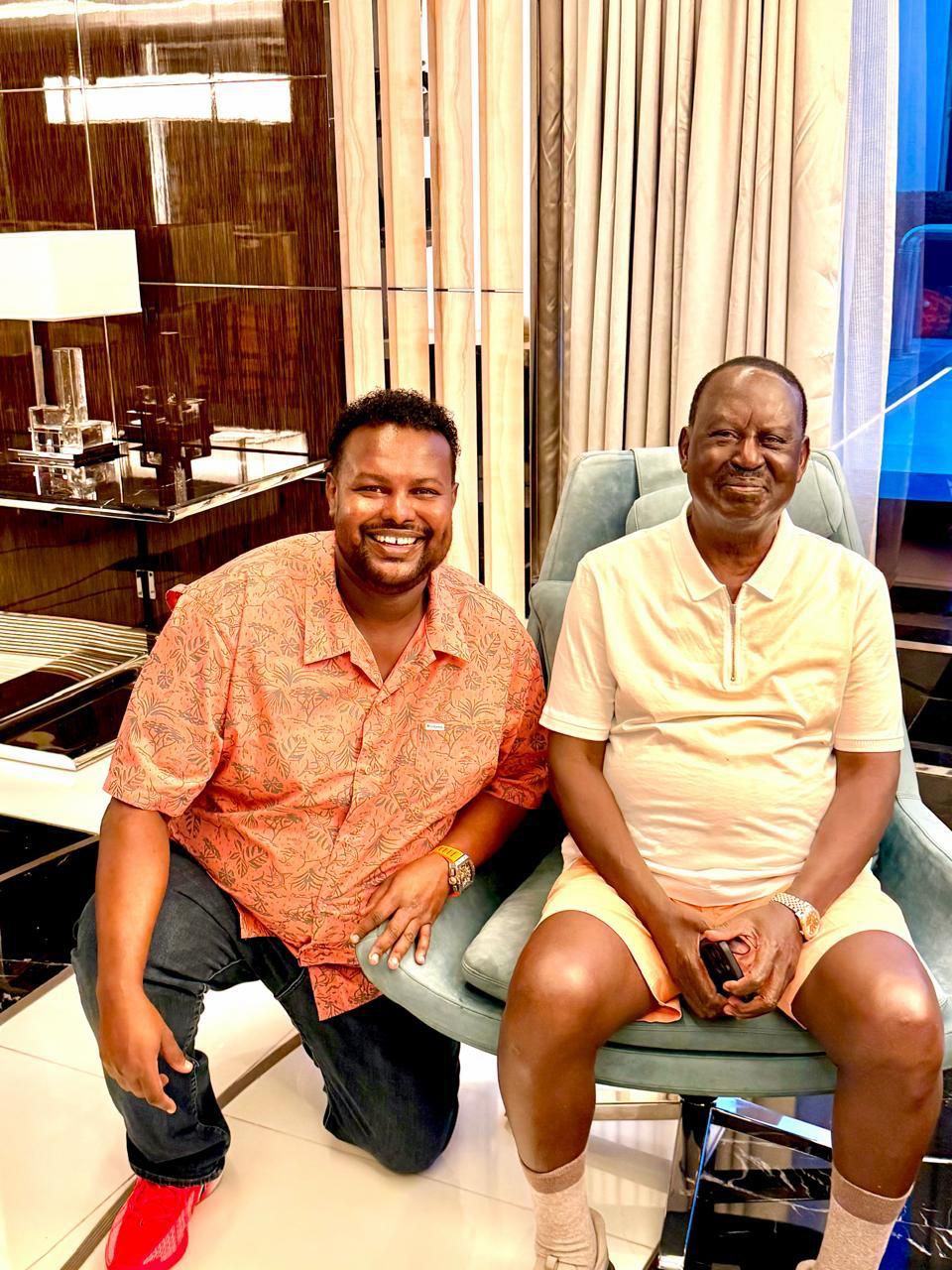 Businessman Oketch Salah with former Prime Minister Raila Odinga./FILE
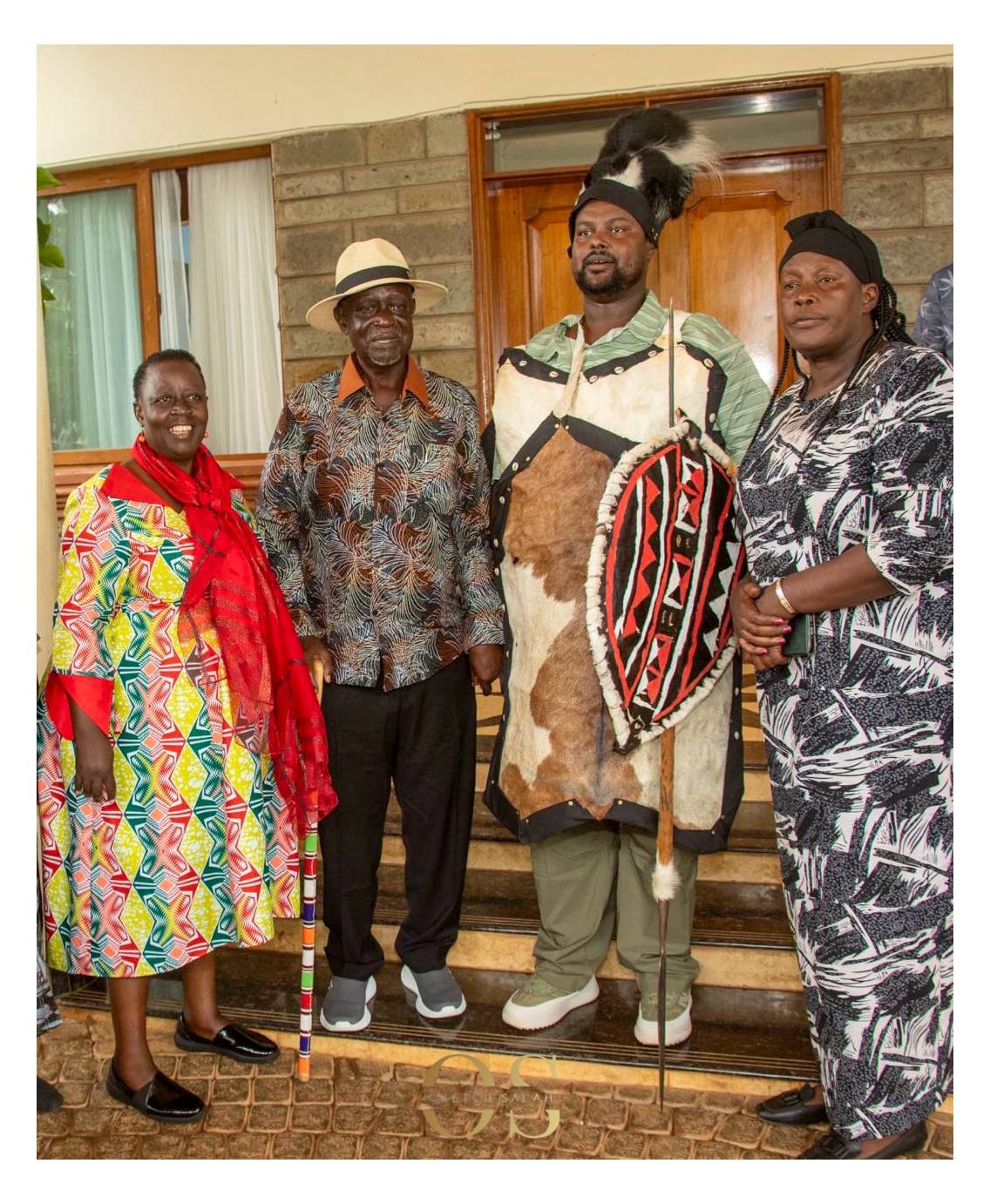 Businessman Oketch Salah and Kang'o ka Jaramogi./COURTERSY
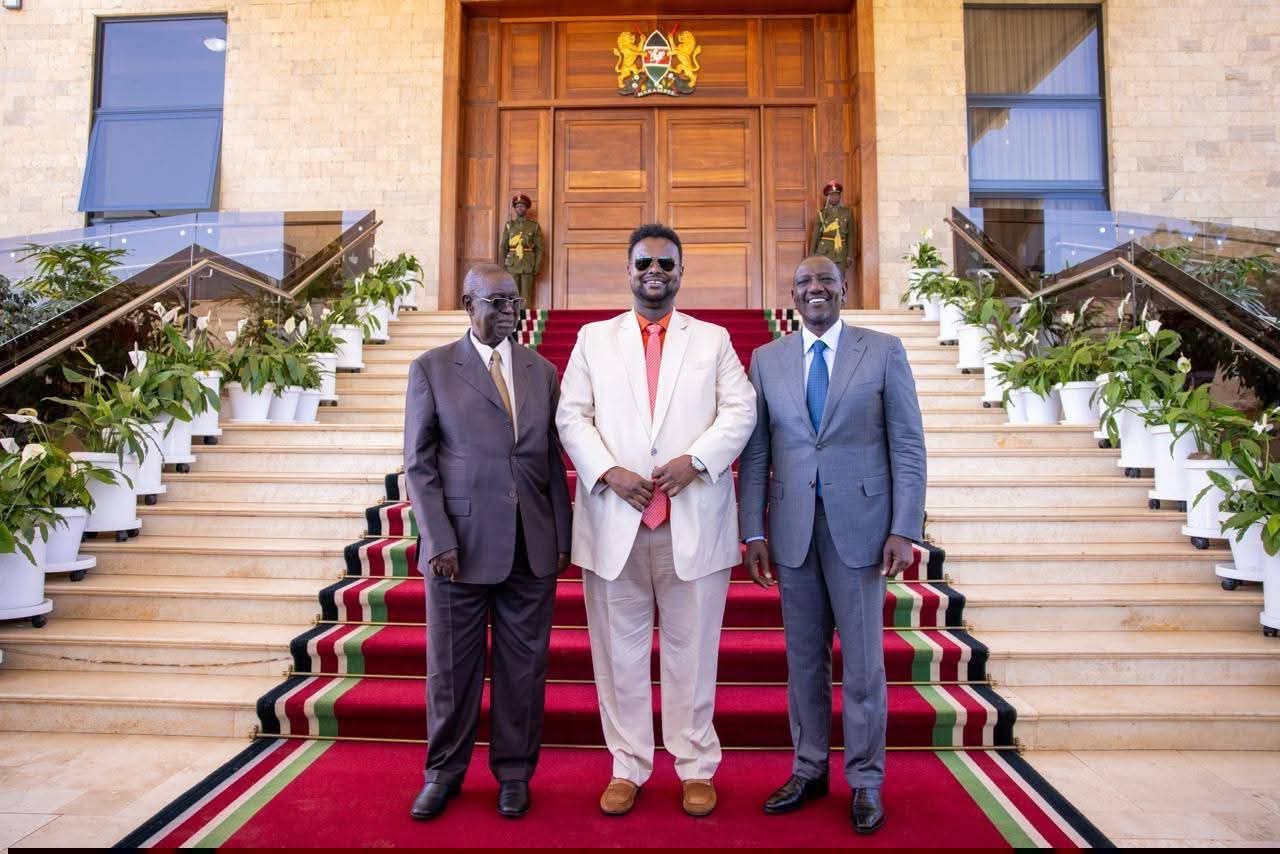 ODM party leader Oburu Odinga, businessman Oketch Salah and President William Ruto at State House, Nairobi./PCS
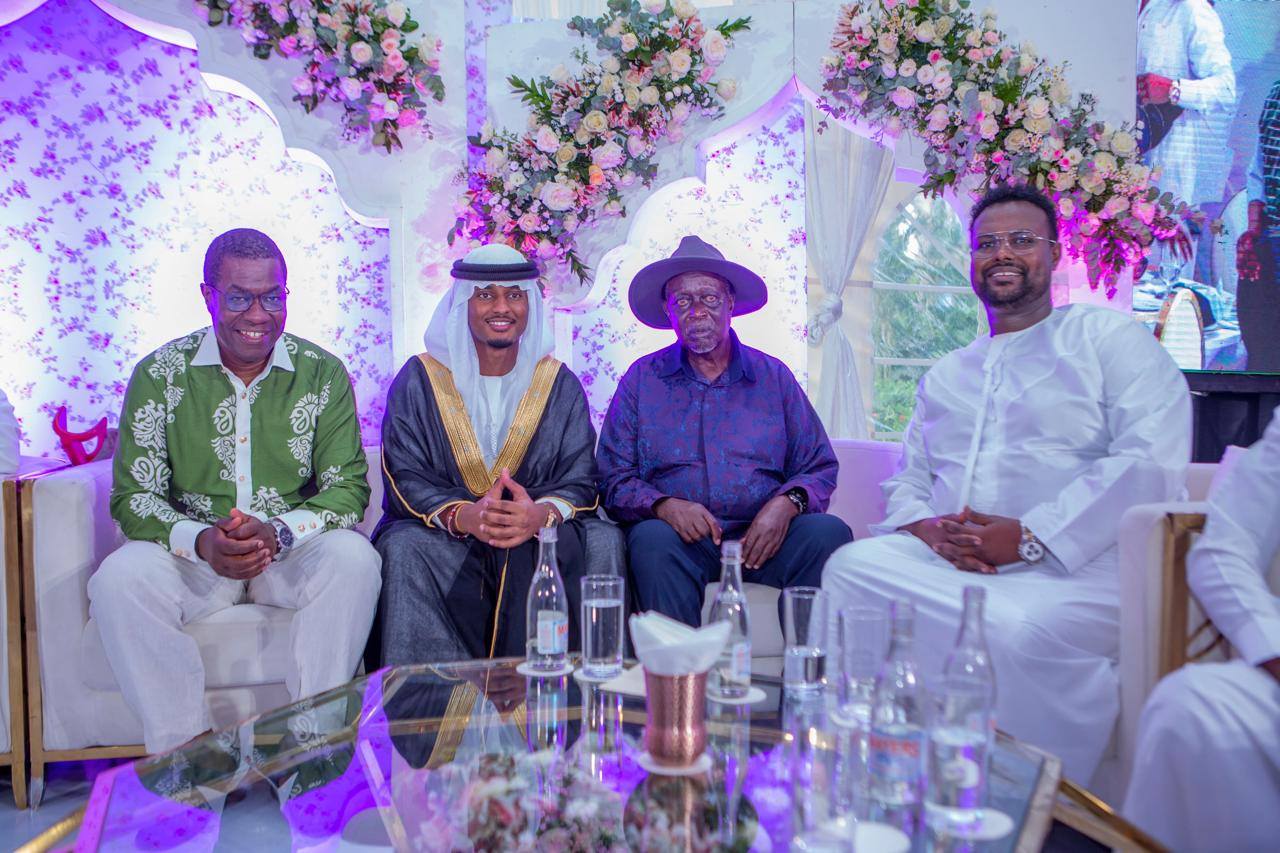 Energy CS Opiyo Wandayi, ODM party leader Oburu Odinga and businessman Oketch Salah during his son's wedding in October 2025. /COURTESY
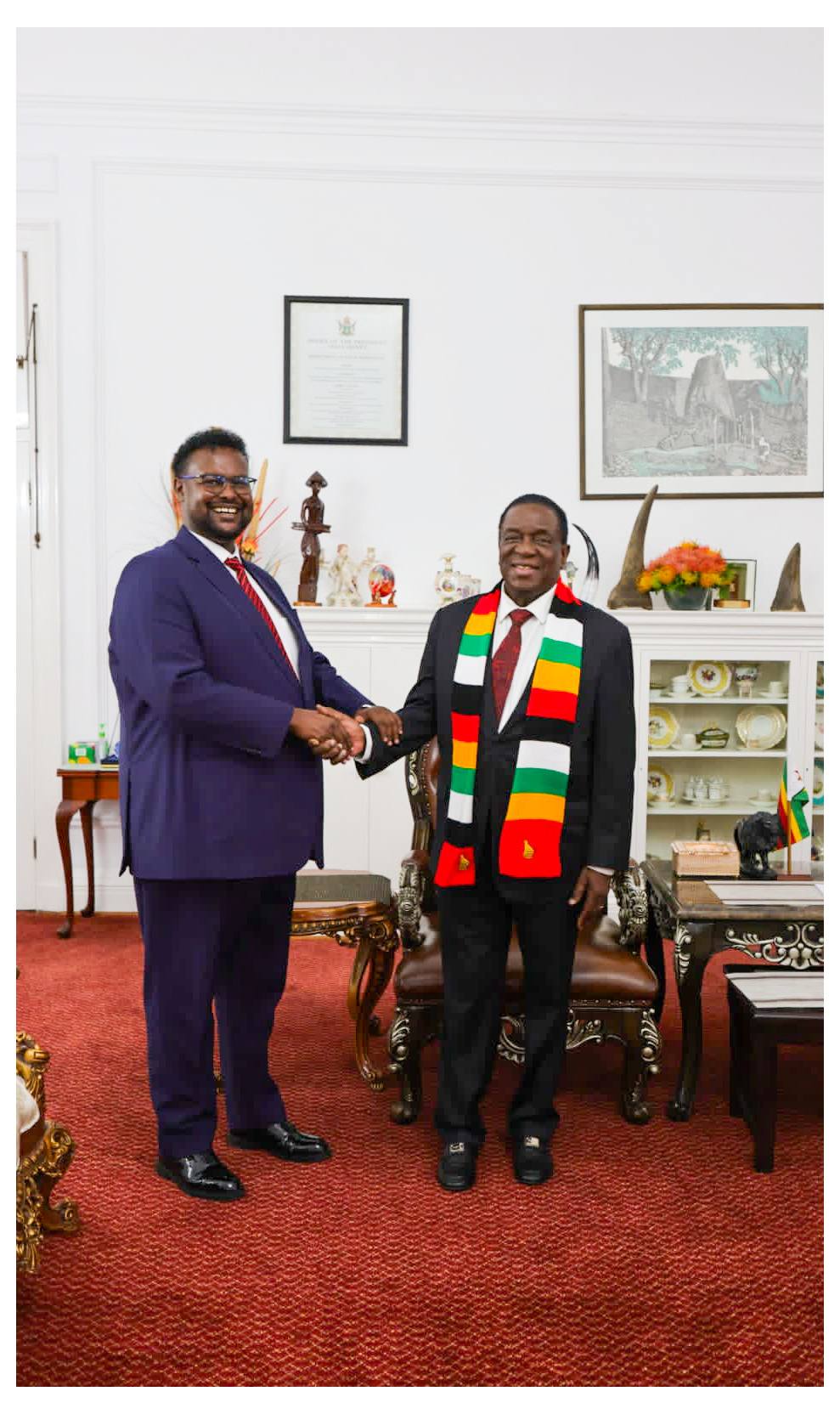 Oketch Salah with Zimbabwean President Emerson Mnangagwa. /HANDOUT
Salah is reportedly diversifying his family’s investments into gold mining in Nyatike, a hub for small-scale miners, cross-border traders, and speculative investors.
The gold industry relies heavily on political connections, access to mining sites, international buyers, and government cooperation—all areas that Salah seems to be navigating.
As his story is still unfolding. He is admired by some, scrutinised by others, and often misunderstood, yet he has secured a distinct role in Kenya’s evolving political landscape.
Critics view him as someone who entered Raila Odinga’s life too late and too conspicuously to be fully trusted.