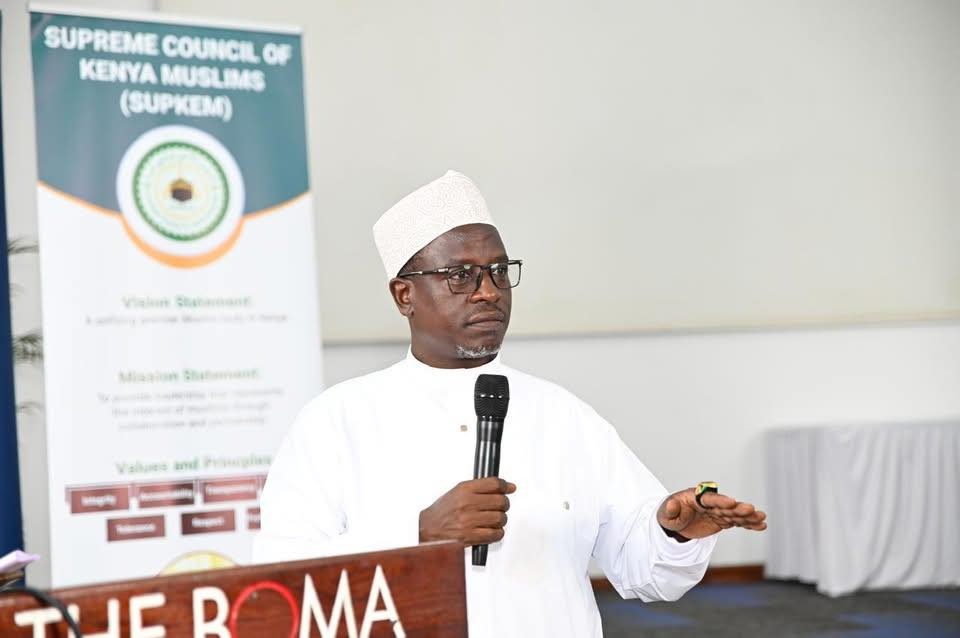
 SUPKEM National Chairman Al-Hajj Hassan ole Naado/FILE
The Supreme Council of Kenya Muslims (Supkem) has commended the government for facilitating the duty-free importation of dates ahead of the holy month of Ramadan, terming the move a timely boost for Muslim communities across the country.
The initiative, the council said, will help ease the cost burden on faithfuls while strengthening the spirit of charity and compassion that defines the sacred season.
In a statement, Supkem national chairman Hassan Ole Naado underscored the importance of gratitude in Islam, recalling the teachings of Prophet Muhammad (peace be upon him).
“He who does not thank people, does not thank Allah,” he said, adding that acknowledging goodwill and positive action remains central to faith and communal harmony.
Naado expressed appreciation to President William Ruto and Treasury Cabinet Secretary John Mbadi Ng’ongo for their support in enabling the initiative.
“This initiative goes beyond the provision of food. It embodies the values of compassion, unity, and generosity that Ramadan inspires,” Naado said.
“Dates are not just a staple for breaking the fast; they are a symbol of the communal spirit and the importance of sharing with those in need.”
The move follows a request from Supkem to the government for an exemption from taxes on dates imported for distribution to Muslims during Ramadan, expected to commence on February 19, 2026.
The request was submitted to the National Treasury following deliberations during a consultative meeting on drought mitigation, food security, and protection of vulnerable populations.
In response, the Treasury CS granted an exemption from the Import Declaration Fee (IDF) and the Railway Development Levy (RDL) on dates imported for Ramadan.
While the government will cover import duty and VAT, the measure ensures that dates reach communities at minimal cost and in a timely manner.
The tax exemption applies from February 12 to March 20, 2026.
Muslims will celebrate Ramadan on the evening of February 17 to March.
Dates may, however, vary.
Naado also singled out Mbadi for his role in facilitating the initiative, citing another prophetic teaching: “The best of people are those that bring the most benefit to others” (Sahih Al-Jami).
He encouraged communities to embrace the opportunity not only as a provision for themselves but also as a chance to extend support to the vulnerable and needy, reinforcing social cohesion and collective responsibility.
“This gesture reflects the government’s commitment to inclusivity and social welfare, especially for religious communities observing the holy month,” Naado said.
“It is a reminder that governance and faith can work hand in hand to uplift society.”
Dates, which are traditionally consumed to break the fast during Ramadan, play a vital role in the spiritual and nutritional observance of the month.
By making them more accessible, the initiative allows families across Kenya, including those from low-income backgrounds, to participate fully in Ramadan practices.
Religious leaders and community organizations have welcomed the move, noting that it reduces financial strain while promoting the culture of giving and charity that is central to the holy month.
The Supkem boss called on Muslims nationwide to reflect on the deeper meaning of Ramadan, which extends beyond fasting to acts of kindness, charity, and gratitude.
“This is the season to strengthen our bonds as a community, support the less fortunate, and exemplify the values taught by the Prophet,” he said.
Through this initiative, the government and Supkem aim to reinforce a sense of shared responsibility and compassion, ensuring that Ramadan is observed with dignity and joy for all.
By easing access to dates, the initiative is not only meeting a practical need but also nurturing the spiritual essence of the holy month, emphasizing unity, generosity, and service to others.