Nairobi Woman Representative Esther Passaris has raised concerns over an image circulating on social media, asserting that it misrepresents her and is AI-generated.
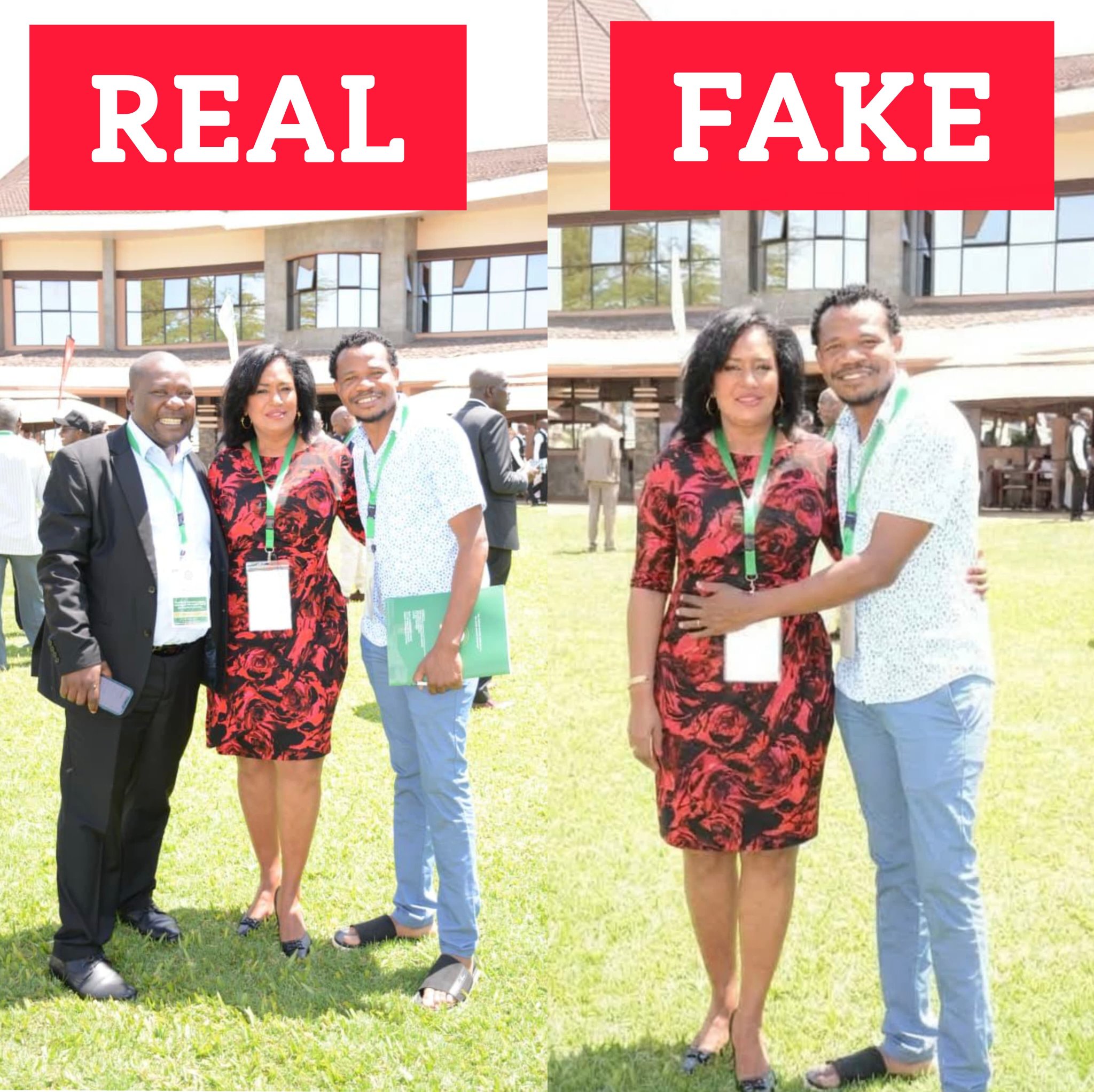
The image shows Passaris posing closely with Mumias East MP Peter Salasya, with her hand on his back near the waist and Salasya placing his hand on her belly and back. Passaris had previously shared the photograph herself.
Her statement comes on the sidelines of Data Protection Day, a global observance highlighting the growing challenges of distinguishing authentic content from digitally altered material.
Social media users noted the risks of artificial intelligence (AI) in producing misleading visuals, with posts comparing the real photograph to the AI-altered version, emphasising how easily images can be manipulated without consent.
Passaris cautioned her followers about the dangers of such manipulations. “Today is Data Protection Day. This image shows how easily reality can be manipulated. One version is AI-generated with @pksalasya. One is real. In today’s digital age, it’s becoming harder to tell the difference, which is why privacy, ethical data use, and responsible sharing matter more than ever," she said.
"Data protection, digital ethics, and stronger cyber laws, including Kenya’s cybercrime and data protection frameworks, are not just “tech issues.” They protect real people from digital harm. Always verify because in 2026, seeing is no longer believing."
Experts say the incident highlights a global challenge: the rapid rise of generative AI tools capable of producing hyper-realistic images and videos. While these technologies can be innovative, they can also be misused to distort facts, spread misinformation, or defame individuals.
Kenya’s Cybercrime and Data Protection laws provide safeguards against digital harm, including identity theft, cyberbullying, and unauthorised use of personal images. However, regulators and users face an ongoing challenge in keeping pace with rapidly evolving AI capabilities.