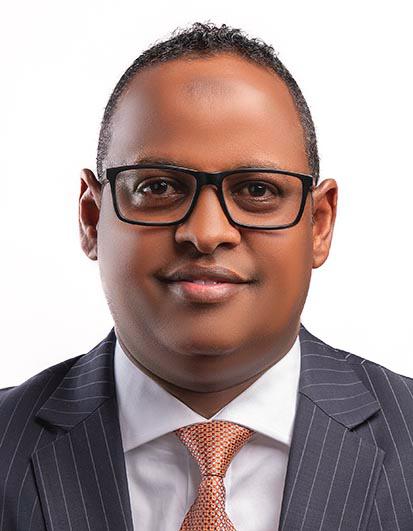
 Hon. Mustafa Abdirashid Ahmed MCA Iftin and current Deputy Speaker of Garissa County Assembly./COURTESY
Former Deputy President Rigathi Gachagua did not merely speak about Northern Kenya; he shattered a long-protected silence. His remarks on underdevelopment in the region landed like a slap, not because they were reckless, but because they dared to redirect blame inward.
By claiming that Northern Kenya has received in excess of one trillion shillings through counties, CDF, NGAAF, and other state interventions, only for the money to be looted by its own leaders, Gachagua committed the ultimate political sin; he questioned a sacred narrative. Northern Kenya has for decades been framed, correctly, as a victim of historical injustice and state neglect.
That history is real, painful, and documented. But Gachagua’s provocation was this; at what point does victimhood expire as an excuse? At what point does marginalisation stop being the only explanation and start sharing space with misrule? The fury that followed his remarks was instant, yet tellingly selective.
While some condemned him for insulting and poking his nose on the region, many within Northern Kenya quietly nodded in agreement. Professionals, civil servants, and ordinary citizens echoed what he said in private conversations; that the region’s greatest tragedy today is not lack of money, but the industrial-scale betrayal by those entrusted with it.
The evidence, though uncomfortable, is visible. The explosion of luxury apartments, hotels, transport companies, and prime real estate in Nairobi, Mombasa, and other cities owned by politicians from chronically poor counties is not a coincidence. It is a pattern.
While children learn under trees and hospitals run without medicine back home, political elites have mastered the art of exporting public wealth and importing private comfort. Poverty remains local while prosperity relocates.
Gachagua’s most biting accusation was not theft, but abandonment. According to him, many leaders mentally resign from their constituencies the moment they win elections. Their loyalty shifts from voters to deals, from service to survival, and from development to accumulation. Droughts, insecurity, and marginalisation then become recycled talking points, useful for fundraising, political bargaining, and emotional blackmail, but rarely for genuine reform.
Yet balance matters. To suggest that Northern Kenya’s problems would disappear with good leadership alone is dangerously simplistic. The region faces brutal structural constraints: harsh climate, vast distances, fragile ecosystems, historical insecurity, and decades of delayed infrastructure. Development here is slower, costlier, and more vulnerable than in other parts of the country.
Even honest leaders operate within an unforgiving environment. Moreover, the national government is not an innocent bystander. Budget delays, policy incoherence, failed drought responses, and security lapses have repeatedly undermined local efforts. Central corruption does not stop at county borders.
To shift the entire blame to local leaders risks laundering the state’s long record of neglect under the banner of generosity. Still, the uncomfortable truth remains; devolution did not just bring resources closer to the people, it brought temptation closer to power. In too many cases, it decentralised corruption faster than it decentralised development.
Weak oversight, clan-based voting, fear of speaking out, and the weaponisation of identity created an ecosystem where poor performance carries little political cost. This is why Gachagua’s remarks stung. They punctured a culture of denial that has long shielded mediocrity and theft behind historical grievance.
For years, failure was blamed exclusively on National Government, colonial ghosts, or climate change. While all are real factors, they have also become convenient hiding places for leaders who enrich themselves while presiding over stagnation. Of course, the messenger is not neutral. Gachagua speaks as a fallen insider; impeached, politically wounded, and estranged from the power structure he once defended.
His sudden bluntness raises legitimate questions about motive. But motive does not automatically nullify truth. Sometimes the most honest confessions come from those no longer protected by the system. What makes this moment significant is not Gachagua himself, but the reaction to him.
Many from Northern Kenya openly admitted that his words reflect reality and would influence how they vote. That admission signals a quiet but dangerous shift; the erosion of blind loyalty and the rise of accountability politics. Northern Kenya stands at a crossroads. It can continue weaponising its pain to excuse failure, or it can confront the rot within its leadership class.
Marginalisation is real, but so is misrule. History explains much, but it does not absolve everything.
Gachagua held up a mirror. The outrage came not because the mirror lied, but because the reflection was too familiar. And sometimes, the most offensive thing in politics is not an insult, but the truth spoken without apology.
The author is the MCA for Iftin Ward and Deputy Speaker of the Garissa County Assembly. A columnist and a playwright.