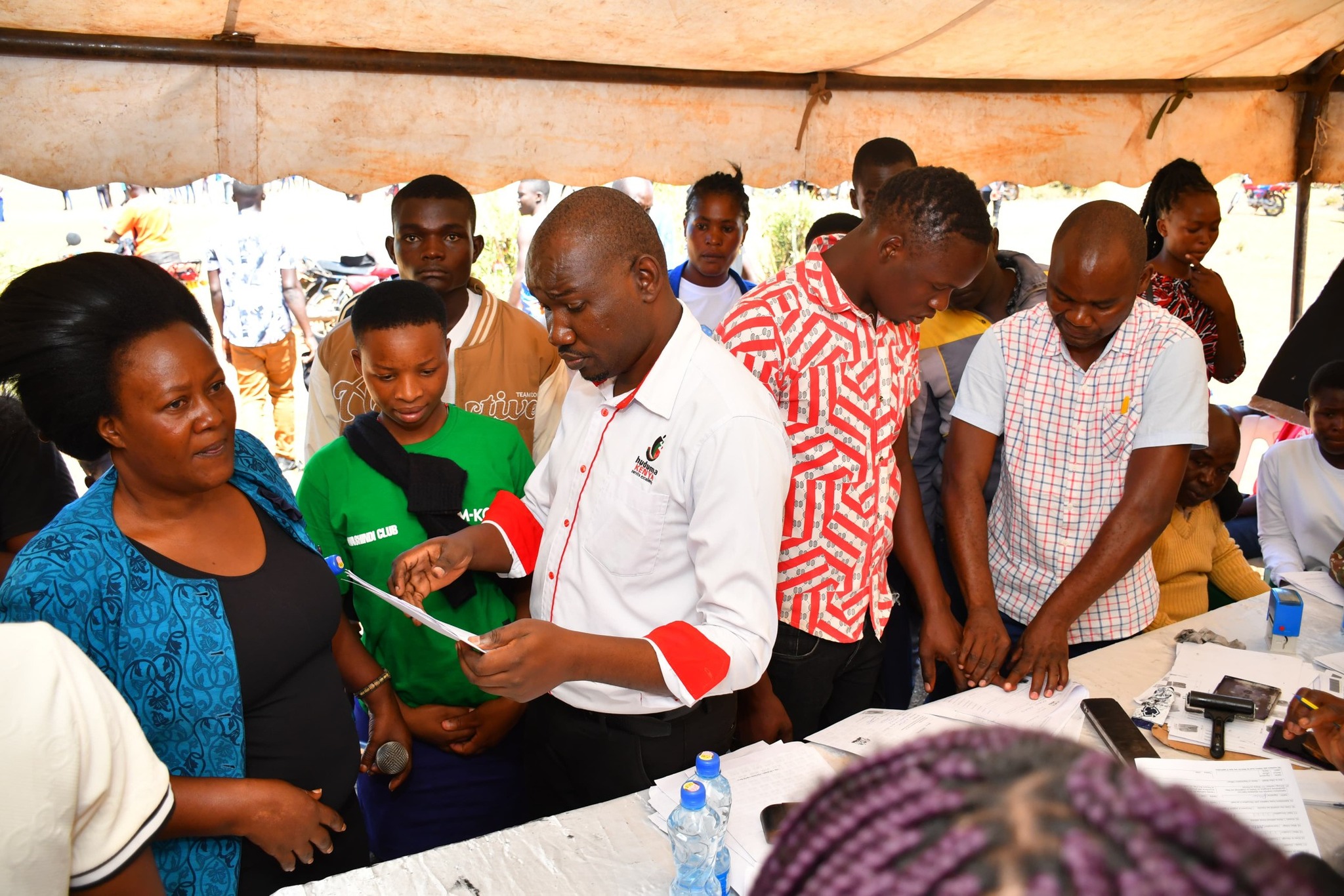
 ID issuance and voter registration exercise at Pap Kogalo, North Kadem Ward in Migori county./FILE
A targeted mobile national identity card registration drive is emerging as a major force that could significantly reshape Kenya’s political landscape ahead of the 2027 General Election.
Previously undocumented citizens and newly eligible youth will be free to enter the democratic space for the first time.
The drive, which focuses on senior citizens, youth, and residents of historically marginalised regions, including parts of Northern, Eastern and the Coast, is aimed at registering more than one million Kenyans who have long remained outside the formal system.
With national identity cards serving as the gateway to voter registration, the initiative is expected to translate directly into an expanded and more diverse electorate, altering voting patterns and political calculations across the country.
With IDs in hand, those newly documented will be eligible to participate in the 2027 elections, forming part of the 6.3 million Kenyans the Independent Electoral and Boundaries Commission (IEBC) is targeting for new voter registration.
This group includes citizens who have attained the age of 18, those who have never registered as voters before, and voters seeking to transfer their registration details to new polling stations.
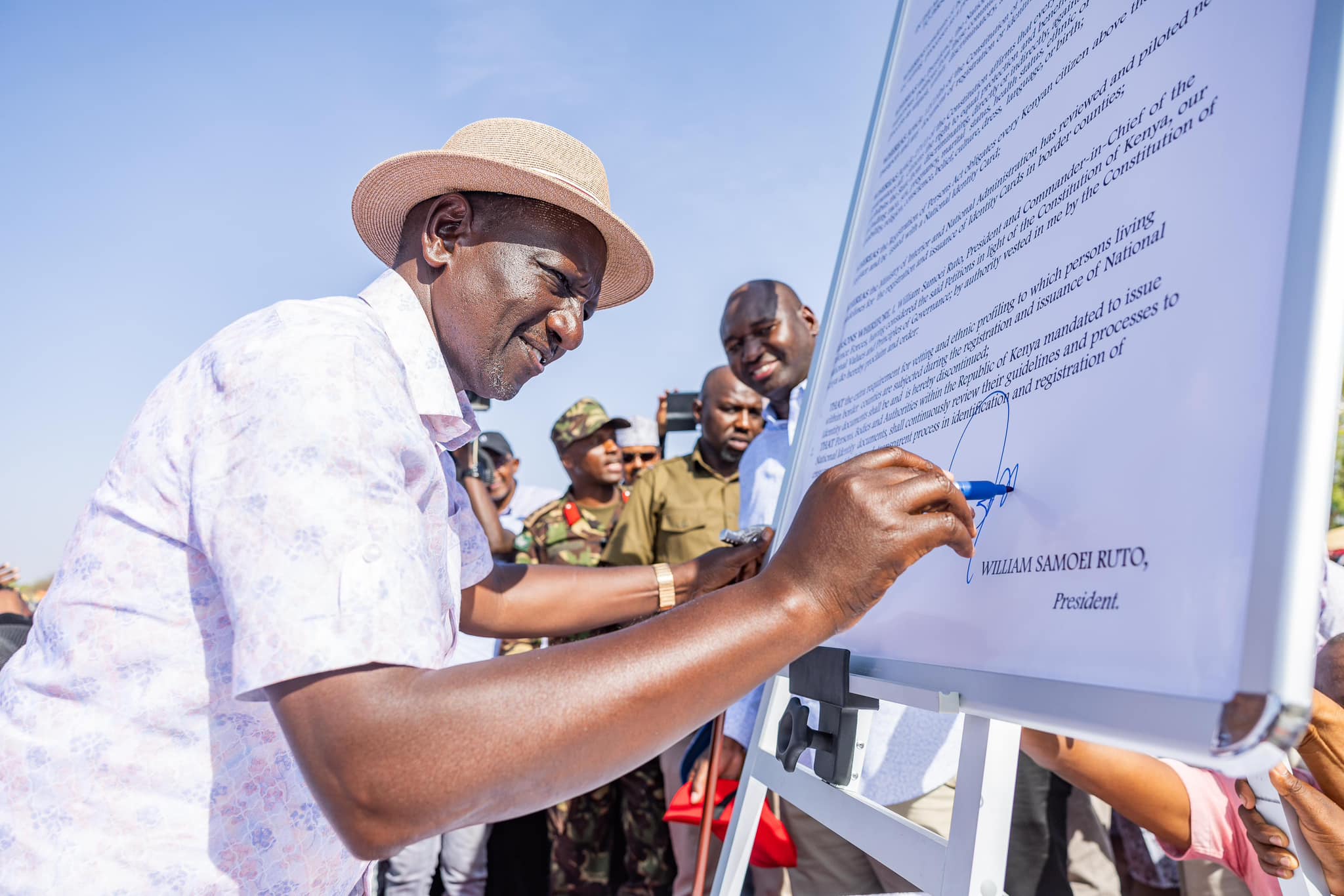 President William Ruto signs agreement to end extra-vetting for IDs in border counties on February 5, 2025/PCS
Without it, citizens are effectively excluded from the democratic process, regardless of their political preferences or civic awareness.
IEBC Commissioner Alutalala Mukhwana underscored this requirement in September 2025 while announcing the start of continuous voter registration in preparation for the 2027 General Election.
He said eligible voters must present their original national identity card or a valid Kenyan passport to register, reaffirming the central role of documentation in democratic participation.
The scale of the potential shift becomes clearer when viewed against past figures.
During the August 2022 General Election, a total of 22,120,458 voters were registered to participate across the presidential, parliamentary and county ballots.
Of these, 14,326,641 ballots were cast, translating to an overall turnout of about 64.8 per cent.
The addition of millions of new voters by 2027 could not only raise turnout figures but also redraw electoral battlegrounds, especially in regions that have traditionally recorded low participation.
With IDs and the subsequent registration of new voters, analysts say the political terrain is likely to change drastically.
Areas that record large numbers of new voters are expected to become hotly contested, as politicians seeking elective seats intensify campaigns to court first-time voters whose loyalties are not yet firmly established.
Interior Principal Secretary Raymond Omollo has pointed to policy and technological changes that are accelerating the registration drive.
He noted that following a Gazette Notice issued on October 31, 2025, which made first-time ID registration free from November 1, demand for the document has risen sharply.
“Service delivery has been further enhanced through the introduction of biometric live capture units, which allow applicants to be captured and forwarded directly to the printing stage, substantially reducing waiting periods and improving customer experience,” Omollo said.
He added that the government plans to deploy mobile biometric live capture kits under the Huduma Mashinani initiative, taking services closer to the people and easing pressure on fixed registration centres.
According to Omollo, the government has also acquired modern live capture machines to facilitate on-the-spot registration, with a target of issuing IDs within three to ten days.
In January 2026, the government rolled out a targeted mobile national identity card registration drive focusing on senior citizens and previously undocumented individuals.
The initiative is anchored in Cap 107 of the Registration of Persons Act, which requires all Kenyan citizens who attain the age of 18 to register for legal recognition.
For decades, many of those now being reached by the drive lived on the margins of the system.
Their lack of documentation locked them out of social protection programmes, healthcare registration, voter participation and even basic administrative services, reinforcing cycles of exclusion and poverty.
The human impact of the exercise has been vividly illustrated in counties such as Siaya, where dozens of senior citizens turned up for mobile registration drives.
The joy of finally holding a national identity card was unmistakable on their faces. For many, the small laminated card symbolised far more than identification, it was a long-awaited key to rights and services denied to them for decades.
Though visibly elderly, some well into their 70s, residents narrated lives lived without legal recognition in a country where a national ID is mandatory to access critical government services.
Many said they had never been registered, while others lost their identification documents in the 1980s and never managed to replace them.
Hundreds of senior citizens from Alego Usonga were among those who turned up for the ongoing mobile registration drive, reflecting renewed hope of finally accessing key government services and participating fully in national life.
Omollo hailed the large turnout among the elderly in Siaya as a major milestone towards inclusion and equity.
“For decades, many of these elderly citizens were left undocumented, a historical injustice that denied them access to essential government services and the ability to fully exercise their democratic rights,” he said.
He added that the initiative is not just about documentation, but about correcting long-standing exclusion and affirming the government’s commitment to dignity, participation and equal opportunity for all Kenyans.
Beyond the elderly, youth are expected to be the biggest beneficiaries of the expanded registration drive.
With millions expected to turn 18 before the next election, their successful documentation and voter registration could inject new energy and unpredictability into Kenyan politics.