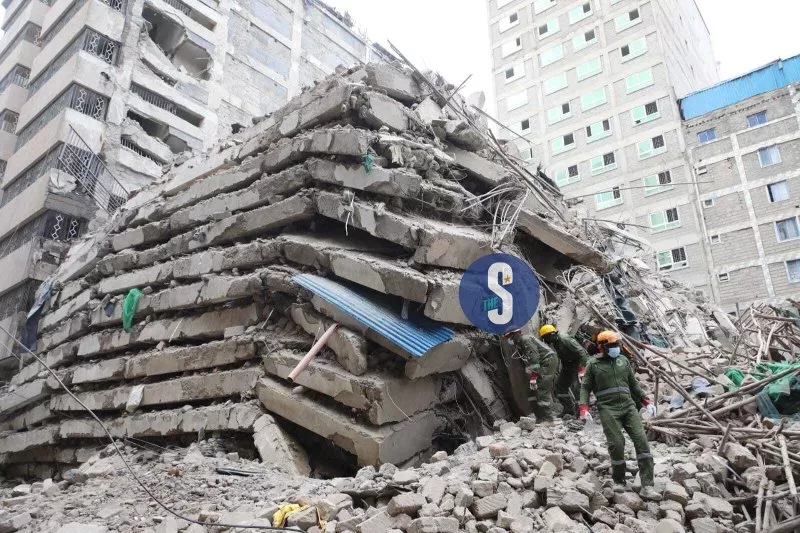
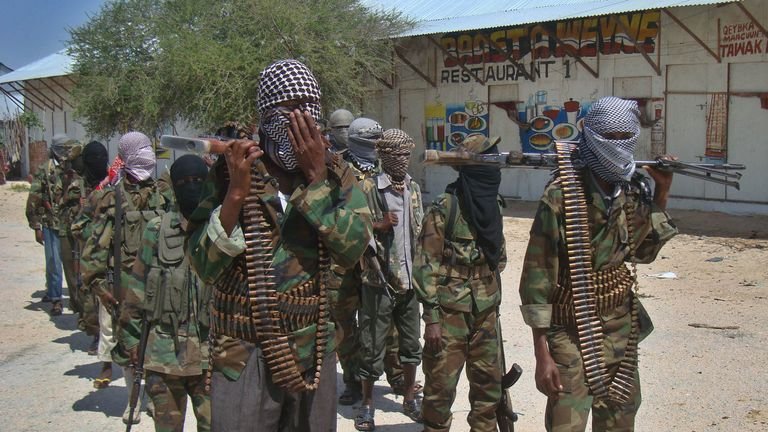
 Al Shabaab militants have taken credit for most of the attacks in Northeastern region.
Reports that suspected al Shabaab militants attacked and killed a teacher in Garissa county have revived painful memories of a dark chapter that dominated headlines from the early 2010s through to 2020.
The reports have rekindled fears that the militant group may be resuming attacks on educators, particularly non-local teachers.
The Teachers Service Commission (TSC) confirmed that Stephen Vundi Musili, a teacher at Hulugho Primary School, was attacked and killed on Monday, January 26, in an incident blamed on suspected al Shabaab militants.
According to authorities and media reports, heavily armed gunmen stormed Musili’s house in the early hours of the night and shot him dead.
Moments later, they also killed the area chief who lived in a neighbouring house.
“The commission strongly condemns this heinous and cowardly act of terror, which has not only robbed a young teacher of his life but also undermines the right to education, peace and security for teachers and learners alike,” acting TSC chief executive Evleen Mitei said.
She said the commission would accord Musili’s family all necessary support to ensure a dignified send-off and reaffirmed TSC’s commitment to improving the welfare and safety of teachers across the country.
Mitei described Musili as a dedicated educator who remained committed to imparting knowledge to learners despite working in a challenging and insecure environment.
His killing has once again highlighted the precarious safety of teachers in Northeastern Kenya, particularly in Garissa, Wajir and Mandera counties, despite sustained government efforts to stabilise the region.
Attacks on schools and staff quarters have continued to pose a serious threat to lives and to the continuity of learning in the arid and semi-arid areas, with non-local teachers often singled out by the Somalia-based militant group.
Preliminary reports on the latest attack suggest the assailants may have crossed into Kenya from Somalia during the night, reportedly fleeing intensified fighting involving Jubaland special forces.
Musili’s death comes after nearly six years of relative calm.
The last documented attack before this occurred on January 3, 2020, when suspected al Shabaab militants killed three teachers at Kamuthe Resource Centre in Fafi subcounty, Garissa county.
In that incident, heavily armed militants ambushed the trading centre and selectively executed three non-local male teachers stationed at the resource centre, about 50 km from Garissa town.
The attackers also overran and torched the Kamuthe Administration Police post after overpowering security officers, forcing them to flee into nearby thickets.
Preliminary reports at the time indicated that female public servants rounded up during the dawn raid were spared.
That attack came barely a month after suspected militants killed two non-local teachers when they stopped a Mandera-bound bus in Wajir county.
Eight police officers travelling in the same vehicle were also executed.
Earlier, on October 10, 2018, two teachers were killed when suspected al Shabaab militants attacked teachers’ quarters at Arabia Boys Secondary School in Mandera county, detonating explosives before opening fire.
Police said more than 20 militants were involved in the attack and later escaped.
The then county commissioner, Olaka Kutswa, said the attackers hurled an improvised explosive device into one of two blocks housing non-local teachers.
Months earlier, on February 16, suspected militants killed three teachers and injured others in a night attack at Qarsa Primary School in Wajir county.
A senior police officer told a local media outlet that explosives had been planted along access roads, slowing the response by ambulances and security teams.
A police vehicle responding to the incident was partially damaged by an IED.
The most horrific attack targeting teachers occurred in November 2014, when militants stopped a bus ferrying commuters home for Christmas and lined up 28 of them, before executing them by the roadside.
Months later, in April 2015, the country was shaken by the Garissa University attack, in which more than 140 students were killed.
Official Ministry of Education data puts the number of teachers killed by armed militants in Northeastern Kenya between 2012 and 2020 at 32.
In the aftermath of the 2014 massacre, the Kenya National Union of Teachers (Knut) urged non-local teachers deployed to the region to leave until their safety could be guaranteed.
“It’s painful to comprehend what has constantly befallen our members. Many have suffered brutal deaths,” then Knut secretary general Wilson Sossion said.
“We have called for better security, but the government has failed to provide it.”
The attacks triggered an unprecedented exodus of civil servants from the region with Knut later saying Mandera county alone faced a shortage of more than 2,000 teachers across its public primary and secondary schools.
The situation was worsened following the January 2020 attack that claimed the lives of three teachers, prompting at least 2,340 out of nearly 4,000 teachers in the region to demand transfers.
Among those affected was Benson Njue, who said he was a teacher at a school in Ijara Constituency, Garissa county.
Njue said he left the region after the killing of the three teachers without formally seeking a transfer, a decision that initially led to his interdiction for alleged absenteeism.
He was later reinstated and posted to Trans Mara in 2022.
He recounted a near-death experience one morning while reporting to school when the vehicle he was travelling in was stopped by suspected al Shabaab militants who were hunting for non-local residents.
Njue said he had defied advice from his school principal not to use public transport and boarded a Probox, a brand of vehicles commonly used as a taxi in the region.
According to him, a last-minute decision to disguise himself by wearing a kanzu may have saved his life.
“What really helped me most is that I had saved Somali songs on my phone and knew how to say ‘hello’ in the local dialect. They looked inside the vehicle but could not spot any ‘outsider’,” he said.
Njue, a resident of Igambang’ombe in Tharaka Nithi county, added that the Probox driver convinced the militants that he was a Muslim.
“I would never go back there again. I would not even advise someone I know to go,” he said, adding that he only accepted the posting because, like many others at the time, he was desperate for a job.
TSC data showed 836 teachers sought transfers from Garissa, 287 from Wajir and 964 from Mandera.
To plug the widening gap, TSC began hiring local teachers on renewable three-year contracts.
In a 2024 statement to the Senate, the commission said it had employed 376 teachers in Lamu, Wajir, Garissa and Mandera counties due to persistent al Shabaab attacks.
The commission said the Code of Regulation for Teachers allows it to employ a teacher on contractual terms if the teacher is retired and eligible for re-employment.
The code says TSC can hire on contract a person eligible for appointment as the commission may deem fit.
Following Monday’s incident, Hulugho deputy county commissioner Elijah Mutemi told the Kenya News Agency that security teams, including Kenya Defence Forces troops, engaged the militants in a fierce gun battle before they fled into Boni Forest.
A major operation is reportedly ongoing to flush out the militants
He said the attackers, who appeared to have been targeting the chief, also torched his parked vehicle before leaving the compound in ruins.
Hulugho lies close to the porous Kenya–Somalia border, a corridor frequently exploited by al Shabaab militants to stage cross-border attacks.