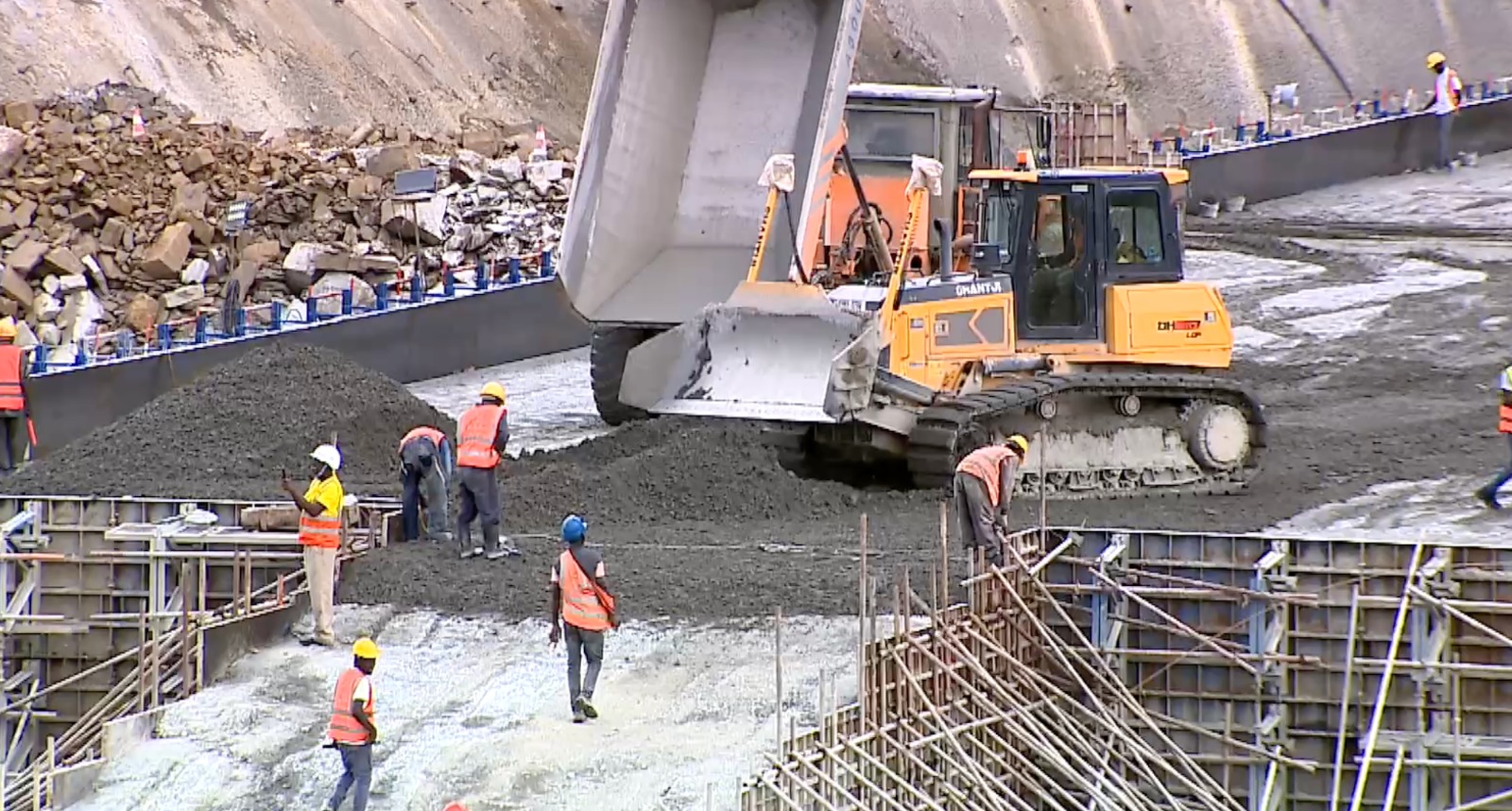
 A dam under construction/HANDOUT
The government has unveiled an ambitious plan to construct at least six large-scale dams and expand irrigation to two million acres of farmland in a bid to strengthen food security, shield farmers from the effects of climate change, and unlock the vast economic potential of Kenya’s arid and semi-arid lands (ASALs).
The dams planned for construction include the likes of Lowaat in Turkana, Galana in Tana River and Kilifi counties, Basalinga Dam in Isiolo, Radat in Baringo, High Grand Falls Dam, and Thuci Dam in Embu County.
The programme, anchored under the National Agricultural Sector Investment Plan, is being spearheaded by the State Department for Irrigation and comes at a time when erratic rainfall, prolonged droughts, and rising food prices continue to expose the vulnerability of rain-fed agriculture, which supports more than 70 per cent of Kenyan farmers.
State Department for Irrigation Principal Secretary Ephantus Kimotho said the expansion of irrigation infrastructure is central to the government’s long-term strategy of climate resilience and sustainable food production.
“Whenever rains fail, it affects the farmers greatly, and those are some of the effects of climate change,” Kimotho said.
“Irrigation comes in as a mitigating factor. Whenever there is rain, we store water, and when there is drought, we use that water to do irrigation.”
Under the plan, the government has already earmarked close to two million acres for irrigation development across the country, with a strong focus on regions that have traditionally been marginalised due to low and unreliable rainfall.
Kimotho noted that irrigation will no longer be treated as a supplementary intervention but as a core pillar of agricultural production. He added that farmers are expected to increasingly benefit from the programme this year as more schemes are rehabilitated, expanded, and brought into operation.
“This is a year that we will actually see more farmers reaping the benefits of irrigation,” the PS said.
The irrigation drive is also expected to lay the foundation for a shift from subsistence to large-scale commercial agriculture. According to the Head of Irrigation Infrastructure, Engineer Vincent Kabuti, construction of at least six “game-changing” dams is expected to begin in 2026, subject to completion of designs, feasibility studies, and financing arrangements.
“We are confident that in 2026 we are going to start construction of at least six large-scale dams,” Kabuti said.
“This will open the door to commercial agriculture, which will go a long way in meeting our food security needs as a country, create jobs, and transform livelihoods.”
The proposed dams will primarily serve irrigation schemes in arid and semi-arid counties, where vast tracts of land remain underutilised despite their potential for irrigated farming. Irrigation Secretary for Programmes Michael Thuita said these regions present the greatest opportunity for expanding the national irrigation footprint.
“We are geared towards increasing the area under irrigation by promoting large dams in ASAL areas such as Mandera and the wider Northeastern region, Baringo, Turkana, and the Galana area,” Thuita said.
“These regions have land, sunlight, and labour, but lack reliable water infrastructure.”
Kenya’s ASAL regions account for between 80 and 89 per cent of the country’s landmass, yet contribute a disproportionately small share to national food production.
Frequent droughts have also made these areas epicentres of humanitarian crises, with millions of households requiring food assistance during prolonged dry spells. Irrigation Secretary for Land Reclamation, Climate Resilience, and Irrigation Water Management Joel Tanui said the government’s focus on ASALs is both strategic and necessary.
“Under the land reclamation programme, we are aware that between 80 and 89 per cent of the country falls under arid and semi-arid areas,” Tanui said. “This is where we will put a lot of focus because it holds the greatest potential for irrigation development in this country.”
Beyond food production, the irrigation and dam projects are expected to spur broader economic activity, including agro-processing, value addition, and rural employment.
The government also views irrigation as critical to reducing Kenya’s heavy reliance on food imports, particularly maize, rice, and wheat, which has strained foreign exchange reserves during periods of poor harvests.
As climate shocks become more frequent and severe, officials say irrigation will be key to stabilising agricultural output and ensuring predictable incomes for farmers.
While challenges remain, including financing, land tenure issues, and environmental concerns, the government insists that scaling up irrigation is no longer optional but essential for Kenya’s food security and economic resilience.