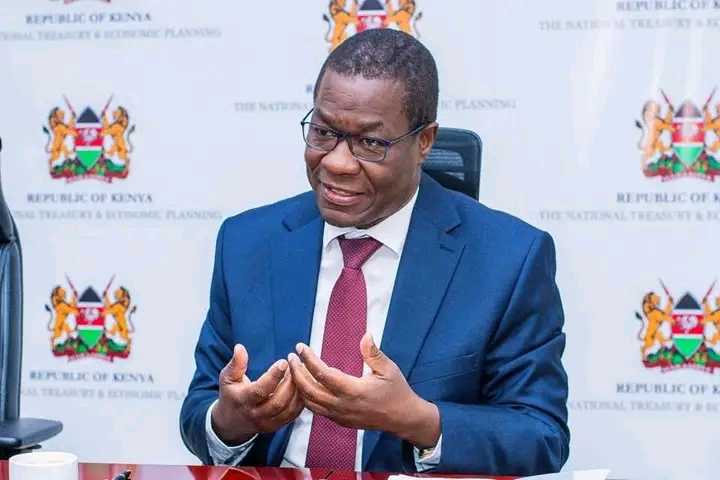
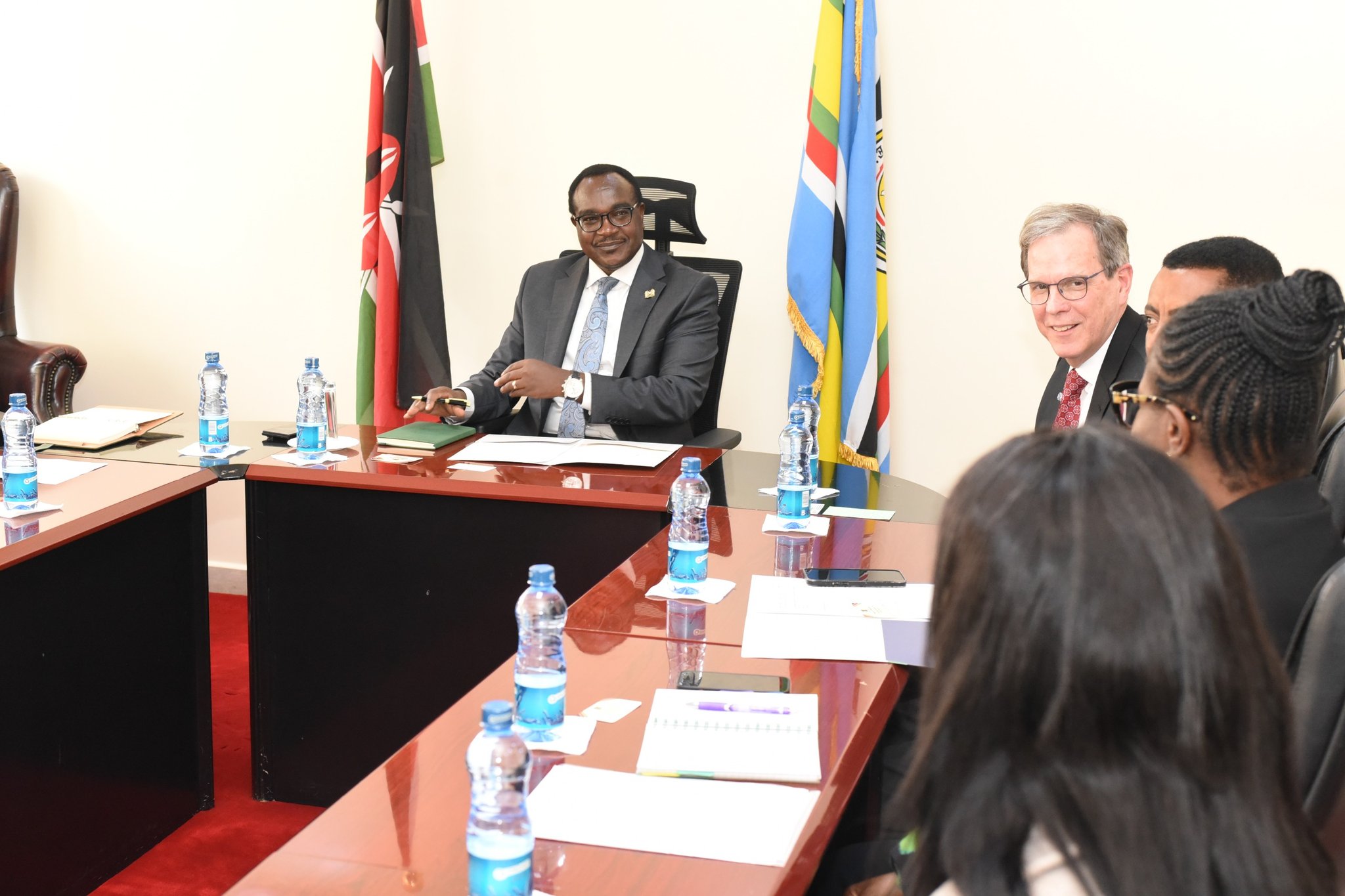
 Education CS Julius Ogamba in a meeting with a team from the Global Partnership for Education (GPE) at Jogoo House led by the Deputy CEO, Charles North, January 22, 2026. /MoE
Calls for prudent utilisation of education funds amid tightening financial constraints and shrinking aid flows dominated discussions at a development partners’ roundtable on education financing held in Nairobi on Monday.
Speaker after speaker at the high-level dialogue argued that the challenge facing education systems is no longer just about mobilising more resources but about using existing funding more effectively to deliver lasting learning outcomes.
“It’s not just about how much we spend; it’s about how well we spend. Some countries achieve far better outcomes than others with equal spending. Prioritise reducing leakages,” World Bank Division Director Qimiao Fan said in his opening remarks.
While acknowledging education as a powerful driver of economic growth and social progress, Fan called for sharper spending choices and innovative approaches to mobilising new funding, framing education financing as a shared global responsibility.
He told the forum attended by government representatives, development partners, philanthropic organisations and private sector actors that education sits at the centre of Africa’s job creation challenge, though its biggest human resource bloc is unskilled.
According to World Bank projections, Africa faces a massive skills gap where 12 million youth enter the labour market annually, but only three million secure formal jobs, leaving many in the informal sector due to a lack of relevant, in-demand competencies.
Key gaps include foundational literacy and technical and digital skills, with 40-60 per cent of firms identifying these shortages as a major constraint to growth.
“Africa cannot close the gap without investing in skills. Education is the foundation on which jobs are created. We cannot afford to let education slip down the priority list,” he said.
The Global Partnership for Education said that despite education equipping societies to adapt and thrive amid climate change, conflict and technological disruption, about 270 million children remain out of school, putting global progress towards the Sustainable Development Goals at risk.
In his opening remarks, Education Cabinet Secretary Julius Ogamba called for deeper partnerships to forge sustainable financing solutions that guarantee quality education for every child.
He said significant reductions and stoppages in aid from traditional partners, coupled with rapid growth in enrolment across all levels of education in recent years, have placed immense pressure on already limited resources.
Kenya, he noted, spends nearly 30 per cent of its total national budget on education but continues to face funding deficits.
To address the challenges, Ogamba outlined three priorities: mobilising additional resources to close the widening funding gap; enhancing sustainable financing by increasing domestic resource mobilisation; and ensuring optimal use of both domestic and external funds to deliver value for money.
“This means, for example, strengthening our education management information systems and building a culture of evidence-based, data-driven decision-making in the sector,” he said, citing the Kenya Education Management Information System as part of ongoing reforms.
Similar sentiments were echoed by Global Partnership for Education deputy chief executive officer Charles North, who said sustainable financing is critical to achieving quality and equitable education, particularly in the face of severe fiscal constraints.
He stressed the need for financing to go hand in hand with policy reforms and inclusive collaboration across partner countries.
Susan Otieno of the Aga Khan Foundation said all resources channelled into education should prioritise human-centred learning to maximise returns on investment.
Her remarks were reinforced by Shamim Chuwe, a GPE youth leader from Zambia, who urged governments and partners to direct more resources towards youth skills development.
She said that while many countries have made progress in expanding free education, hidden costs persist, locking out children from basic schooling.
“There are children who cannot recite vowels. Remove hidden costs to make education accessible to all,” she said.
The roundtable also marked the launch of GPE’s new five-year strategy, GPE 2023, which builds on its fifth financing campaign unveiled at the UN General Assembly last year.
The strategy aims to strengthen education systems in partner countries and deliver results at scale.
Kenya has been a GPE member since 2005 and, in July 2025, Nairobi was designated the partnership’s Regional Hub, providing a platform for resource mobilisation and policy influence.
“As you may recall, Kenya co-hosted the last GPE replenishment alongside the UK in 2021 and raised over $4 billion (Sh516 billion),” Ogamba said.
He said GPE support, alongside the World Bank and the LEGO Foundation, has helped Kenya achieve near-universal enrollment in basic education, gender parity and measurable gains through grants to more than 4,200 schools, scholarships for over 20,000 vulnerable learners, and the construction of more than 23,000 classrooms to support the transition to Junior school under the competency-based system.
Under its 2026–2030 strategy, GPE plans to invest $5 billion (Sh645 billion) in partner countries, an amount it says will catalyse an additional $10 billion (Sh1.289 trillion) in co-financing.
The partnership projects that the investment could improve education outcomes for 748 million children, train 10 million teachers and provide 325 million textbooks.
“These improvements will deliver exceptional returns: every $1 invested through GPE will generate more than $33 in increased lifetime earnings for children in partner countries,” GPE said, adding that over five decades the gains could lift 23 million people out of poverty and save two million children’s lives.