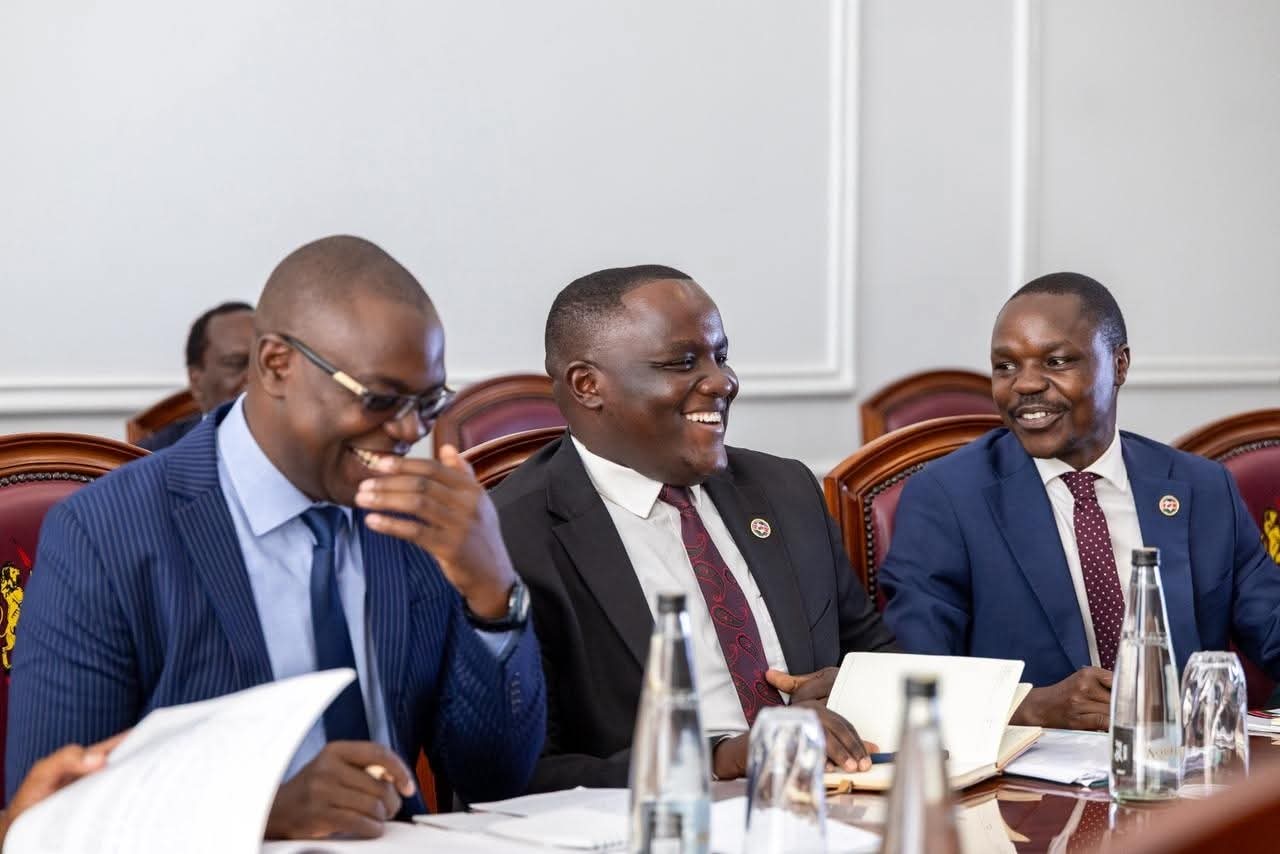
A rare bipartisan moment is quietly taking shape behind the scenes, with President William Ruto and the ODM leadership edging closer to a shared political roadmap anchored on the 10-Point Agenda and the National Dialogue Committee (NADCO) Report, a convergence that could fundamentally reshape Kenya’s politics.
What began as a tactical ceasefire after months of protests, political tension and economic anxiety is increasingly morphing into structured cooperation, with both sides signalling a willingness to move from political rhetoric to measurable implementation.
Behind closed doors, the conversation has shifted from whether reforms should happen to how far and how fast they can go.
A Parliamentary Group meeting bringing together legislators from UDA and ODM has been planned for this month, with members expected to take stock of progress on both frameworks.
Ruto, who also serves as UDA Party Leader, has committed to consulting with ODM leader Oburu Odinga on the timing of the meeting, a signal that cross-party engagement is no longer symbolic, but operational.
At the heart of this process is the COIN-10 Committee, a technical-political organ mandated to oversee, track and evaluate the implementation of both the NADCO Report and the government’s 10-Point Agenda.
The committee has spent months holding consultations with ministries, state departments, agencies and civil society organisations, quietly assembling a detailed reform scorecard, the committee says.
The committee is now finalising a progress report that will determine which reforms are complete, which are ongoing and which remain politically unresolved.
That report will be formally tabled before the UDA National Governing Council (NGC) on Monday, January 26, 2026, a meeting expected to draw intense scrutiny given the fragile balance between cooperation and competition in the current political climate.
The committee met the President on January 21 at State House where they briefed him on the progress.
Among the members present were Agnes Zani, Javas Bigambo, Fatuma Ibrahim, Kevin Kiarie and Gabriel Oguda, alongside Joint Secretaries Nicodemus Bore, UDA Executive Director Oduor Ongw’en and the ODM Executive Director.
The NADCO Report emerged from the national dialogue convened after the disputed 2022 General Election and the mass protests that followed.
With the country facing prolonged instability, UDA and ODM agreed to talks aimed at addressing structural political, electoral and economic grievances.
Parliament adopted the report in February 2024. Drafted jointly by representatives from government and opposition, NADCO proposes a wide-ranging reform agenda.
These include reducing the cost of living through structural economic reforms, electoral reforms, including restructuring the IEBC and reviewing the 2022 election and institutional reforms, such as constitutional offices for a Prime Minister and Leader of the Official Opposition.
Others are protecting NG-CDF and NGAAF and enforcing the two-thirds gender rule.
Running parallel is President Ruto’s 10-Point Agenda, which outlines his administration’s governance and reform priorities.
The task before COIN-10 was to align both frameworks and ensure neither remained a political talking point.
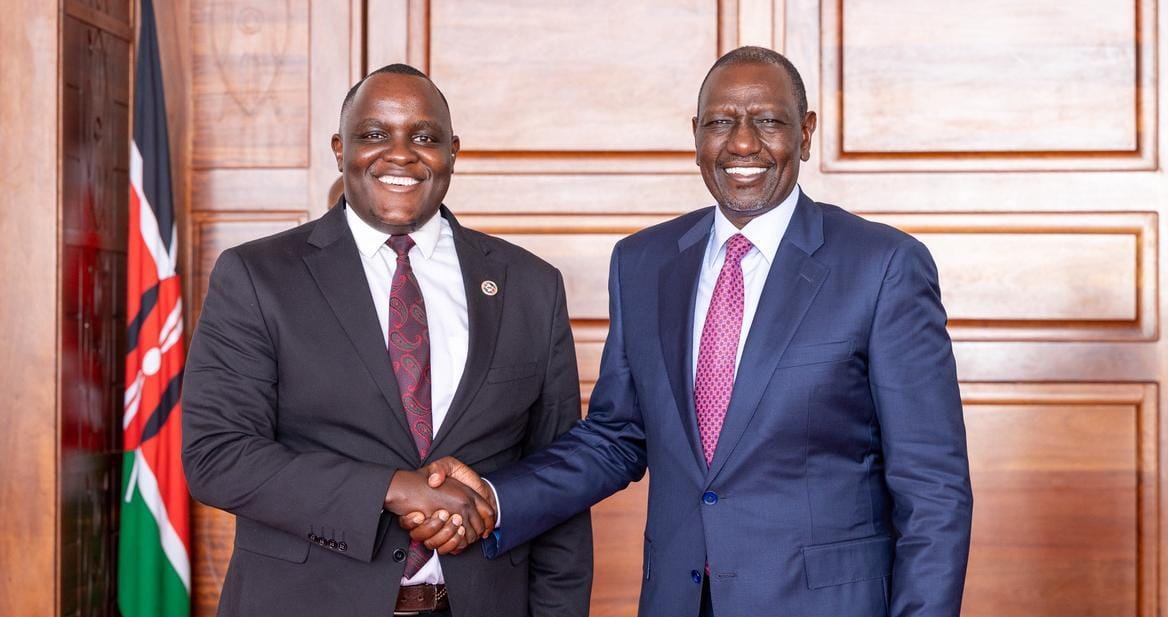
In an exclusive interview with the Star, Kiarie, who is a member of the committee, said during their discussions they deliberately adopted a technical, measurable and stakeholder-driven approach, distancing themselves from political grandstanding.
“The criteria we used was simple. First, we developed our scope,” Kiarie said.
Once the scope was agreed, the committee subdivided the 10-Point Agenda into five thematic clusters, with each committee member assigned two agendas to oversee.
“This allowed us to go deep, rather than spread ourselves thin,” he explained.
The committee then moved to develop and identify Key Performance Indicators (KPIs), benchmarks against which progress could be objectively assessed.
“We needed a way to measure implementation, not just promises,” Kiarie said.
Next came the identification and earmarking of stakeholders, ranging from ministries and independent commissions to civil society actors.
To guide these engagements, COIN-10 developed tailored memorandum guides, recognising that different institutions require different reform pathways.
“The memorandum guides vary from stakeholder to stakeholder,” Kiarie noted.
It ensured engagements were structured and actionable, he said.
On electoral governance, Kiarie said the restructuring and reconstitution of the IEBC has been completed.
“That part is done,” he said.
On boundary delimitation, implementation is ongoing.
The IEBC (Amendment) Act, 2024, assented into law on July 9, 2024, introduced a new Part IIIA to the IEBC Act, 2011, outlining procedures for boundary review.
The County Boundaries Bill, 2023 (Amendment 2024) passed the Senate on April 25, 2024 and is now at the first reading stage in the National Assembly.
The remaining hurdle is constitutional.
“The pending aspect relates to amending Article 89(2) of the Constitution,” Kiarie said.
On electoral reforms, members noted that the Elections (Amendment) (No.2) Bill, 2024 was passed by the Senate on December 5, 2024 and is now before the National Assembly.
On the cost of living and economic reforms, Kiarie said the government has focused on structural policy responses rather than short-term relief.
These include the operationalisation of the Public Benefits Organisations (PBO) Act, 2013, the adoption of zero-based budgeting for all MDAs from FY 2025/26, and the enforcement of the Government-Owned Enterprises Act, which seeks to reduce wastage, improve efficiency and limit reliance on exchequer funding.
“There is also a continuous review of the national tax policy under Sessional Paper No.2 of 2023,” he said.
On corruption, Kiarie cited the EACC (Amendment) Act, 2024, assented to on December 11, 2024.
In February 2025, EACC, working with the Kenya Leadership Integrity Forum (KLIF), launched the Kenya Integrity Plan, focusing on prevention.
Further, the Attorney General has submitted the Anti-Corruption Laws (Amendment) Bill, 2025, which proposes completion of corruption investigations and trials within six months;
Shortened appeal timelines and enactment of the Whistleblower Protection Bill, 2025.
Devolution has emerged as one of the clearest convergence points, he stated.
County allocations have risen from Sh380 billion to Sh415 billion, with projections of Sh450 billion in the current financial year.
Institutional reforms, he noted, are also underway.
"The President has assented to the Autonomy of County Assemblies, while proposals to require CECMs to answer questions on the floor of county assemblies are ongoing," he stated
CAF, he noted, will spearhead amendments to county assembly standing orders to create a ‘Question Time’ for CECMs, similar to what exists for Cabinet Secretaries.
The committee announced the commencement of countrywide stakeholder engagements which will begin early next month.
The committee will present a preliminary report to President Ruto and Oburu on February 6.