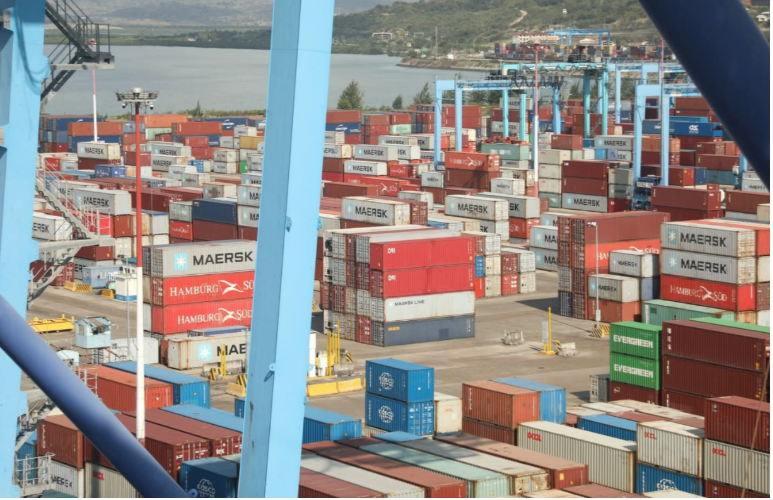
Manufacturers are concerned over congestion at the Mombasa Port saying it has affected imports and exports.
This comes on the back of a rise in cargo volumes passing at at the region’s busiest harbour, with the total volume estimated to have risen by at least six per cent in 2025 above the 40.9 million metric tonnes recorded in 2024.
Container traffic is reported to have gone up by at least seven per cent last year above the more than two million recorded in 2024, leading to congestion at the port towards the end of the year into 2026.
However the traders concern is the pile up of empty containers occasioned by lack of enough depots in Mombasa and space at the port, with poor evacuation plans by shipping lines blamed for worsening the situation.
The port congestion and empty container crisis has since slowed down port operations, with manufactures facing slow delivery of raw materials and export of finished goods.
According to the Kenya Association of Manufacturers (KAM), industries congestion and inefficiency challenges are being felt both at the Port of Mombasa and the Nairobi Inland Container Depot.
Kenyan manufacturers import crucial raw materials like petroleum products, iron and steel (billets, coils, scarp), palm oil, wheat, platics and various chemicals.
This is along machinery for sectors like electrical, automotive and food processing, sourced heavily from China, UAE, India, and Malaysia, driving key industries such as metals, plastics, textiles, and food and beverages.
“Currently, the business community is grappling with full empty container depots, leading to rejected returns, limited booking slots and restricted return windows. These challenges continue to disrupt normal port operations and slow down cargo movement,” KAM chief executive, Tobias Alando, said.
The constraints, he said, reflect gaps in depot capacity, evacuation planning and coordination among stakeholders.
“As a result, manufacturers and traders face higher landed costs, increased working capital pressure due to delayed container returns, and growing risks to business competitiveness, particularly for imports and exports,” he said.
The Shippers Council of Eastern Africa (SCEA), which represents the interests of importers, exporters and stakeholders in the logistics and shipping industries, yesterday said trucks take up to five days on the queue to deliver empties at a costs of about $100 (Sh12, 900 ) per day.
Clearing agents are also being slapped with demurrage and detention charges ranging from $13 (Sh1,677) to over $100 (Sh12, 900) per container, per day, once the free period has expired.
Empty container return free periods (detention) at Mombasa Port vary by destination, typically allowing nine to 14 days for local cargo and up to 30-52 days for transit goods.
The port congestion which started in September last year is estimated to have cost the industry more than $1 million (about Sh129 million) so far, traders say.
High number of vessels bringin in goods, limited storage space at the port and a shortage in empty container depots around Mombasa has hugely been blamed for the congestion.
According to Kenya Ports Authority managing director William Ruto, Mombasa port can only support up 8,000 TEUs in storage but has been forced to accommodate more than 12,000 containers, which has since increased.
The closure of Mahati Container Freight Station, a key facility in Mombasa, has contributed to the congestion. Current empty container depots are Hakika, APM, Dodwell, Fortune, Cargo Haven, and Portreitz, all which are full.
The shippers council had earlier proposed a three-month halt to cargo clearance within the port, with the processes transfered outside the facility, to allow decongestion.
KPA has since issued a directive to shipping lines and agents handling container vessels aimed at helping address the clogging.e
This includes advance submission of empty container requirements where vessel agents, shipping lines representatives shall be required to submit projected empty container loading requirements at least seven days prior to vessel arrival, with effect from January 26.
Gate-in of empty containers intended for loading shall close twenty-four (24) hours prior to vessel berthing.
Loading of empty containers ex-depot or ex-SGR shall not be permitted while the vessel is alongside.
All full export cargo must be fully documented and gated into the port 36 hours before berthing of the carrier vessel.
“No vessel shall be planned for berthing unless the discharge list, export full loading list, and empty container loading list have been submitted and approved. All shipping lines representatives and their appointed agents shall strictly comply with the measures,” Captain Ruto says in the notice.
Allocated empty container space shall be managed exclusively by the respective shipping lines while empty containers delivered for loading shall be allowed a maximum dwell time of 24 hours at the Port Reitz offloading zone.
Containers exceeding this dwell time shall be relocated by KPA at the full cost of the respective shipping line.