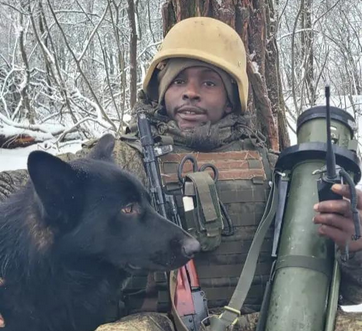
A man from Kiambu County shared a harrowing ordeal after being reportedly misled into joining the Russian military and deployed to the battlefield in Ukraine, where he lost comrades and narrowly escaped with his life.
The man, known only as Dancan Chege, who used his TikTok account to talk about his ordeal over the period, described it as traumatic and cautioned other young Kenyans against falling for overseas recruitment schemes he believes are deceptive.
Chege, like many young job seekers, said he was drawn to Russia by the promise of what he believed would be lucrative work.
He said he had been informed he would be employed as a driver in Moscow, a role he considered attainable after he was selected alongside 10 others through what he described as a local recruitment agent.
However, upon arriving in Moscow in November 2025, Chege claimed the situation changed unexpectedly.
Instead of being placed in a driving job, he claimed he and the group were taken to a military camp and pressured to sign contracts to fight for Russia in its war against Ukraine.
“I knew I was going to be a driver, but when we reached Moscow, things changed,” he recalled.
“We were taken into the camp and made to sign contracts to fight for Russia,” he claimed.
The training that followed, according to Chege, was intense and continuous. He said they were instructed on weapons, tanks, drones and other military equipment for long hours for nearly a month, often with minimal rest.
“The training itself was torture. It was like they wanted to kill us,” he alleged.
Chege said he had been promised Sh3 million for the work, but he stated he never received the money. Instead, he said he was deployed to the frontlines in December 2025.
Within a week of entering Ukrainian territory, he claimed that all 10 of his fellow Kenyans were killed in action.
“We were 11 when we left for Russia. When we were taken to Ukraine, all my comrades from Kenya were killed. I’m the only one who survived,” he told reporters.
Faced with what he described as the grim reality of frontline combat, Chege said he began planning his escape. Believing that conventional routes out were not possible, he said he adopted an extreme ruse by pretending to be mentally unstable.
He claimed he deliberately behaved erratically, shooting aimlessly, screaming and acting out, until his commanding officer reportedly sent him to a military hospital for evaluation.
After three days and assessments at multiple facilities, Chege said he saw an opportunity.
He said he fabricated a story that his family had been killed in an accident and persuaded a doctor and a Russian soldier to help him leave the hospital under the pretext of travelling to collect funds from relatives.
Once outside, he said he switched to Kiswahili and sought help through Kenya’s embassy contacts, who then arranged his travel back home.
Chege said he arrived in Kenya on January 16, 2026, and has since shared videos and testimony describing what he referred to as warfront conditions.
“Mambo ilikuwa ngumu sana. I saw over 30,000 dead bodies, including those of Kenyans and other Africans. I thank God I’m back. But what I saw has left an imprint in my mind. I can’t even sleep at night, kichwa ni mzito,” he said.
“Nashukuru Mungu. Nilipitia njia refu sana ndio niweze kurudi home. Russians ni military commanders hawawezi kukubalisha urudi home. But sio mimi nashukuru Mola tu.”
His account comes amid broader concern over reports of Kenyans being drawn into the Russia-Ukraine conflict.
Officials have estimated that more than 200 Kenyans may have joined Russian forces, often through recruitment channels that reportedly promise civilian work but result in combat roles instead.
Chege’s survival, he said, was “by God’s grace,” and he now urges others to be cautious about offers that appear too good to be true.
“I have firsthand experience, and I can tell you it’s a death trap,” he said, urging young Kenyans to seek lawful opportunities and avoid possible exploitation.
“Don’t think about joining the Russian military. That is my advice. Connections za kuend Russia, siwezi peana. Siwezi kuadvice ujaribu kuenda,” Chege said.
The government has previously said that several recruitment agencies suspected of luring unsuspecting Kenyans to Russia in connection with the war are under investigation, and that some licences have been suspended.
"Some agencies lure young people with promises of large payments. The government is tracking those agencies linked to this fraud," Sylvanus Osoro told the BBC.
He said out of about 130 registered recruitment agencies in Kenya, around five had been flagged, with three already suspended and two others under investigation.
Parliament's Defence and Foreign Relations Committee had taken up the matter, and the agencies it summoned were expected to explain how they had recruited young people, what information had been provided and how contracts were presented, Osoro said.
Families have continued urging the government to help trace and bring back their relatives believed to be on the Russian battlefield.
On Thursday, Foreign Affairs PS Korir Sing’Oei said at least 28 Kenyans have been repatriated from Russia since December 2025 after what he described as irregular recruitment linked to the Russia-Ukraine conflict.
The PS said the government is not supporting recruitment efforts for any party in the conflict, adding that those on the battlefield have been seeking help from the mission.
“A number of them (Kenyans fighting in Russia) have come to our missions and reached out to our mission in Moscow. I can confirm that 28 of them have been repatriated since December, and this was facilitated by our mission in Moscow,” Sing’Oei said.
He said the government is working to address the issue by negotiating for the release of Kenyans captured by Ukrainian authorities and held as prisoners of war, while also engaging the Russian Federation mission in Nairobi to discourage further irregular recruitment.
Sing’Oei said Russian officials have told Kenya that their government does not support such recruitment practices, while noting that a legal grey area exists.
“Under Russian law, it is not illegal for a non-Russian to serve in their army if they do so voluntarily. The critical question we are trying to assess is the extent to which these Kenyans were recruited voluntarily,” the PS said.