
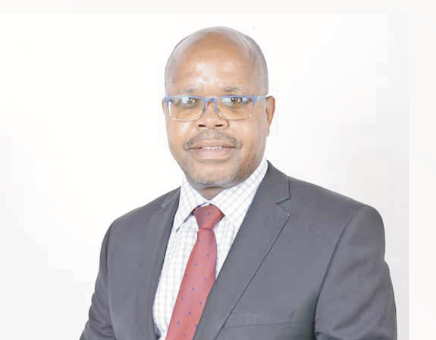
 Justice Elijah Obaga /JUDICIARY
A judge of the Environment and Land Court who is seeking promotion to the Court of Appeal has told the Judicial Service Commission that he would rather resign than bow to pressure from politicians to issue favourable rulings and judgments.
The commission that is interviewing candidates to fill 15 vacancies at the Court of Appeal raised concerns of judicial security and independence with Justice Elijah Obaga who has served for many years in the Environment and Land Court.
"I would rather resign than issue a ruling or judgement that is against my conscience and the law,” the judge said when asked how he would respond to undue pressure from a powerful individual, such as a politician..
The JSC interviews which concluded on Wednesday have provided a rare glimpse into the legal philosophies and personal mettle of Kenya’s senior judges.
Yesterday, Justice Samson Okongo appeared before the panel, which sought to understand his swift pace of delivering rulings and judgments.
Okongo argued that justice delayed is justice denied and that a court’s duty is to marry efficiency with thoroughness.
Commissioners however questioned his presence at a public function where he was photographed alongside a prominent politician.
"I did not go to that function as a guest of the politician. I went to that function as a member of the community," he stated.
Justice Hedwig Ong’udi focused on her experience across various court divisions.
Asked how she would adapt to the Court of Appeal's requirement for collegiate judgments, Ong'udi said she was confident in her ability to work with colleagues but stressed she was prepared to write dissenting opinions if they serve the law.
Justice Lucy Mbugua championed Court-Annexed Mediation, saying not every dispute requires a courtroom battle.
She highlighted how mediation preserves relationships in sensitive areas like family and land law, while decongesting the courts.
As a judge in the Environment and Land Court, she asserted that her transition would bring a practical perspective on land matters—a dominant issue at the appellate level.
On Tuesday, judges Elijah Obaga, Nduma Nderi, Mwihaki Njuguna and lawyer Daniel Ogola faced faced the Judicial Service Commission panel for the same interviews.
Reflecting on the emotional weight of capital punishment, Nderi stated, "Passing a death sentence is a melancholic duty. It stays with you. You go home, you look at your children and you remember you have taken away someone's child."
Drawing from experience in family and civil divisions, Justice Njuguna outlined her approach to heavy caseloads, placing her emphasis on "practical efficiency without sacrificing thoroughness".
Ogola told the panel that focusing on the transformative potential of intelligent technology and modernised case management is the solution to the judiciary’s perennial backlogs.
Earlier, Justices Johnson Okello, Stephen Radido and Rachel Ngetich faced the panel.
Commissioners questioned a past incident where Okello was accused of being harsh with a lawyer in his court. The judge described the incident as a "lapse in temperament".
Justice Radido's interview focused on his judicial productivity, speed in writing judgments and approach to the law, particularly in employment matters.
Confronted with statistics about a high number of pending rulings, Radido attributed delays partly to the complexity of employment cases and the conduct of parties.
Ngetich’s interview highlighted her hands-on managerial experience in trial courts and strategic vision for tackling systemic issues like case backlogs.
She made a case for specialised benches within the Court of Appeal, arguing that judges with specific expertise (such as in land, family, or commercial law) can handle appeals more efficiently.







