
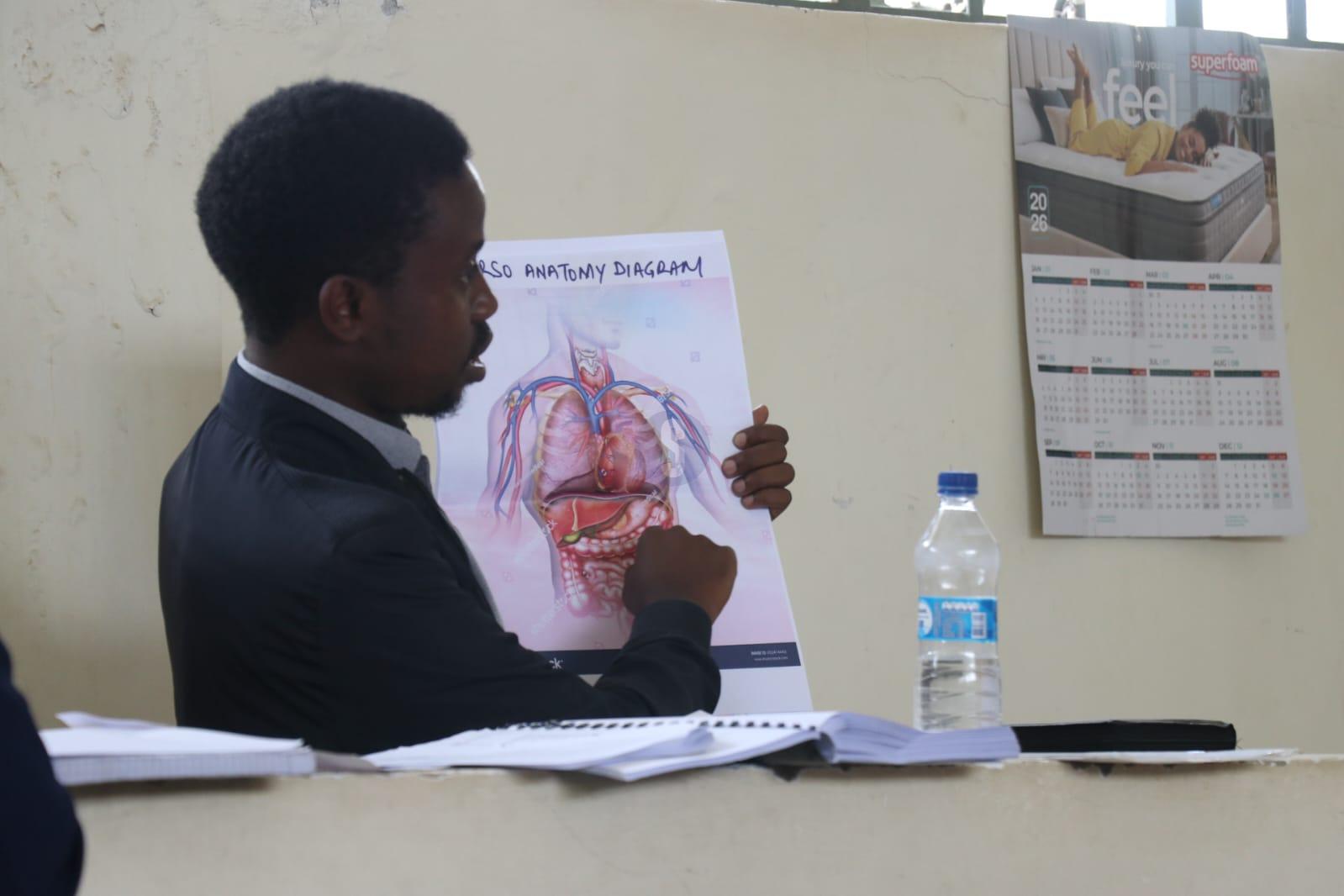
When the first witness was called to the stand on Thursday to testify in the case of late Lucy Wambui, Judge Christine Njagi cautioned that this was going to be a long hearing.
Taking the dock was Dr Alex Kingoo, who was part of the medical team from Omnicare Limited under whose care Wambui was.
Wambui passed away days after cosmetic surgery.
Reports indicate that Wambui checked into Omnicare’s Body By Design facility for a liposuction procedure.
The doctor narrated that the patient was admitted in good health, was advised on any related complications or risks and signed the informed consent form.
The procedure, one of over 200 performed at the facility, went without complications.
Questioning revolved around doctor licensing, patient management and facility suitability to handle the surgical procedure.
The doctor affirmed that he was licensed to practice by the Kenya Medical Practitioners and Dentists Council and that the facility was adequately equipped, in line with standard operating procedures laid out by the Kenya Society of Plastic, Reconstructive and Aesthetic Surgeons.
The prosecutor pointedly asked, “Would it be right to say that the KPMD does not recognise you as a plastic surgeon?”
The doctor affirmed he was a general practitioner. While he attended to Wambui after surgery while doing patient rounds, the witness asserted he was not the performing surgeon, nor was he present in the operating room.
However, it emerged that there wasn't a resident pharmacist attached to the clinic.
This prompted the judge to inquire how medication was administered to patients in the absence of a pharmacist.
“We have a drugstore,” the witness responded, adding that both doctors and nurses were permitted to dispense drugs as required.
On the fateful day, that would have been the premises of the nurse on duty, he added.
The court heard that on November 18, around 11 am, the patient complained of chest pain and difficulty breathing.
Nonetheless, there were no complaints of abdominal pain. A CT scan and other tests were run, which determined Wambui had a lung infection.
She was put on medication and on November 22, was discharged.
Continuing with questioning, Senior Counsel Eric Mutua asked: “What was the patient's condition after discharge?”
The doctor explained that Wambui reported no chest pains or difficulty breathing and was ambulant [walking], as indicated in her discharge summary.
The court heard that 10 minutes later, Wambui became unresponsive. She came for readmission, but as the doctor had left, she was taken to the Nairobi Hospital.
“Did you interact with the patient after that? “ Mutua posed.
The witness confirmed that they had spoken, as Wambui called him to request the changing of her surgical dressing.
As this was part of post surgical care, the doctor informed her that the facility would visit to change the compression garment.
The doctor denied that the patient had a “foul smell” emanating from her.
The defence lawyer sought to know why the doctor went to Nairobi Hospital, to which he responded, “I felt it would be important to tell the hospital what procedure was done for continuity of care.”
The doctor alleged that his interaction with the patient's husband on November 22 was normal, but aggravated the next day.
“He complained that we had operated on his wife's intestines and if anything happened, tutakiona (we will be in for it).”
The husband also threatened to go to the Ministry of Health and ensure the clinic was closed. All the same, the witness testified that he did not escalate the matter until after learning of Wambui’s death, when he informed one of the clinic’s directors.
However, he did not report the threat to the police. In a turn of events, postmortem results found Wambui died of sepsis due to multiple perforations.
The pathologist's report - drawn from Nairobi Hospital’s patient history - revealed some “ports” (incisions made during the liposuction to allow drainage of fluid) had been sealed.
This was unusual, the witness said, as closing off the incisions would lead to complications, including seroma (accumulation of fluid in the body occurring most commonly as a complication of a surgical procedure).
It also emerged that the report showed the deceased had more ports, despite only five being made during the liposuction.
With these twists, the hearing of the case, in which Wambui’s family has sued Body By Design for negligence, continues.
The judge agreed to a break before the next witness was called.







