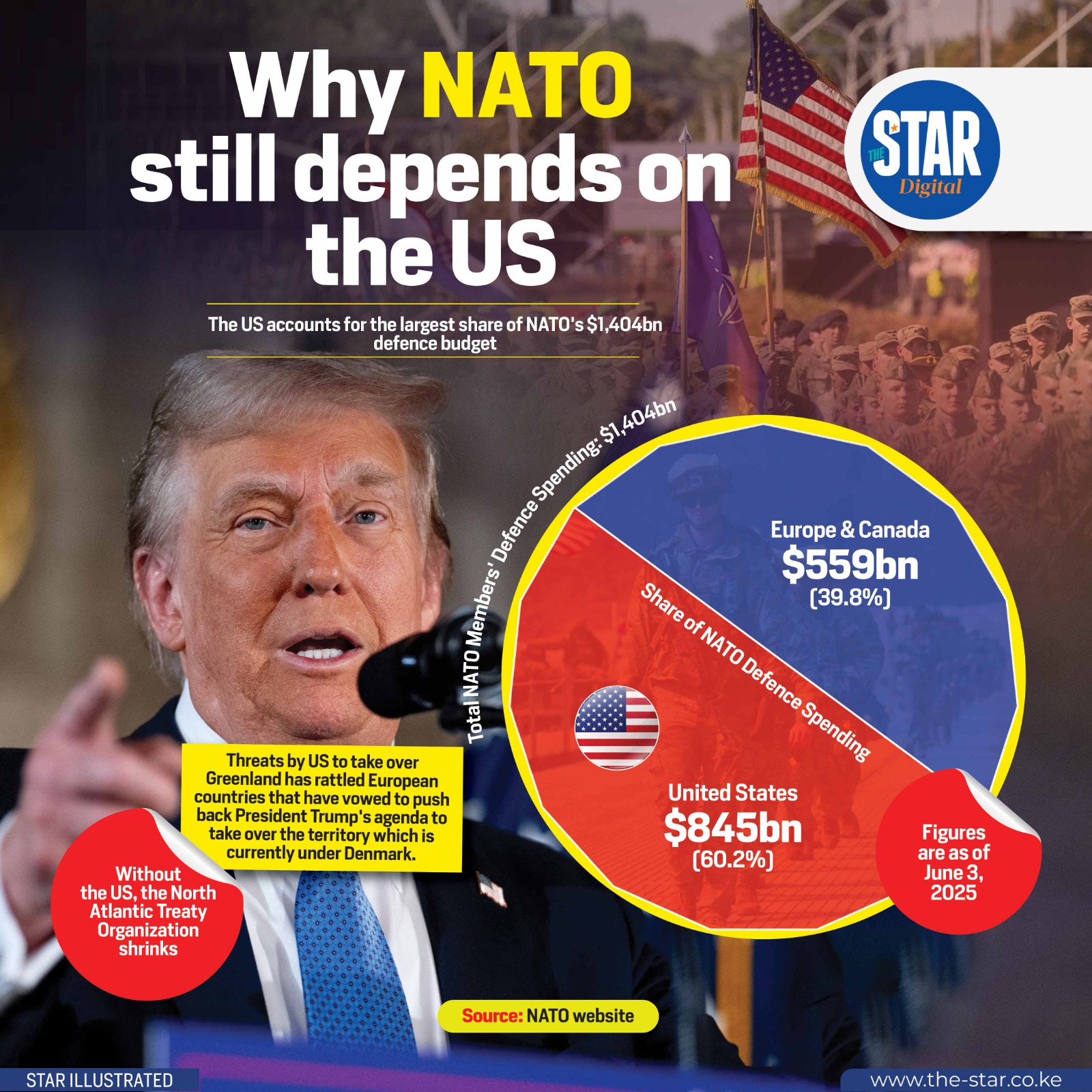
The North Atlantic Treaty Organisation's (NATO) defence budget stands at a staggering $1.404 trillion, but the distribution of that spending reveals a stark imbalance. The United States alone contributes $845 billion, accounting for 60.2% of the alliance’s total military expenditure.
In contrast, Europe and Canada collectively provide $559 billion, or 39.8%. This disparity underscores the strategic dependency NATO continues to have on Washington, despite decades of calls for burden-sharing.
The implications stretch beyond budget lines. With the US footing the majority of the bill, its influence over NATO’s direction remains dominant.
European nations, while vocal about autonomy, face a dilemma: without American military might, NATO’s operational capacity would shrink dramatically.
The alliance’s deterrence posture, rapid deployment capabilities, and technological edge are all heavily underwritten by US resources.
Tensions have escalated with recent geopolitical moves, including threats by the US to take over Greenland, a territory under Denmark. Such ambitions have rattled European capitals, prompting renewed debates over sovereignty, strategic priorities, and the future of transatlantic cooperation.





Comments 0
Sign in to join the conversation
Sign In Create AccountNo comments yet. Be the first to share your thoughts!