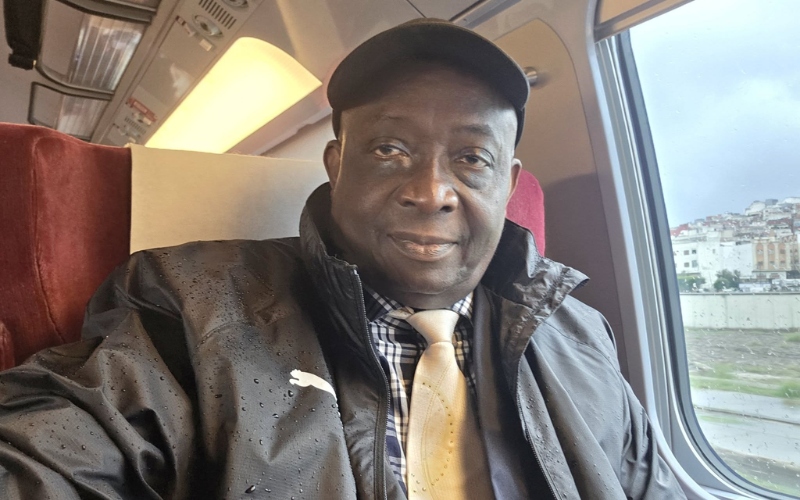
 Ivorian journalist Mamadou Gaye
Mamadou Gaye, an Ivorian journalist known for his outspoken commentary on African football, has recently found himself at the centre of a heated debate after questioning the readiness of East African nations to host the 2027 Africa Cup of Nations (AFCON).
His remarks—which he says were intended to spark reflection rather than offend—underscored broader conversations about infrastructure, standards, and regional expectations for major sporting events on the continent.
A voice in African football
Gaye has long been a recognisable figure in African sports media. Over the years, he has articulated strong opinions about the state of soccer development across the continent, touching on issues ranging from coaching and tribalism to administrative standards in various football federations.
His perspective often blends historical context, personal observation, and wider concerns about how African football is governed and presented internationally.
While detailed biographical information about his early life and career is not widely documented in mainstream media, Gaye’s reputation is rooted in his commentary and analysis—particularly his willingness to speak candidly about topics others might shy away from.
His work has been featured on platforms that cover African sports discourse, reflecting both praise and criticism for his evaluations of football issues affecting the continent.
The AFCON 2027 comments that sparked debate
The latest chapter in Gaye’s public profile began in January 2026 during a press conference preceding the AFCON 2025 final in Morocco, where he posed critical questions about East Africa’s ability to host the 2027 tournament. The edition of the African Cup of Nations will be jointly hosted by Kenya, Uganda and Tanzania—a historic first for the region.
At that event, Gaye pointed to Morocco’s infrastructure—specifically roads, transportation systems, and stadium facilities—as setting a new benchmark for AFCON hosts.
He suggested that the expanded demands of modern continental tournaments require host nations to have first-class infrastructure capable of supporting teams, fans, and logistics seamlessly.
“At the moment as we are speaking, the three countries are not properly ready,” he said, adding that his concerns were about delivery and readiness rather than cultural or regional disrespect.
“The roads may be good but they are not highways. You take a lot of time traveling,” he added.
Gaye also drew on historical references, noting that in the past Cote d’Ivoire was considered more developed than Morocco in certain respects, yet Morocco has since leapfrogged in terms of sporting infrastructure.
. “In the 1980s, Cote d'Ivoire was more developed than Morocco,” he said, adding that the situation has since changed dramatically.
“You were in Morocco, you could go to any of the venues on top highways, by speed train, by rail, by bus. Everything is first class. I expect sub-Saharan Africa to reach that level,” Gaye said.
This comparison was used to frame his argument that East Africa needs to invest significantly if it hopes to match the standards set by recent hosts.
Infrastructure, standards and the reality of hosting
One of the most controversial aspects of Gaye’s comments was his mention of road connectivity across Kenya, Uganda and Tanzania. He claims that road travel between these countries could take up to two days.
“I have been to East Africa and I know there is infrastructure and I know, like most of West African countries, when you leave the capital city, the remaining part of the country is a bush. That is the reality. And you do not have top class stadium,” he said.
He further raised concerns about travel times between host cities, noting that while some roads are in good condition, they fall short of international standards. “The roads may be good but they are not highways. You take a lot of time traveling,” he added.
Critics quickly seized on this assertion, questioning its accuracy and noting that established highway corridors already link major East African cities and are used daily for commercial and passenger traffic.
Analysts who examined Gaye’s remarks noted that while raising concerns about infrastructure is within the scope of journalistic critique, such comments carry weight and must be backed by verifiable data. Without such evidence, observers argued, they risk reinforcing misconceptions rather than contributing constructively to the debate.
Despite the backlash, Gaye insisted his commentary was meant to motivate improvements rather than disparage the region. In interviews, he maintained that the expectations for hosting football’s premier continental tournament have risen, especially in the wake of Morocco’s highly praised delivery of AFCON 2025—from transport networks and stadium readiness to overall organization.
Regional and public reactions
In the days following his remarks, reactions rolled in from a wide range of stakeholders. Fans, commentators and sports officials across East Africa offered differing views on his comments.
Some defended Gaye’s right to express concern, framing his remarks as a realistic assessment that could push host nations to work harder. Others dismissed his observations as uninformed or based on stereotypes rather than recent developments in East African infrastructure and event planning.
Public debate on social media highlighted the intensity of the reaction, with hundreds of posts on platforms like X (formerly Twitter) dissecting and debating both the substance and tone of Gaye’s commentary.
While supporters praised his boldness, critics urged greater sensitivity to regional pride and ongoing investment efforts in stadiums, airports and road projects.
CAF President Patrice Motsepe also responded directly at the press conference, affirming that hosting rights would not be stripped from the trio of East African hosts.
Motsepe emphasized CAF’s commitment to balanced football development across the continent and expressed confidence that Kenya, Uganda and Tanzania would successfully stage the tournament.
"You’ve got to create opportunities for all African countries to develop infrastructure. I am confident that the AFCON will be successful. I know there will be challenges," Motsepe said.
"That's why I wanted CHAN to take place in those countries, because it would give the chance to develop. We are not going to take the competition away from those countries because I am convinced it will be successful."
The role of critical debate in African football
Gaye’s comments brought into focus a crucial aspect of sports journalism: the balance between critique and constructive engagement.
Major sporting events like AFCON represent significant opportunities for economic, social and cultural development for host nations. They also require coordinated investment in infrastructure, logistics and community readiness.
Constructive scrutiny can contribute to better planning and implementation — but it can also be contentious when perceived as overcritical or lacking in context.
For Gaye, his latest remarks fit within a broader pattern of candid commentary. In past interviews and analyses, he has not shied away from addressing systemic issues in African football, including allegations of tribalism, nepotism, and administrative inefficiencies that he believes hinder the sport’s growth across the continent. These long-standing views have at times drawn both praise for honesty and criticism for bluntness.
What comes next
As preparations for AFCON 2027 continue, the debate ignited by Gaye’s remarks is part of a larger conversation about how Africa’s major sporting events are hosted and perceived.
Governments in Kenya, Uganda and Tanzania have been investing in stadium upgrades, transportation networks and hospitality infrastructure. CAF has also been working with the hosts to ensure standards meet the expectations of teams, sponsors and international audiences.
On September 16, 2024, President William Ruto said that Kenya will be ready to co-host the Africa Cup of Nations (AFCON) tournament in 2027.
He noted that the preparations for the three stadiums—renovation of Kasarani and Nyayo and construction of the Talanta Sports City Stadium—are progressing well
"We commit that Kasarani and Nyayo will be ready by the end of this year for the African Nations Championships 2025, while Talanta Sports City Stadium will be completed by December 2025 for AFCON 2027," Ruto said.
Whether Gaye’s intervention will have a lasting impact on the hosting plans remains to be seen. What is clear is that public scrutiny—both supportive and critical—highlights the passion and engagement African football inspires.
As the continent’s footballing landscape grows more competitive and more visible on the global stage, journalists like Mamadou Gaye will continue to play a role in shaping discourse, even when that role sparks controversy.