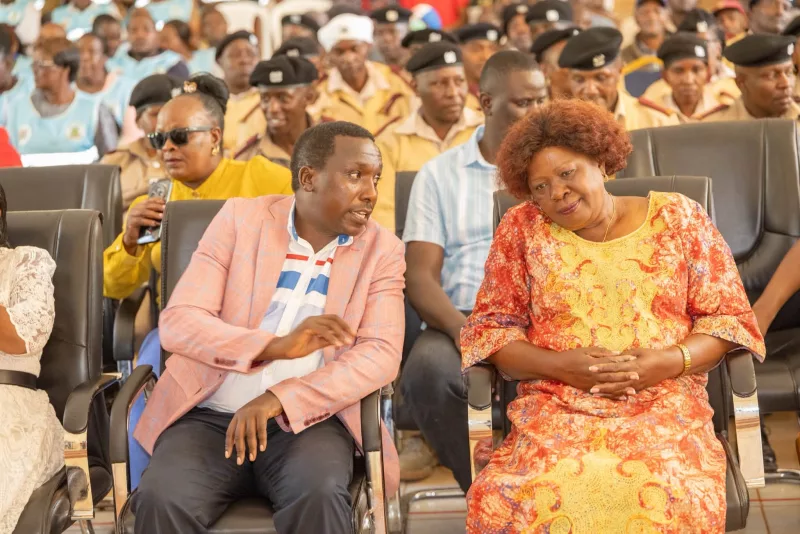
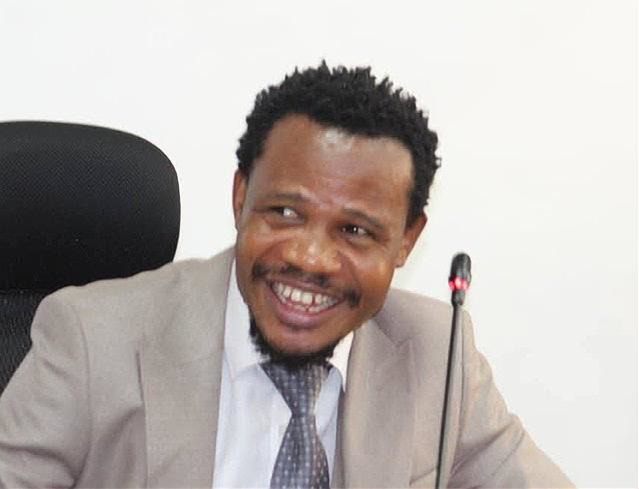
 Mumias East MP Peter Salasya. /PETER SALASYA/X
Mumias East MP Peter Salasya has criticised the proposed sale of the government’s 15 per cent stake in Safaricom, arguing that the telecommunications company is not a loss-making entity and therefore should not be sold.
The government plans to sell the shares at Sh34 per share to raise Sh244.2 billion, including upfront payments of future dividends, to fund key infrastructure projects.
A joint committee comprising the Departmental Committee on Finance and National Planning, led by Molo MP Kuria Kimani, and the Select Committee on Public Debt and Privatisation, chaired by Balambala MP Abdi Shurie, is currently reviewing the Sessional Paper on the proposed divestiture.
The committee has started public participation to collect views on the sale ahead of submitting the sessional paper to Parliament for debate.
In a statement issued on Wednesday, Salasya said the proposed sale was unnecessary and argued that it could undermine the country’s long-term development.
“That is not reform, it is intellectual laziness and economic cowardice. You do not sell what works to fix what you broke,” he said.
Saying that the proposed privatisation was unjustified, Salasya described Safaricom as a profitable national asset and said he would vote against the sale when the matter reaches the House.
“Safaricom is not a failing parastatal. It is a profitable, strategic national asset and the backbone of Kenya’s digital economy. Let me be clear and on record: I will vote against the sale of Safaricom shares the moment it lands in the House,” he said.
Salasya’s comments add to the criticism that has emerged since the joint committee opened a portal for public submissions on January 13.
Several entities and individuals appearing before the committee have urged caution, while the Kenya Bankers Association has expressed support for the planned sale.
On January 14, the Institute of Certified Public Accountants of Kenya (ICPAK) and the Telecommunications Service Providers Association of Kenya (Tespok) questioned the pricing of the shares, describing the proposed Sh34 per share as unfavourable and calling for greater transparency in the valuation process.
“If not addressed, this will fuel the perceived concern that the offer price is below Safaricom’s all-time high of Sh44.7 in 2021, reinforcing public perceptions that the asset may have been sold below its intrinsic value,” ICPAK national chairperson Elizabeth Kalunda told MPs.
The Law Society of Kenya (LSK) also urged MPs not to approve the Sessional Paper in its current form, saying it requires further review and wider stakeholder engagement.
“We respectfully urge the National Assembly to decline the Sessional Paper in its current form,” LSK vice-president Maura Kabata told MPs on Friday, January 16.
LSK chief executive officer Florence Muturi added that any decision involving a national asset should consider the broader public interest.
“You cannot proceed with this transaction as is… at the end of the day you must be sure the decision is in the best interest of the country,” Muturi said.
Kiharu MP Ndindi Nyoro said the transaction lacked transparency and raised accountability concerns. He challenged the National Treasury to disclose the identities of advisers involved in negotiating the deal.
The former National Assembly Budget and Appropriations Committee chair said Parliament would need full disclosure to effectively perform its oversight role.
Treasury Cabinet Secretary John Mbadi told MPs last week that the National Treasury had engaged KCB Capital as transaction adviser to conduct an independent valuation of the Safaricom shares.
The government has identified South Africa-based company Vodacom as a strategic partner in the planned sale of 15 per cent of its 35 per cent stake, which would reduce the state’s shareholding to 20 per cent.
This would allow Vodafone Kenya Limited (VKL) to increase its shareholding from 40 per cent to 55 per cent.
Central Bank of Kenya Governor Kamau Thugge supported the proposed divestiture, describing it as a financing mechanism to fund infrastructure projects without increasing debt.
“Overall, the proposed divestiture of Safaricom PLC will have a positive macroeconomic impact. It will not only lead to increased foreign exchange reserves and exchange rate stability, but the additional fiscal space will reduce domestic borrowing and help sustain the reduction in domestic interest rates,” he said.
Nyoro called for broader public participation to ensure maximum value is derived from the asset.
A copy of the Sessional Paper is available at the National Assembly Table Office at the Main Parliament Buildings and on the official parliamentary website.
Public hearings are scheduled to begin on February 3, starting in Nairobi at the Kenyatta International Convention Centre (KICC).