Interior Cabinet Secretary Kipchumba Murkomen has announced that 200 additional officers will be deployed to the Kenya Coast Guard Service (KCGS) to bolster patrols and secure key border waterways amid intensified efforts to curb the smuggling of illicit alcohol and narcotics.
Murkomen said the government considers the fight against drug and alcohol abuse a priority this year, noting that traffickers have increasingly exploited Lake Victoria and Lake Turkana due to their shared borders with neighbouring countries.
He said a stronger Coast Guard presence will help safeguard livelihoods, improve compliance, and restrict illicit trade.
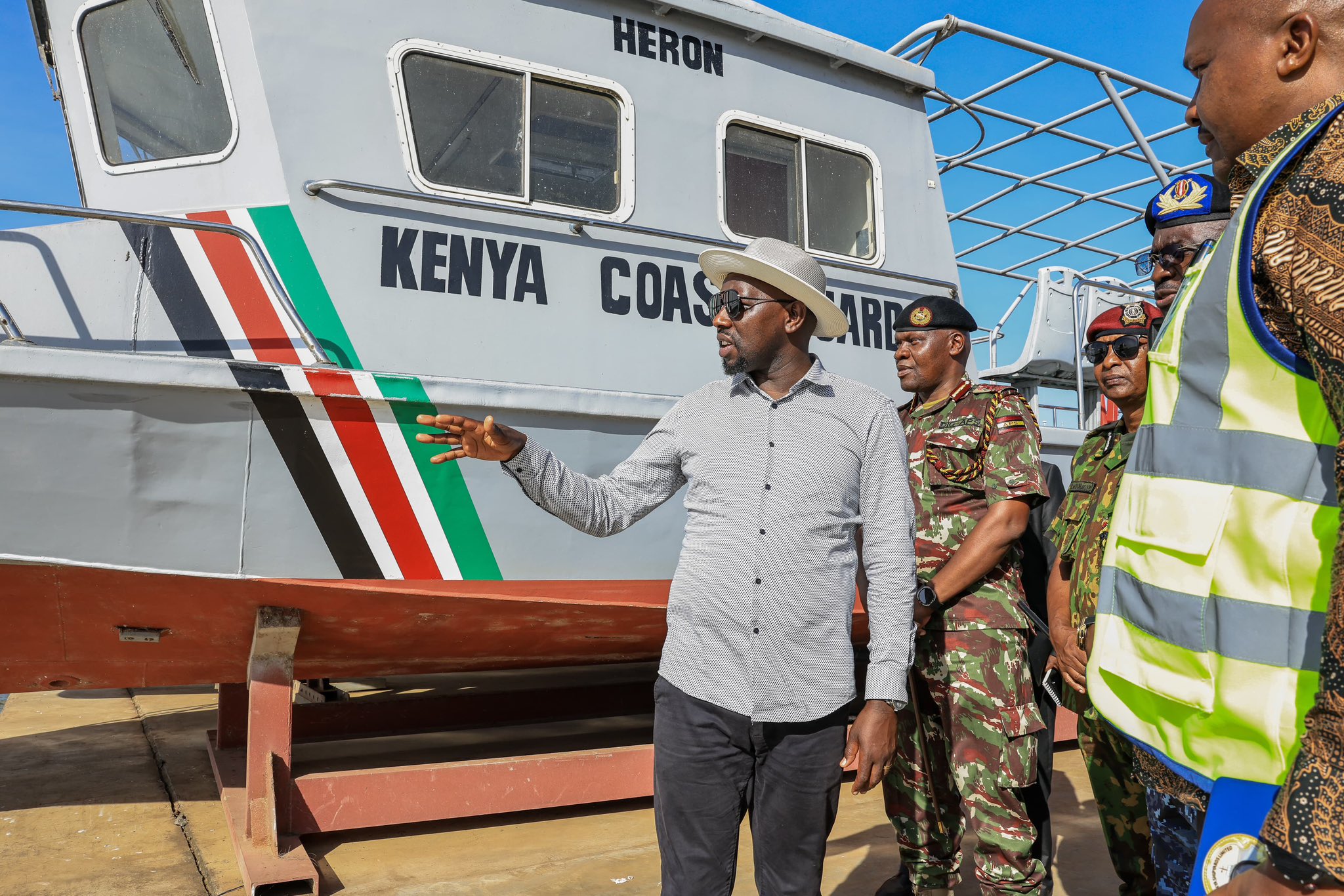
“The Kenya Coast Guard is extremely important in securing this path as we deal with drugs. We have seen that they need more boats and more human resources. We did recruitment in both the Kenya Defence Forces and the Kenya Police Service and upon graduation, 200 officers will be drawn from the armed forces to be deployed to the Kenya Coast Guard,” he said during an inspection tour in Kisumu.
The CS met KCGS Director General Bruno Shosio to assess operational plans and capacity along the Lake Victoria corridor, describing the lake as a strategic and economic asset for Kenya.
Officials also inspected the ongoing rehabilitation of the Old Port station, now 80 per cent complete, which is expected to enhance surveillance and rapid-response capabilities.
Kenya Shipyard Limited has also rehabilitated three patrol boats to support lake operations, while the Interior Ministry plans to secure land to expand permanent facilities for the Coast Guard.
Murkomen emphasised the importance of cooperation with Beach Management Units and other local stakeholders to improve information sharing, safety and enforcement.
Kisumu Governor Anyang’ Nyong’o and Deputy Inspector General (Administration Police Service) Gilbert Masengeli accompanied the CS during the tour.
The announcement comes as President William Ruto has proposed reforms to Kenya’s narcotics laws that would introduce the death penalty for individuals convicted of trafficking hard drugs.
The proposed changes represent a major policy shift in the government’s campaign against alcohol and substance abuse.
President Ruto said the amendments would replace what he described as lenient penalties under the current legal framework, where traffickers can be fined as little as Sh1 million.
Under the new proposal, the sale of hard drugs such as heroin and cocaine would be classified as a capital offence.
Ruto said the trade is harming families, increasing addiction among young people, and threatening the country’s future.
“People who are selling heroin and cocaine are destroying our children. Those who are selling or their children don’t use it themselves; they come to sell to other people’s children,” he said.
“The past law stated that such people should be fined Sh1 million. We are now changing the law to make it a capital offence. Those found guilty would face the ultimate penalty.”
He added that traffickers profit from addiction while shielding their own families from harm, calling the practice morally indefensible.